
Table of Contents
We’ve all been there. The code is ready, the feature is built, and the finish line is in sight. But there’s one last hurdle: the QA bottleneck. Your testing team is swamped, manual regression is taking forever, and every minute spent waiting is a minute your product isn’t in the hands of users.
In the race to ship faster, many teams look for a silver bullet. For a lot of them, that silver bullet looks like Testing as a Service (TaaS). It’s the promise of offloading your entire testing workload to a third-party expert, freeing up your developers to do what they do best: build.
But is it really that simple? While TaaS can be a powerful ally, it’s not a one-size-fits-all solution. In this guide, we’ll break down how testing as a service really works, where it shines, where it fails, and how to build a truly scalable testing strategy using ContextQA.

What Exactly Is Testing as a Service?
At its core, Testing as a Service (TaaS) is an outsourcing model where you hand over your software testing activities to an external provider. Instead of hiring, training, and managing an in-house QA team, you pay for a service that handles it all for you. This can range from executing a few manual test cases to managing your entire automated regression suite.
The appeal is obvious: you get instant access to a team of QA professionals and a suite of testing tools or web automation offerings without the upfront investment. It’s a plug-and-play solution for a complex problem. But as with any service, the devil is in the details.
The TaaS Workflow: A Look Behind the Curtain
So, what happens after you sign on the dotted line? While every provider is different, the TaaS workflow generally follows a predictable pattern.
| Your Responsibility | The TaaS Provider’s Responsibility |
|---|---|
| Define the Scope: You provide the application, define what needs to be tested, and set the acceptance criteria. | Test Planning: The provider analyzes your requirements and creates a detailed test plan and strategy. |
| Provide Builds: You give the provider access to testable builds of your application. | Test Execution: The provider’s team executes the tests (manual, automated, or both) across different environments and devices. |
| Review Feedback: You receive and review the test reports, bug lists, and quality summaries. | Reporting & Analysis: The provider delivers detailed reports on test results, identifies defects, and provides insights into your product’s quality. |
This back-and-forth communication is the engine of the TaaS model. When it works, it’s a well-oiled machine. When it doesn’t, it becomes a major source of friction.
Is Your Team Ready for TaaS? A Quick Checklist
Testing as a service isn’t for everyone. Before you jump in, ask yourself these questions:
- Do you have a temporary need? If you’re facing a one-time event, like a major product launch or a legacy system migration, TaaS can provide the short-term firepower you need without the long-term commitment.
- Is your product highly specialized? If your application requires deep domain knowledge (e.g., complex financial software or medical devices), an external team may struggle to test it effectively. The learning curve can be steep and costly.
- How fast do you iterate? If your team practices rapid CI/CD with multiple deployments a day, the communication overhead with a TaaS provider can slow you down. TaaS often works best with more structured, less frequent release cycles.
- Can you afford a loss of control? With TaaS, you’re placing a critical function in someone else’s hands. If you need tight control over your testing process and data, an in-house solution might be better.
If you answered “yes” to the first question and “no” to the rest, TaaS could be a great fit. If not, you might fall into the TaaS trap.
The TaaS Trap: When Outsourcing Goes Wrong
The biggest pitfall of testing as a service is the communication gap. Your developers have an intimate understanding of the product that is difficult to transfer to an external team. This can lead to superficial testing that misses critical, nuanced bugs. For more on how to avoid this, check out our guide on QA best practices.
Furthermore, when your testers are not part of your core team, they become a black box. You send a build over the wall and get a bug report back. This disconnect makes it harder to foster a culture of quality where everyone, developers and testers alike, is responsible for the end product. Instead of breaking down silos, TaaS can build them higher.
Beyond TaaS: A Smarter Way to Scale Your Testing
What if you could get the scalability and efficiency of testing as a service without giving up control or creating communication silos? What if you could empower your existing team to do more, faster?
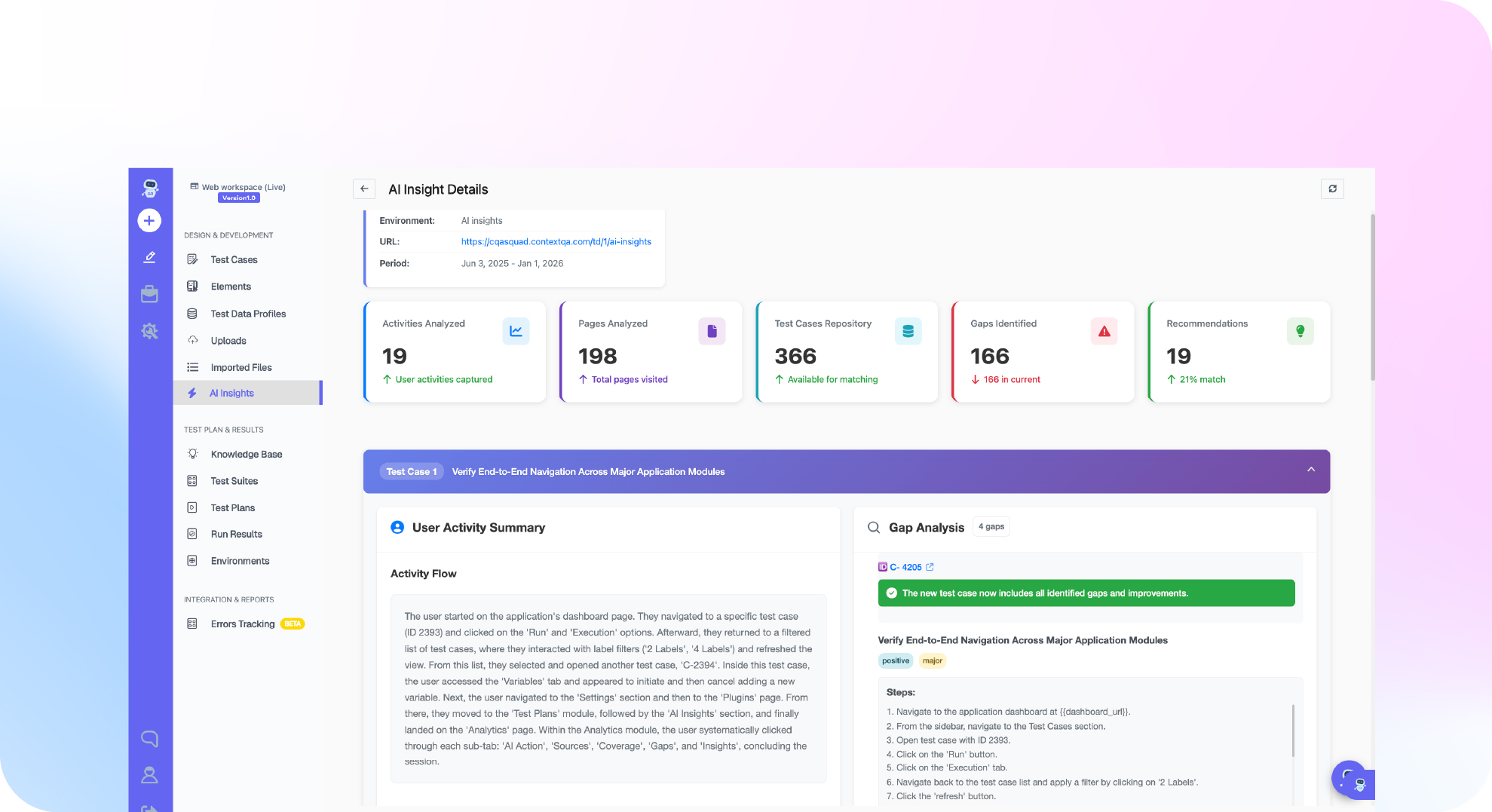
That’s the philosophy behind ContextQA. Instead of outsourcing your testers, you can supercharge them with a smarter testing platform. Our AI-driven, low-code solution helps you build a robust, scalable testing practice right within your own team. Imagine your developers and manual QAs creating and maintaining complex automated tests without writing a single line of code. Our platform’s self-healing capabilities mean tests don’t break with every minor UI change, slashing the maintenance time that kills so many automation initiatives.
This approach keeps the product knowledge and testing expertise in-house, right where it belongs. You get the speed and coverage of a dedicated automation team without the overhead, all while fostering a stronger culture of quality. It’s not about replacing your team; it’s about making them exponentially more effective.
Let’s get your QA moving
See how ContextQA’s agentic AI platform keeps testing clear, fast, and in sync with your releases.
Book a demoBuild a Testing Strategy That Works for You
Testing as a service can be a valuable tool, but it’s just one tool in the toolbox. The ultimate goal is to build a resilient, efficient, and scalable testing strategy that fits your team’s unique workflow.
Whether that means leveraging TaaS for specific projects, or empowering your in-house team with smarter tools, the right choice is the one that helps you ship better products, faster.
Ready to see what your team is truly capable of? Explore how ContextQA’s AI-powered platform can transform your testing process. Get started with a free demo.