

The DORA State of DevOps Report 2024 has some numbers that should change how you think about deployment. Elite performing teams deploy on demand, often multiple times a day, with change failure rates below 5%. Low performing teams? They deploy monthly and see failure rates above 45%. Understanding these metrics is essential for optimizing your […]
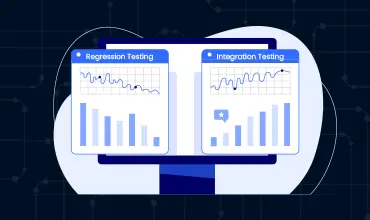
Here’s a stat that should bother you: the Capgemini World Quality Report 2024-25 found that 60% of organizations say inadequate test coverage is directly responsible for their production defects. Six out of ten. And yet, when I talk to engineering teams about their testing strategy, the conversation almost always stalls on the same confusion. They […]
Root cause analysis, or RCA, is a method used to trace a defect back to the real origin of the problem during quality assessment testing. Teams look past the surface symptom and map the chain of events that led to the issue. When QA understands the source rather than the outcome, it becomes easier to prevent the problem from returning.

In busy software teams, bugs can pile up quickly. Sorting them in a clear, consistent way helps products stay stable and keeps releases on track. A bug triage meeting gives the team a set time to look at open issues, agree on what matters most, and plan how each item should move forward. When teams […]

In this age of rapid digitization, quality software may be just the differentiator between make or break. With growing application complexities, rigorous testing has become a necessity rather than a luxury. That’s where Testing as a Service joins in, marrying scalability, experience, and cost efficiency. In this blog, let’s have an overview of the top […]

The development of software of very high quality is immensely important in this field of profession. Two major metrics playing a very significant role in the process include Defect Density vs Test Coverage. If understood correctly, these two metrics could make all the difference in the delivery of a robust and reliable software product. Defect […]

Testing is considered to be among the most important phases in the software development lifecycle. It is through this process that software is highly scrutinized, and its quality analyzed prior to delivering it to the end-user. Being a QA professional, it involves churning out test cases and test scripts that become well-detailed guidelines toward assessing […]

Integration testing is one of the stages in the life cycle of software development and takes place just before system testing, performed with the purpose of verification of interaction between connected application modules. It is aimed at detection of problems in the integrations or interfaces between components before full-scope testing of a system. Usually, it’s […]

Ensuring quality and reliability in software development is of utmost importance, especially as teams strive to accelerate development cycles while still meeting high standards. DORA (DevOps Research and Assessment) metrics have emerged as a prominent framework to measure software testing processes. In this guide we explore some key DORA metrics related to test automation and […]

User Acceptance Testing is a crucial phase of the lifecycle of software testing that is designed to determine whether a software program works with the users’ needs in a real-life situation. Contrary to other methods of testing that could focus on technical error or performance, User Acceptance Testing is uniquely user-centric. It is based on actual […]
- 1
- 2