
With a jam-packed software development landscape, the pressure to release new features quickly is huge. However, speed without quality is a recipe for disaster. Bugs, glitches, and poor user experiences can erode customer trust and damage a brand’s reputation. This is where a strong foundation of Quality Assurance (QA) becomes critical.
By implementing and adhering to trusted QA best practices, development teams can confidently accelerate their release cycles without compromising on the stability and reliability of their products. These practices are not just about finding bugs; they are about preventing them in the first place and building a culture of quality that permeates every stage of the development lifecycle.
For teams looking to innovate and compete, adopting a robust quality framework is not just an option… it’s a necessity for sustainable growth and long-term success. Here’s how ContextQA helps.

Why Do We Need QA Best Practices?
Modern software is complex, with intricate dependencies and ever-evolving user expectations. A reactive approach to QA, where testing is an afterthought, is no longer enough. Instead, teams need a proactive strategy that integrates quality checks from the very beginning. This shift from quality control to quality assurance is fundamental. It’s about creating a system of processes and standards that help teams build quality into the product, not just inspect it at the end.
QA best practices are a set of guidelines and principles that help software development teams maintain the quality of their products throughout the entire development lifecycle. These practices are not rigid rules but rather a framework that can be adapted to fit the specific needs of a team or project.
The goal is to move beyond simply detecting defects to proactively preventing them. This involves a holistic approach that encompasses everything from initial requirements gathering to post-release monitoring. By focusing on process improvement, clear communication, and continuous feedback, these practices help teams build quality into their products from the ground up.
At its heart, quality assurance is about confidence. It’s about having the confidence to release new features knowing that they have been thoroughly vetted and meet the highest standards of quality. This confidence is built on a foundation of well-defined processes, clear roles and responsibilities, and a shared commitment to excellence. When teams embrace these principles, they are not just improving their testing processes; they are improving their entire development process. This leads to better products, happier customers, and a more efficient and effective development team.
Why Following QA Best Practices Matters for Modern Teams
In an era of continuous delivery and rapid innovation, the cost of poor quality can be substantial. A single critical bug that makes it into production can lead to financial losses, reputational damage, and customer churn. Following QA best practices helps mitigate these risks by making quality a primary focus throughout the development process. This proactive approach helps teams identify and address potential issues early, when they are easier and less expensive to fix. It also helps to create a more predictable and stable release process, which is essential for meeting business objectives and maintaining a competitive edge.
Furthermore, a commitment to quality can have a significant impact on team morale and productivity. When developers are confident that their code will be thoroughly tested, they are more likely to take ownership of quality and write better code from the start. This collaborative approach to quality, where everyone is responsible for the final product, can lead to a more engaged and motivated team. It also frees up QA professionals to focus on more strategic tasks, such as exploratory testing and process improvement, rather than being bogged down in a never-ending cycle of bug fixes. Ultimately, a culture of quality is a culture of excellence, and it is a key differentiator for high-performing teams.
Essential QA Best Practices for High-Performing Teams
Adopting a set of core principles can transform a team’s approach to quality. These practices are designed to be integrated into the existing workflow, creating an efficient process for maintaining product quality.
Integrate QA Early and Continuously
The most effective way to improve software quality is to make it a part of the entire development process. This means involving QA professionals in the early stages of planning and design, where they can provide valuable input on potential risks and testability. By integrating testing activities throughout the development lifecycle, teams can identify and address issues as they arise, rather than waiting until the end of the process. This approach, often referred to as “shifting left,” is a cornerstone of modern quality assurance.
Continuous integration and continuous delivery (CI/CD) pipelines are essential for implementing this practice. By automating the build, test, and deployment processes, teams can verify that every code change is automatically tested, providing rapid feedback to developers. This not only speeds up the development process but also helps to maintain a high level of quality by catching bugs early. A well-designed CI/CD pipeline, combined with a comprehensive test automation strategy, is a powerful combination for any team looking to improve their QA process.
Prioritize Test Cases Based on Risk
Not all bugs are created equal. Some may be minor annoyances, while others can be showstoppers. With limited time and resources, it’s impossible to test everything. This is why risk-based testing is a critical component of any effective QA strategy. By identifying and prioritizing test cases based on the potential impact of a failure, teams can focus their efforts on the areas of the application that matter most. This approach helps teams test the most critical functionality thoroughly, reducing the risk of a major failure in production.
Creating a risk matrix can be a helpful tool for this process. By mapping out the likelihood of a failure against the potential impact, teams can get a clear picture of where to focus their testing efforts. This data-driven approach to test planning helps teams allocate resources effectively and address the most critical risks. It also provides a clear rationale for testing decisions, which can be valuable for communicating with stakeholders.
Combine Manual and Automated Testing
While test automation is a powerful tool for improving efficiency and coverage, it is not a silver bullet. There are certain types of testing, such as exploratory testing and usability testing, that are best suited for manual testing. A balanced approach that combines the strengths of both manual and automated testing is the most effective way to maintain comprehensive test coverage.
Automated testing is ideal for repetitive, time-consuming tasks such as regression testing and performance testing. It can run tests quickly and consistently, providing rapid feedback to developers. Manual testing, on the other hand, is essential for uncovering unexpected issues and providing valuable feedback on the user experience. By leveraging both approaches, teams can achieve a higher level of quality than they could with either one alone.
Maintain Clear and Actionable Documentation
Clear and concise documentation is essential for any successful QA process. This includes everything from test plans and test cases to bug reports and release notes. Well-written documentation helps verify that everyone on the team is on the same page and has a clear understanding of the testing process. It also provides a valuable historical record that can be used to track progress, identify trends, and make informed decisions about future testing efforts.
Bug reports are a particularly important form of documentation. A good bug report should be clear, concise, and actionable. It should include a detailed description of the problem, steps to reproduce it, and any relevant screenshots or log files. This information is essential for developers to be able to quickly and easily fix the bug. A well-documented bug is a bug that is halfway to being fixed.
Foster a Culture of Quality
Ultimately, the success of any QA process depends on the culture of the team. A culture of quality is one where everyone, from developers to product managers, takes ownership of the quality of the product. This means that quality is not just the responsibility of the QA team, but a shared responsibility of the entire team. Fostering this type of culture requires strong leadership, clear communication, and a commitment to continuous improvement.
One way to foster a culture of quality is to celebrate successes and learn from failures. When a team successfully releases a high-quality product, it’s important to recognize the contributions of everyone involved. Similarly, when a bug does make it into production, it’s important to conduct a post-mortem to understand what went wrong and how it can be prevented in the future. By creating a culture of transparency and continuous learning, teams can build a strong foundation for long-term success.
How ContextQA Reinforces Best Practices
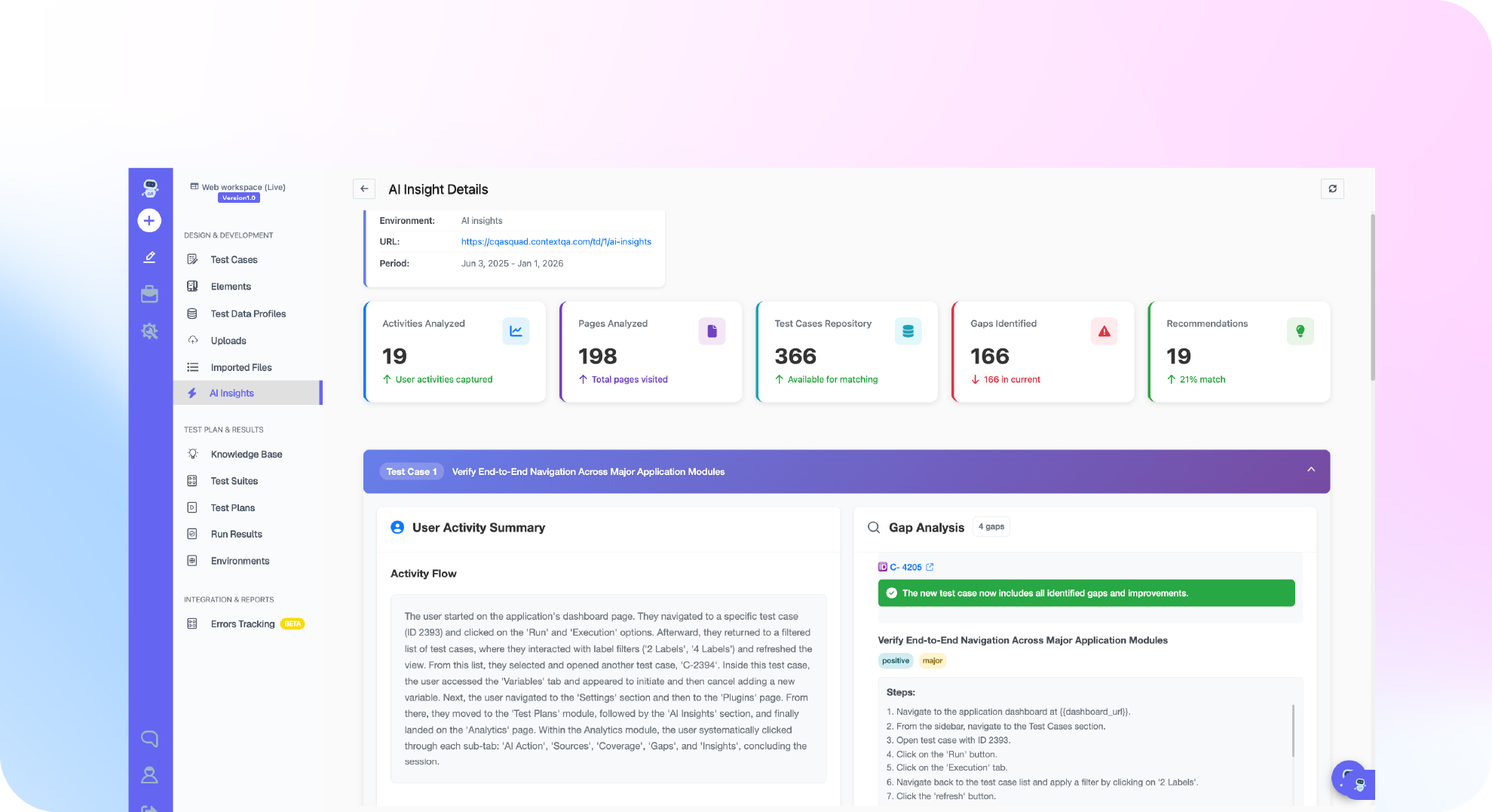
Adopting these QA best practices is made significantly easier with the right tools. The ContextQA tool can automate many of the tedious and time-consuming tasks associated with QA, freeing up teams to focus on more strategic activities. For example, AI-powered test automation can help teams create and maintain robust and reliable automated tests with minimal effort. Self-healing tests can automatically adapt to changes in the application, reducing the maintenance burden and helping teams keep tests stable over time.
Furthermore, a comprehensive QA platform can provide valuable insights into the quality of the product. By tracking key metrics such as test coverage, pass/fail rates, and bug trends, teams can get a clear picture of their quality posture and identify areas for improvement. This data-driven approach to quality management is essential for making informed decisions and driving continuous improvement. With the right tool, teams can not only implement quality assurance principles more effectively but also take their efforts to the next level.
Let’s get your QA moving
See how ContextQA’s agentic AI platform keeps testing clear, fast, and in sync with your releases.
Building a Future of Quality
Implementing a robust set of QA best practices is an ongoing journey, not a one-time event. It requires a commitment to continuous improvement and a willingness to adapt to new challenges and technologies.
By fostering a culture of quality, embracing automation, and leveraging the power of data, teams can build a sustainable and effective QA process that supports faster, safer releases. The result is not just higher-quality software, but a more confident and successful team.
Ready to put these best practices into action? Contact us to learn how ContextQA can help you build a world-class QA process.