
TL;DR: Framework selection for automated testing depends on four variables: application type, team language proficiency, test type distribution, and CI/CD integration requirements. Stack Overflow’s 2024 Developer Survey and JetBrains State of Developer Ecosystem provide the adoption data. ThoughtWorks Tech Radar documents migration patterns. Playwright leads end-to-end for new projects. Jest leads JavaScript unit testing. No single framework covers all testing types.
The Framework Decision Is a Long-Term Commitment
Automated testing frameworks are not easy to swap. A 500-test Cypress suite takes an estimated 2 to 4 engineer weeks to migrate to Playwright. A 1,000-test Selenium suite takes significantly longer. The wrong framework choice compounds over years as tests accumulate and migration cost grows.
Stack Overflow’s 2024 Developer Survey shows Playwright at 33 percent adoption among professional developers, growing from 24 percent in 2023. Cypress sits at 19 percent, flat year-over-year. Selenium is at 17 percent, declining. The trajectory is clear for new JavaScript/TypeScript projects: Playwright is where the community is consolidating.
ThoughtWorks Technology Radar 2024 makes its recommendation explicit: Playwright is in the Adopt category. Cypress is Assess, recommended only for teams with existing investment. Selenium is in the Hold category for new projects. ThoughtWorks’ Radar has a strong track record of reflecting where the practitioner community lands 18 to 24 months after a recommendation. The Playwright signal is unambiguous.
JetBrains’ 2024 State of Developer Ecosystem shows Jest at 63 percent adoption for JavaScript unit testing, maintaining a dominant position despite Vitest’s growth among Vite-based projects. Vitest is at 29 percent and growing, primarily in teams using Vite as their build tool.
Their QualityAssurance community discussion on framework selection reflects the data: Playwright for new end-to-end projects, Jest or Vitest for unit tests, and a persistent Selenium tail for teams with enterprise Java codebases. The debates are largely settled. The nuance is in migration cost and specific use case exceptions.
Definition: Test Automation Framework A test automation framework is a structured set of guidelines, tools, libraries, and conventions for writing, organizing, executing, and reporting automated tests. ISTQB distinguishes between test execution frameworks (Playwright, Cypress, Selenium), assertion libraries (Jest, Chai), and reporting integrations (Allure, CI dashboards). A complete automated testing strategy uses components from all three categories.

Quick Answers
Q: Which automated testing framework should new projects use in 2025? A: Playwright for end-to-end and browser automation (TypeScript or Python). Jest for JavaScript/TypeScript unit testing if using Webpack, Vitest if using Vite. Stack Overflow 2024 and ThoughtWorks Tech Radar both point to Playwright as the current community standard for new projects.
Q: Is Selenium still worth using? A: For new projects with JavaScript or Python, no. ThoughtWorks classifies Selenium in Hold for new projects. For existing Java projects with large Selenium WebDriver test suites, the migration cost justification is case-specific. Selenium remains relevant for Java-first enterprises with significant existing investment.
Q: What is the difference between a testing framework and a testing library? A: A framework provides the full structure: test runner, assertion handling, parallel execution, and reporting. A library provides one of those capabilities. Playwright is a framework. Chai is an assertion library. Jest is a framework with built-in assertion support. Most production setups combine a framework with additional libraries for specific capabilities.
The Selection Framework: Four Criteria Before Choosing
ISTQB’s test automation engineer guidance recommends evaluating testing frameworks against five criteria. Here are four of the most decision-relevant.
Criterion 1: Language and Team Proficiency
Framework selection must match the team’s language proficiency. A QA team proficient in Python will be more productive with Playwright (Python) or pytest than with Cypress (JavaScript only). A frontend JavaScript team will adopt Playwright or Cypress faster than a Java-based framework.
JetBrains’ data shows Python at 51 percent usage among professional developers and JavaScript at 63 percent. Both languages have strong framework ecosystems. Java (at 30 percent) has the most mature Selenium integration. Framework choice should follow language proficiency, not the reverse.
Criterion 2: Application Type and Test Coverage Requirements
Not all frameworks cover all application types. Playwright covers web browser automation across Chrome, Firefox, Safari, and Edge. It has mobile web support through device emulation but limited native mobile app testing capability. For native iOS and Android apps, Appium or Maestro are the relevant frameworks.
SmartBear’s quality research shows that organizations with multi-platform test suites (web, mobile, API) spend 35 percent more time on framework configuration than organizations with single-platform web suites. Evaluating full coverage scope before choosing a framework prevents the discovery mid-project that the chosen framework does not cover a required surface.
Criterion 3: CI/CD Integration Depth
The testing framework must integrate with your CI/CD pipeline without requiring significant custom configuration. DORA’s research documents CI/CD integration depth as one of the strongest predictors of test automation program adoption and sustainability.
Playwright and Cypress both have GitHub Actions integrations, Docker images, and CircleCI orbs that work with minimal configuration. Selenium requires more manual integration work, which increases setup time and maintenance burden. ThoughtWorks’ Radar partially bases its Playwright recommendation on this reduced integration friction.
Criterion 4: Parallel Execution and Speed
Test suite speed determines adoption. DORA’s research documents that fast feedback loops (test results within 10 minutes) are correlated with higher developer adoption of testing practices. Slow suites get bypassed.
Playwright has native parallel execution with worker process isolation. Cypress recently added full parallel execution support (previously requiring Cypress Cloud). Selenium parallel execution requires third-party configuration (Selenium Grid or cloud providers). For suites above 200 tests, native parallel execution support is a primary criterion, not a secondary one.
| Framework | Language Support | Parallel Execution | Mobile Support | ThoughtWorks 2024 | Best For |
| Playwright | JS/TS, Python, Java, C# | Native, worker-isolated | Web emulation only | Adopt | New E2E projects |
| Cypress | JS/TS only | Yes (recent addition) | None | Assess (existing only) | Existing Cypress suites |
| Selenium WebDriver | All major languages | Via Grid (complex setup) | Via Appium | Hold | Java enterprise, legacy |
| Jest | JS/TS | Worker-based | N/A | Adopt | JS/TS unit testing |
| Vitest | JS/TS | Native | N/A | Adopt | Vite-based projects |
| Appium | JS, Python, Java | Via Appium Grid | iOS and Android native | Adopt | Mobile native testing |
Definition: Test Runner A test runner is the component of a testing framework responsible for discovering test files, executing tests in the configured order, managing parallel workers, collecting results, and generating reports. ISTQB identifies the test runner as a distinct component from the assertion library and the browser driver. Playwright, Jest, and Vitest all include integrated test runners. Selenium WebDriver requires a separate test runner (typically TestNG or JUnit for Java, pytest for Python).
The Framework Stack for a Production-Grade Test Suite
No single framework covers all testing types adequately. The production-grade test strategy combines frameworks by test type.
Unit testing: Jest for JavaScript/TypeScript with Webpack. Vitest for JavaScript/TypeScript with Vite. pytest for Python. JUnit 5 for Java. JetBrains data confirms these as the dominant choices in their respective ecosystems.
End-to-end and browser automation: Playwright for new projects. State of JS 2024 shows Playwright’s satisfaction score at 92 percent versus Cypress at 74 percent among users who have tried both. The satisfaction gap reflects the developer experience improvements in Playwright’s API design, wait strategy, and debugging tools.
API testing: Supertest for Node.js API testing. Requests plus pytest for Python. REST Assured for Java. SmartBear’s survey documents API testing as the fastest-growing testing category by adoption rate, reflecting the microservices architecture trend.
Contract testing: Pact for consumer-driven contract testing between microservices. Relevant when multiple teams own different services that integrate with each other. RedHat’s Kubernetes adoption data shows 78 percent of organizations running containerized microservices, making contract testing increasingly relevant as a testing category.
Mobile: Appium for cross-platform native mobile testing. Maestro for mobile UI testing with a simpler API. Detox for React Native applications specifically.
The Honest Constraints
Playwright does not fully replace Cypress for teams that have invested in the Cypress ecosystem. Component testing in Cypress has no direct Playwright equivalent. If your team has heavily used Cypress Component Testing, the migration is not straightforward.
Framework lock-in compounds with test count. At 50 tests, migration is a weekend project. At 500 tests, it is a sprint project. At 5,000 tests, it is a quarter-long effort that requires business justification. Choosing the wrong framework early has long-term consequences that are invisible at the time of the decision.
Gartner’s testing tools market guide notes that the testing framework market is consolidating around a smaller number of well-maintained projects. Choosing a framework with strong community maintenance health reduces the risk of being left maintaining an abandoned dependency. Playwright (Microsoft), Jest (Meta/OpenJS Foundation), and Vitest (community with Vite backing) all have institutional backing. Smaller frameworks without organizational sponsorship carry higher long-term maintenance risk.
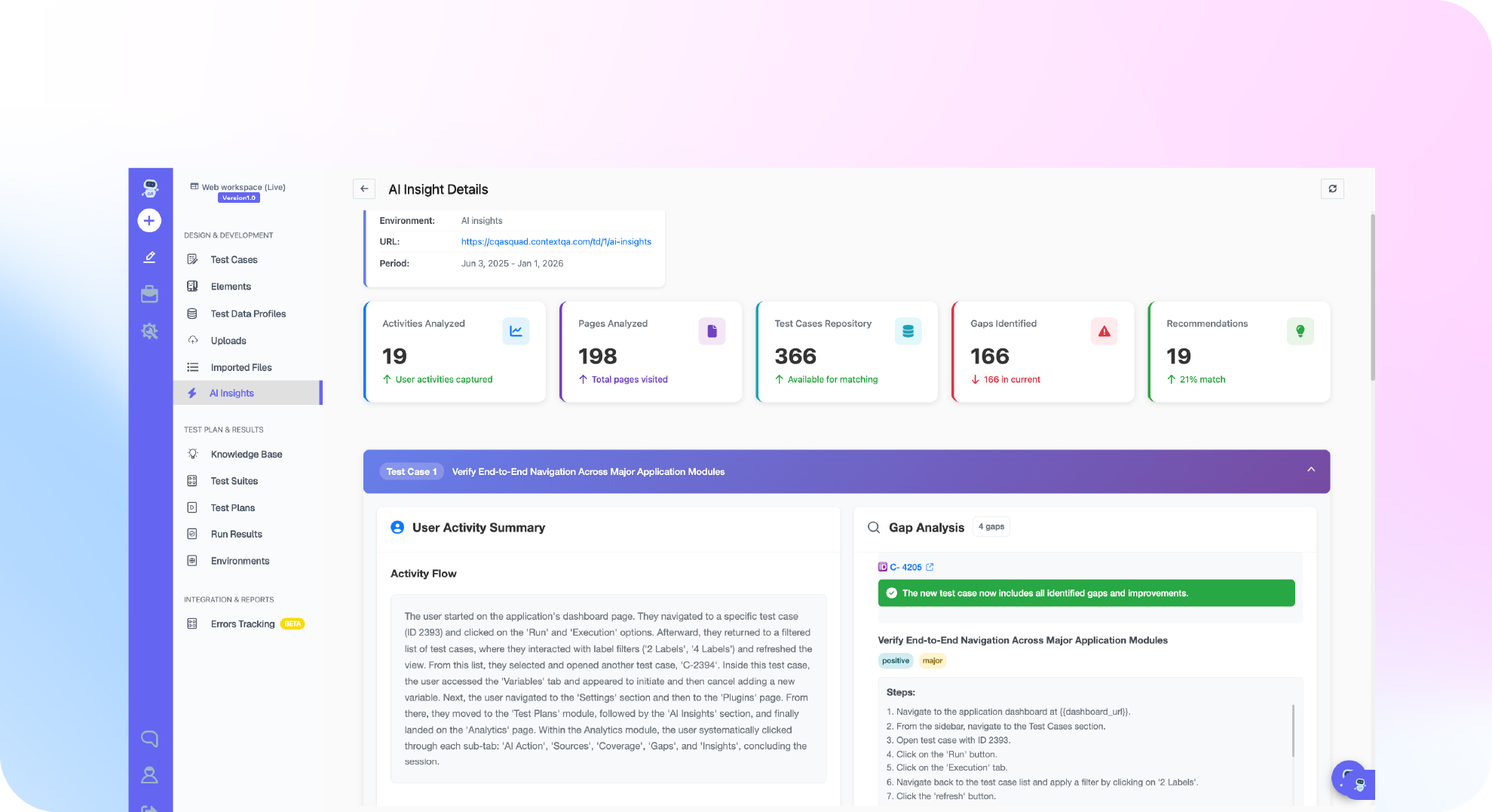
For teams running multi-platform test suites, ContextQA’s AI test automation platform operates across web (Playwright-backed), mobile (iOS and Android), API, Salesforce, and SAP surfaces with self-healing capabilities. The ContextQA Pilot Program runs a 12-week benchmark documenting efficiency improvement on your specific test suite and framework configuration.
Do This Now: Framework Selection Checklist
Step 1: Map your current test type distribution. What percentage is unit, integration, end-to-end, API? This tells you which framework categories matter most. Target: 30 minutes.
Step 2: Read the ThoughtWorks Technology Radar 2024 testing section. It provides the most current practitioner consensus on framework recommendations with explicit Adopt, Trial, Assess, Hold classifications. Target: 30 minutes.
Step 3: Review Stack Overflow’s 2024 Developer Survey testing data filtered for developers in your language ecosystem. Adoption trends matter for long-term maintenance health. Target: 20 minutes.
Step 4: Check State of JS 2024 satisfaction ratings for any JavaScript testing framework you are evaluating. Satisfaction scores predict retention and community maintenance quality. Target: 20 minutes.
Step 5: Run a proof of concept with your top two framework candidates against 10 existing test scenarios. Measure configuration time, execution speed, debugging experience, and CI integration effort. Target: 1 to 2 days.
Step 6: Review ContextQA’s web automation platform as an AI-assisted alternative that abstracts framework selection complexity for teams that want coverage across web, mobile, and enterprise applications without managing multiple framework configurations. Target: 30 minutes.
The Bottom Line
Framework selection in 2025 is more data-rich than at any previous point. Stack Overflow, JetBrains, ThoughtWorks, and State of JS all provide current adoption and satisfaction data that removes the guesswork.
Playwright for end-to-end. Jest or Vitest for unit. Pact for contracts. Appium for mobile. The community consensus is clear. The decision is in the combination that fits your team’s language proficiency, application coverage requirements, and CI/CD integration constraints.
The migration cost math: make the right decision now at 50 to 100 tests, or pay 2 to 4 engineer weeks later at 500 tests. The data supports Playwright for new projects without ambiguity.