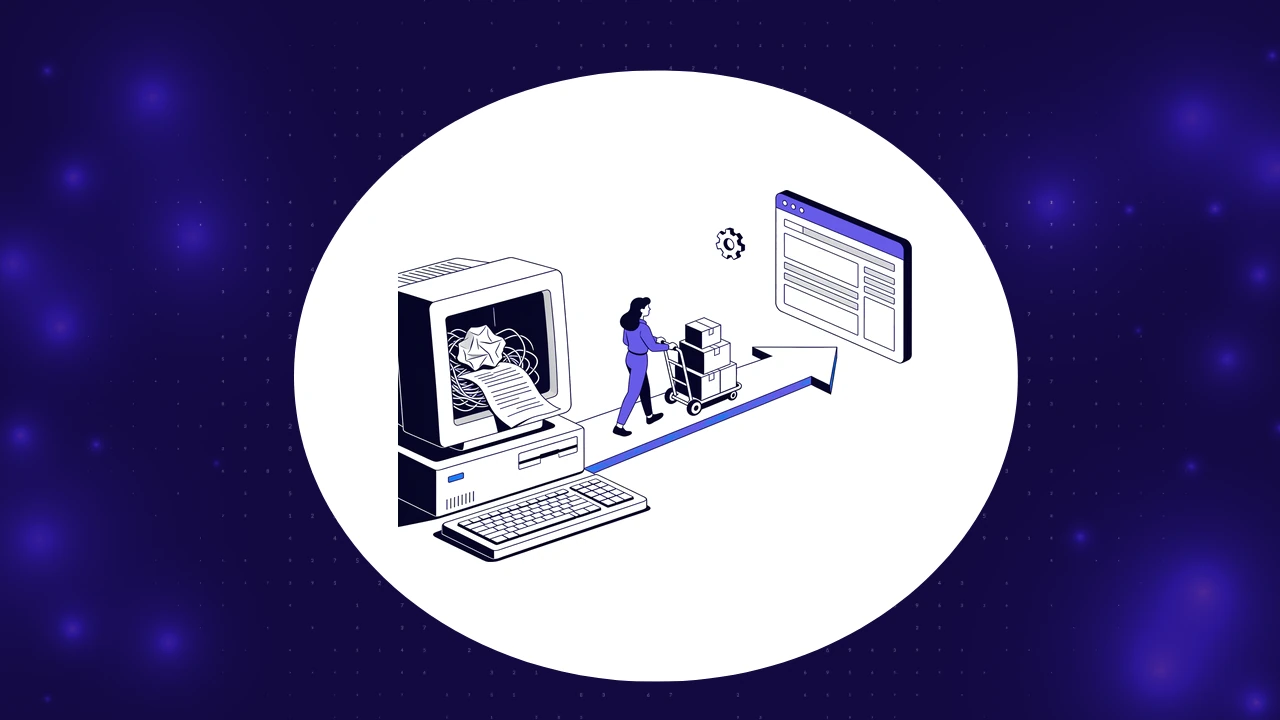

Manufacturing & ERP Testing: AI QA for S/4HANA Migrations
Unplanned downtime already costs the world's biggest manufacturers $1.4 trillion a year, and the 2027 S/4HANA migration deadline is about to put every ERP regression suite under pressure at once. ContextQA automates ERP regression, MES-to-ERP integration, and migration testing so releases ship without gambling on a batch job you didn't fully test.








One untested batch job can stop a production line
A consumer app bug frustrates a user. An untested ERP change can stop a production line, and unplanned downtime already costs the world's 500 biggest companies $1.4 trillion a year, 11% of revenue. At the same time, the industry-wide migration off legacy ECC systems means every manufacturer's regression suite is about to get exercised harder than it has been in a decade, and Gartner warns more than 70% of recent ERP implementations will fail to fully meet their original business case by 2027, with up to 25% failing catastrophically.
ContextQA's context-driven testing platform automates the scenarios that actually break ERP and manufacturing systems: regression testing across web, API, and mobile touchpoints; MES-to-ERP integration checks; and batch/nightly job validation, so a migration or a routine release doesn't turn into a production-line incident.
Testing built around how ERP systems actually break
ERP regression testing across web, API & mobile
Automated coverage of core ERP workflows, order-to-cash, procure-to-pay, and inventory, across every surface your team actually uses, so a UI update doesn't silently break a downstream integration.
Explore web automation →MES-to-ERP integration testing
Validate that shop-floor data flowing from MES into planning and quality-management modules arrives correctly, catching an integration break before it corrupts a production or inventory record.
Explore API testing →Migration & upgrade regression testing
Run parallel test suites across a legacy system and its replacement during a platform migration, with AI root-cause analysis isolating exactly what changed when a result diverges.
Explore root cause analysis →Master data governance testing
Data-driven test matrices verify material master, bill-of-materials, and vendor-master records stay consistent through every change-management cycle, not just at go-live.
Explore data validation →Batch & nightly job validation
Simulate MRP runs, month-end close, and inventory-valuation batch jobs under real data volume ahead of go-live, so the job that runs once a month doesn't fail the one night it matters most.
Explore performance testing →Shop-floor & field mobile testing
Native mobile coverage for the handheld scanners and tablet apps shop-floor and field teams depend on, so a mobile release doesn't stall the production line it's meant to support.
Explore mobile automation →Works with the tools your team already uses
No rip-and-replace. ContextQA plugs into the CI/CD pipeline and issue tracker your manufacturing IT team already runs, so test runs trigger on every build and every migration checkpoint.





Two-thirds of plants already report monthly unplanned downtime
Equipment failure drives 42% of unplanned downtime incidents, but IT and software failures still account for 8%, and that share rises fast during a migration year. Hidden costs, idle workforce wages, premium emergency parts, contractual penalties, have driven a 62% increase in downtime cost since 2019 even as incident frequency declined, which means the incidents that do happen now cost more, not less.
- Parallel regression testing across legacy and target ERP systems during migration
- Self-healing tests that survive frequent ERP configuration and UI changes
- AI root-cause analysis that isolates the exact change behind a batch-job failure

The standards that actually shape manufacturing QA
| Standard | What it means for testing |
|---|---|
| ISO 9001 / IATF 16949 | Quality-management systems for manufacturing and automotive; MES and ERP need documented, auditable test evidence for process control and traceability. |
| IEC 62443 | Industrial automation and control systems cybersecurity; every MES-to-PLC or SCADA integration point needs security and resilience testing, not just functional checks. |
| ERP platform migration deadlines | Vendor-driven end-of-mainstream-maintenance timelines are forcing mass regression testing industry-wide as companies migrate off legacy ERP systems before support lapses. |
Most ERP failures trace back to scope and alignment, not code
Gartner's research points to a specific cause: most ERP disappointments come from unrealistic scope, underestimated complexity, and poor change-impact assessment, not pure software defects. That means a testing strategy narrow enough to only check "does the code work" misses the biggest failure driver. Regression suites that cover cross-module, end-to-end business processes, order-to-cash and procure-to-pay included, catch the class of failure that a unit-test-only strategy never sees.
See ContextQA test your actual ERP stack
Bring your migration plan, your MES integrations, your batch jobs. We'll show exactly how AI test automation handles it live.
Frequently asked questions
Why is ERP regression testing uniquely hard?
Dense configuration and customization combine with tightly coupled cross-module transactions, so a single end-to-end process validates dozens of downstream dependencies at once. A change in one module can silently break a process three modules away, which is why narrow, module-only test coverage misses so many real failures.
What happens if a legacy ERP migration isn't finished in time?
Companies lose standard vendor support and either pay a premium for extended maintenance or run on an unpatched system. As of the most recent industry surveys, a majority of the installed base still had not completed migration, which means most manufacturers are racing the same clock.
What does unplanned downtime actually cost?
Across the world's 500 largest companies, unplanned downtime costs roughly $1.4 trillion a year, about 11% of revenue, and in automotive a single idle production line can cost up to $2.3 million per hour. Hidden costs, idle wages, emergency parts, and penalties, have grown faster than incident frequency since 2019.
Is IEC 62443 relevant to software testers, not just OT engineers?
Yes. MES and ERP systems increasingly interface directly with PLCs and SCADA systems, so testing has to validate there is no security or resilience gap at that integration point, not just that the functional workflow completes correctly.
Why do ERP testing efforts still miss production issues?
Gartner's research attributes most ERP failures to scope and change-management gaps rather than pure code defects. A testing strategy has to cover cross-module business processes end to end, not just individual transactions, to catch the failure class that actually causes most ERP disappointments.
Stop letting an untested batch job risk the production line
Join manufacturing and ERP teams using ContextQA to ship migrations and releases without gambling on untested cross-module dependencies.