
Let’s be honest, nobody really likes manual regression testing. It’s tedious, time-consuming, and let’s face it, a little bit boring. But it’s also a necessary evil. You have to make sure that your new features haven’t broken anything, and that means re-running a whole bunch of tests every time you release.
But what if there was a better way? What if you could reduce manual regression testing without sacrificing coverage? It sounds too good to be true, but it’s not. With the right strategies and tools, you can dramatically reduce the amount of time you spend on manual regression testing, and free up your team to focus on more important things.
In this post, we’ll break down how to do it. We’ll cover everything from prioritizing your test cases to leveraging the power of AI with ContextQA.

Why Manual Regression Testing is Such a Pain
Before we dive into the solutions, let’s quickly recap why manual regression testing is such a pain. Think of this as a group therapy session. Here are just a few of the problems you’ve no doubt run into:
- It’s slow: Manually re-running a large suite of tests can take days, or even weeks. This can be a major bottleneck in your release process.
- It’s error-prone: Humans make mistakes. It’s easy to miss a step or to make a mistake when you’re running the same tests over and over again.
- It’s not scalable: As your application grows, your regression suite will grow with it. This can quickly become unmanageable for a manual testing team.
This is where a smart approach to regression testing comes in. By combining the right strategies and tools, you can reduce manual regression testing and make your entire QA process more efficient and effective.
Strategies to Reduce Manual Regression Testing
So, how do you do it? Here are a few strategies that can help you reduce manual regression testing without sacrificing coverage:
Prioritize Your Test Cases
You don’t have to run every single test in your regression suite every time you release. Instead, you can prioritize your test cases based on their importance. Start by identifying the most critical user journeys in your application. These are the paths that are most important to your business and that are most likely to be impacted by a change. For more on this, check out our post on test coverage techniques.
Once you’ve identified your critical user journeys, you can focus your manual testing efforts on these areas. This will help you make sure that the most important parts of your application are working as they should, without having to waste time on less critical tests.
Automate, Automate, Automate
Listen up, this is the big one. The single most effective way to reduce manual regression testing is to automate as much of it as possible. Automated tests can run much faster than manual tests, and they can run 24/7 without getting tired or making mistakes.
But where do you start? A good place to start is with your most repetitive and time-consuming tests. These are the tests that are most likely to benefit from automation. And with a no-code/low-code platform like ContextQA, you can easily create and maintain these tests without writing a single line of code. For more on this, check out our post on the best AI QA platform for test automation.
Use a Risk-Based Approach
A risk-based approach to regression testing is all about focusing your efforts on the areas of your application that are most likely to be impacted by a change. This means you need to have a good understanding of your application’s architecture and how the different parts of it interact with each other.
When a developer makes a change to a particular part of the application, you can use this information to identify the areas that are most at risk of a regression, for example testing your Salesforce protocols. This will allow you to focus your testing efforts on these areas, rather than having to re-run your entire regression suite.
Leverage AI-Powered Tools
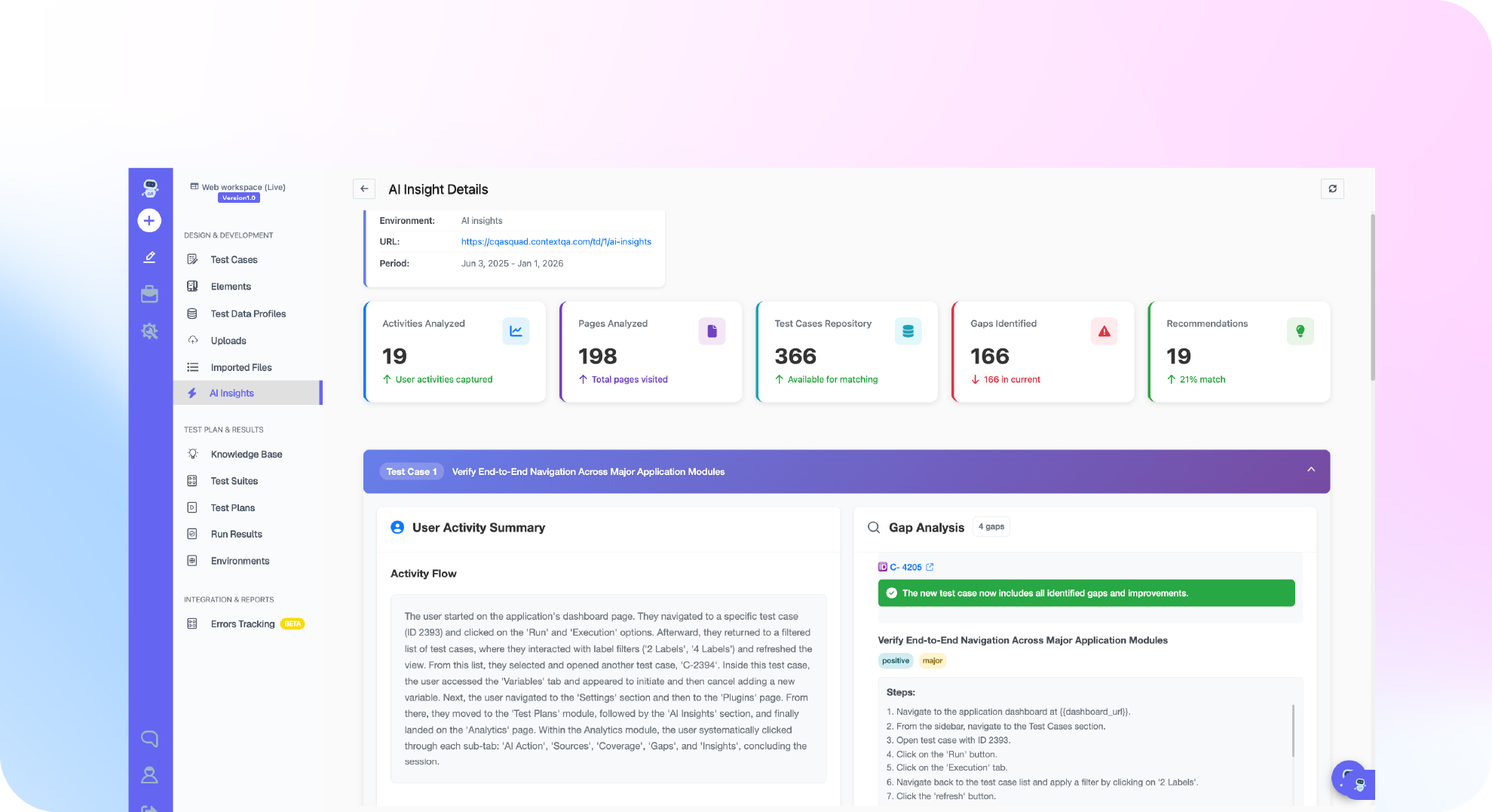
AI is a powerhouse when it comes to regression testing. An AI-powered testing tool can help you reduce manual regression testing in a number of ways. For example, it can be used to automatically generate tests, to identify and prioritize the most critical tests, and to even predict where regressions are most likely to occur.
One of the most powerful features of an AI-powered tool is self-healing tests. A self-healing test can automatically adapt to changes in your UI, so you don’t have to waste time updating your tests every time you make a change. This is a huge time-saver and can dramatically reduce the flakiness of your tests.
How ContextQA Can Help You Reduce Manual Regression Testing
So, how can ContextQA help you reduce manual regression testing? Here are just a few of the ways:
- No-code/low-code test creation: With our no-code/low-code platform, you can easily create and maintain automated tests without writing a single line of code.
- AI-powered self-healing tests: Our self-healing tests automatically adapt to changes in your UI, so you don’t have to waste time updating your tests.
- Risk-based testing: Our platform helps you identify and prioritize the most critical tests, so you can focus your efforts on the areas that matter most.
- CI/CD integration: We integrate with your existing CI/CD pipeline, so you can automate your regression tests and run them as part of your regular development workflow. For more on this, check out our post on CI/CD pipeline implementation.
Let’s get your QA moving
See how ContextQA’s agentic AI platform keeps testing clear, fast, and in sync with your releases.
Book a demoThe Future of Regression Testing is Here
Say goodbye: the days of spending weeks on manual regression testing are over. The future of regression testing is automated, AI-powered, and data-driven. By leveraging the right strategies and tools, you can reduce manual regression testing and make your entire QA process more efficient and effective. And with a platform like ContextQA, you can do it all without breaking a sweat.
Ready to say goodbye to manual regression testing? Book a ContextQA free demo to see how we’ll help you take your regression testing to the next level.