
Test automation frameworks help teams organize, run, and maintain automated tests in a consistent way. For modern development teams, frameworks are no longer just about structure. They also need to support scale, frequent releases, and automated AI testing approaches that reduce manual effort. As products grow more complex and automation becomes the norm across multiple sectors, frameworks shape how reliable and readable automated tests remain over time.
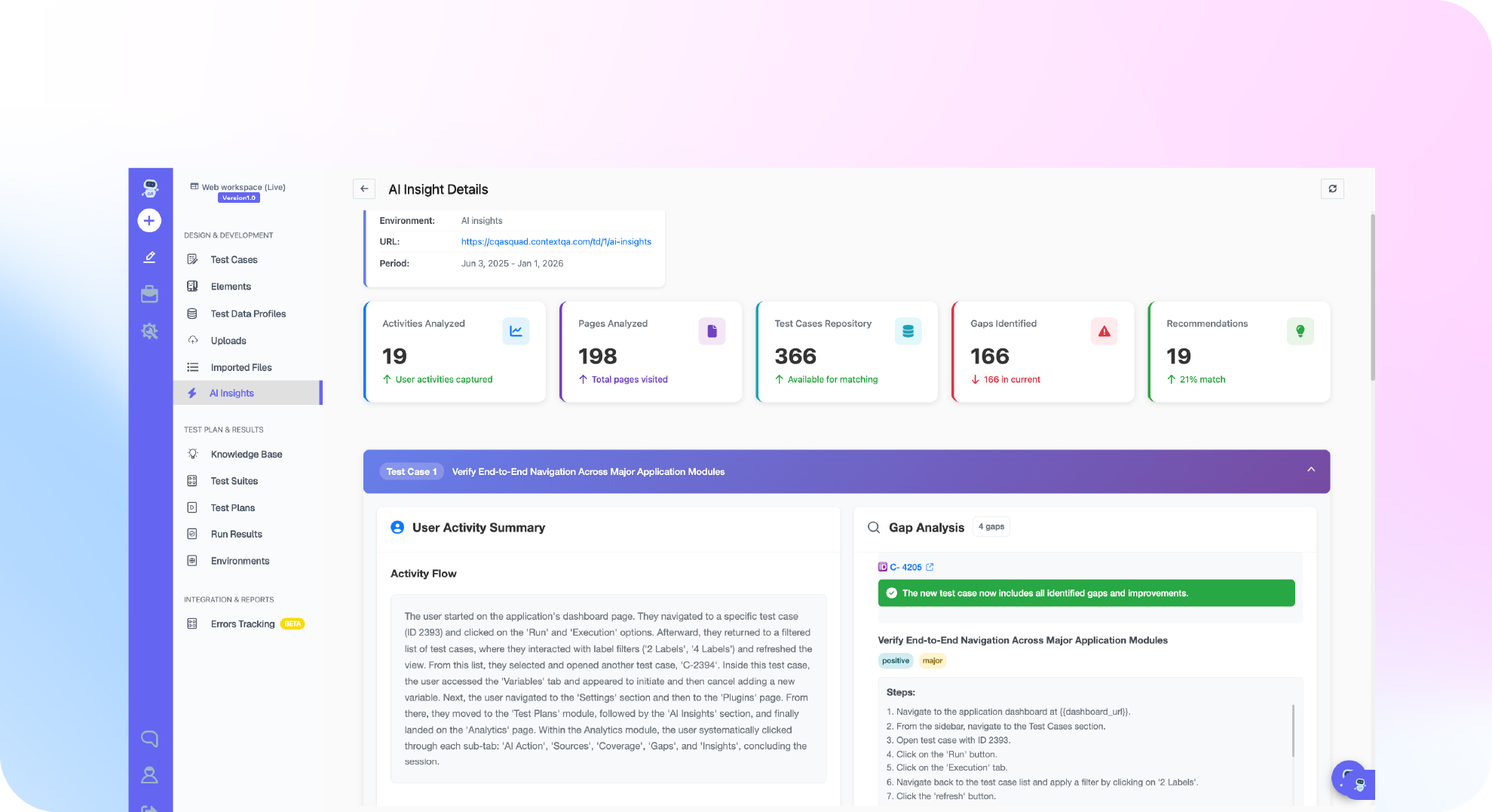
AI testing has added another layer to this picture. Instead of relying only on scripts, teams now combine traditional frameworks with visual flows, models, and AI-driven generation. ContextQA supports this shift by helping teams build tests that reflect real behavior while still fitting into structured automation setups.
What Is a Test Automation Framework?
As any QA or testing team knows, a test automation framework is a set of rules, tools, and patterns used to design and run automated tests. It defines how tests are written, how data is handled, how results are reported, and how tests fit into build pipelines.
Frameworks exist to reduce duplication and confusion. Without one, test suites often grow messy, difficult to maintain, and overall a bit of a nightmare. With a framework in place, teams gain consistency across contributors and environments.

Why Frameworks Matter for Development Teams
Frameworks give teams a shared way to work. Developers know how tests are structured, while QA teams know where logic lives. Reviews become easier because tests follow predictable patterns.
A good framework also supports growth. As test coverage expands, structure prevents that all too familiar chaos. Teams can add new scenarios without breaking older ones, which is especially important when release cycles are short.
Common Types of Test Automation Frameworks
Different teams choose different approaches depending on their needs. ContextQA’s range of features means there are tools and functionalities for a number of use cases.
Linear frameworks
These are simple and easy to set up. Tests run in sequence with minimal abstraction. They work for small projects but become hard to maintain as coverage grows.
Modular frameworks
Tests are broken into reusable pieces. This reduces duplication and improves maintainability. Many teams adopt this approach as products mature.
Data-driven frameworks
The same test logic runs against multiple datasets. This increases coverage without duplicating steps. Data-driven testing works well for forms, validations, and workflows with many inputs.
Keyword-driven frameworks
Tests are written using predefined actions instead of code. Low code automation helps non-developers contribute but can become rigid if overused.
Hybrid frameworks
Many teams combine approaches to balance flexibility and structure. This is common in larger systems where different test types coexist.
Where AI Test Automation Frameworks Fit Into Modern Processes
Traditional frameworks rely heavily on scripts and manual updates. AI changes how teams interact with these structures. Instead of writing every step, teams can generate tests from behavior, prompts, or recorded flows.
ContextQA supports this by working alongside existing frameworks rather than replacing them. Tests generated from visual models or prompts can still follow framework rules, use shared data, and report results consistently.
Reducing Maintenance With Better Structure
Maintenance is one of the biggest challenges in automation. Tests break when UI elements move or logic changes. Frameworks help by isolating changes, but AI-based approaches reduce effort further.
This is one of the biggest benefits of using test automation: when tests are built around behavior instead of fragile selectors, fewer updates are needed. ContextQA helps teams compare behavior across runs and focus on meaningful changes rather than cosmetic ones.
Integrating Frameworks Into CI Pipelines
Automation frameworks only add value when tests run regularly, for example in continuous testing structures. Modern teams integrate frameworks into CI workflows so tests execute on pull requests, merges, or scheduled runs.
Frameworks that support clear reporting and failure visibility help teams act quickly. ContextQA supports automated execution and readable results, making it easier to spot issues early.
How to Choose the Right Framework Setup
There is no single best framework that will suit every team, use case or situation. Teams should consider:
- team skill sets
- application complexity
- frequency of change
- data requirements
- reporting needs
Frameworks should support how teams actually work, not just how you want them to. Overly complex setups slow teams down and make things more complicated. Simple structures that evolve over time tend to last longer, and actually lighten the load.
Let’s get your QA moving
See how ContextQA’s agentic AI platform keeps testing clear, fast, and in sync with your releases.
Book a demoHow ContextQA Supports Framework-Based Testing
ContextQA helps teams work within automation frameworks by generating structured tests that follow consistent patterns. Visual flows and reusable models reduce duplication while still fitting into existing setups.
This approach allows teams to keep the benefits of frameworks while reducing manual effort. Tests remain readable, adaptable, and aligned with real application behavior.
Conclusion
Test automation frameworks give modern development teams structure, consistency, and a way to scale testing efforts. As AI testing becomes more common, frameworks need to support new ways of creating and maintaining tests.
ContextQA helps teams bridge this gap by generating behavior-based tests that fit into structured automation setups. The result? Expect clearer tests, lower maintenance, and stronger confidence in releases.
Want to try building a test automation framework for yourself? Book a demo of ContextQA today to see how it works.