TL;DR: The API testing market reached an estimated $2.14 billion in 2026, growing at 22.2% CAGR (The Business Research Company, 2026). The average application now uses 26 to 50 APIs to function. When one of those endpoints breaks, the entire user experience can fall apart. Choosing the right API testing tool depends on three things: what protocols you need to test (REST, GraphQL, gRPC, SOAP), how deeply the tool integrates with your CI/CD pipeline, and whether you need API testing alone or API testing as part of a broader quality platform. This guide compares 13 tools across those dimensions with honest evaluations, pricing data, and team fit recommendations.
Definition: API Testing Tool Software that validates application programming interfaces for correct functionality, data accuracy, response times, security vulnerabilities, and error handling. API testing tools send requests to API endpoints, verify responses against expected results, and report failures. Modern tools go beyond manual request/response testing to include automated test generation, contract validation, performance benchmarking, security scanning (OWASP API Security Top 10), and integration with CI/CD pipelines for continuous validation on every build. The market is splitting between standalone API clients (Postman and its alternatives such as Insomnia and Bruno) and integrated testing platforms (ContextQA, ACCELQ, Katalon) that cover APIs alongside web, mobile, and enterprise application testing.
Quick Answers:
What is the best API testing tool in 2026? For AI powered API testing as part of a full testing platform: ContextQA. For codeless API testing across packaged and custom enterprise apps: ACCELQ. For standalone API development and testing: Postman. For open source code first testing: REST Assured (Java) or Playwright (JavaScript/TypeScript). For API security testing: StackHawk. For performance and load testing: k6 or JMeter. The best tool depends on whether you need API testing only or API testing combined with web, mobile, and enterprise testing.
How much do API testing tools cost? Free and open source: REST Assured, JMeter, k6, Bruno, Hoppscotch. Freemium (free tier + paid plans): Postman (Free plan covers a single user as of 2026, Solo $9/user/month, Team $19/user/month), Insomnia ($5/user/month). Enterprise: ContextQA (custom pricing with pilot program), ACCELQ (custom quotes), SoapUI Pro ($659/year). Most tools offer free tiers sufficient for small teams.
Do I need a dedicated API testing tool or a platform? If your team only tests APIs in isolation, a dedicated tool like Postman or Bruno is sufficient. If your team tests APIs alongside web UI, mobile apps, databases, and enterprise systems like SAP or Salesforce, an integrated platform like ContextQA or ACCELQ eliminates the overhead of managing multiple tools and correlating results across systems.
How We Evaluated These Tools

We assessed each tool on six criteria that matter to API testing teams in 2026.
| Criteria | Weight | What We Looked At |
| Protocol Support | 20% | REST, GraphQL, gRPC, SOAP, WebSocket coverage |
| AI and Automation | 20% | AI test generation, auto healing, intelligent assertions |
| CI/CD Integration | 20% | Jenkins, GitHub Actions, GitLab CI, Azure DevOps, CLI support |
| Ease of Use | 15% | Onboarding time, UI quality, non developer accessibility |
| Pricing and Value | 15% | Free tier, per user cost, feature gating, hidden costs |
| Security Testing | 10% | OWASP API Top 10, authentication testing, vulnerability scanning |
The 13 Best API Testing Tools for 2026
1. ContextQA (Best for AI Powered API Testing Within a Full Platform)
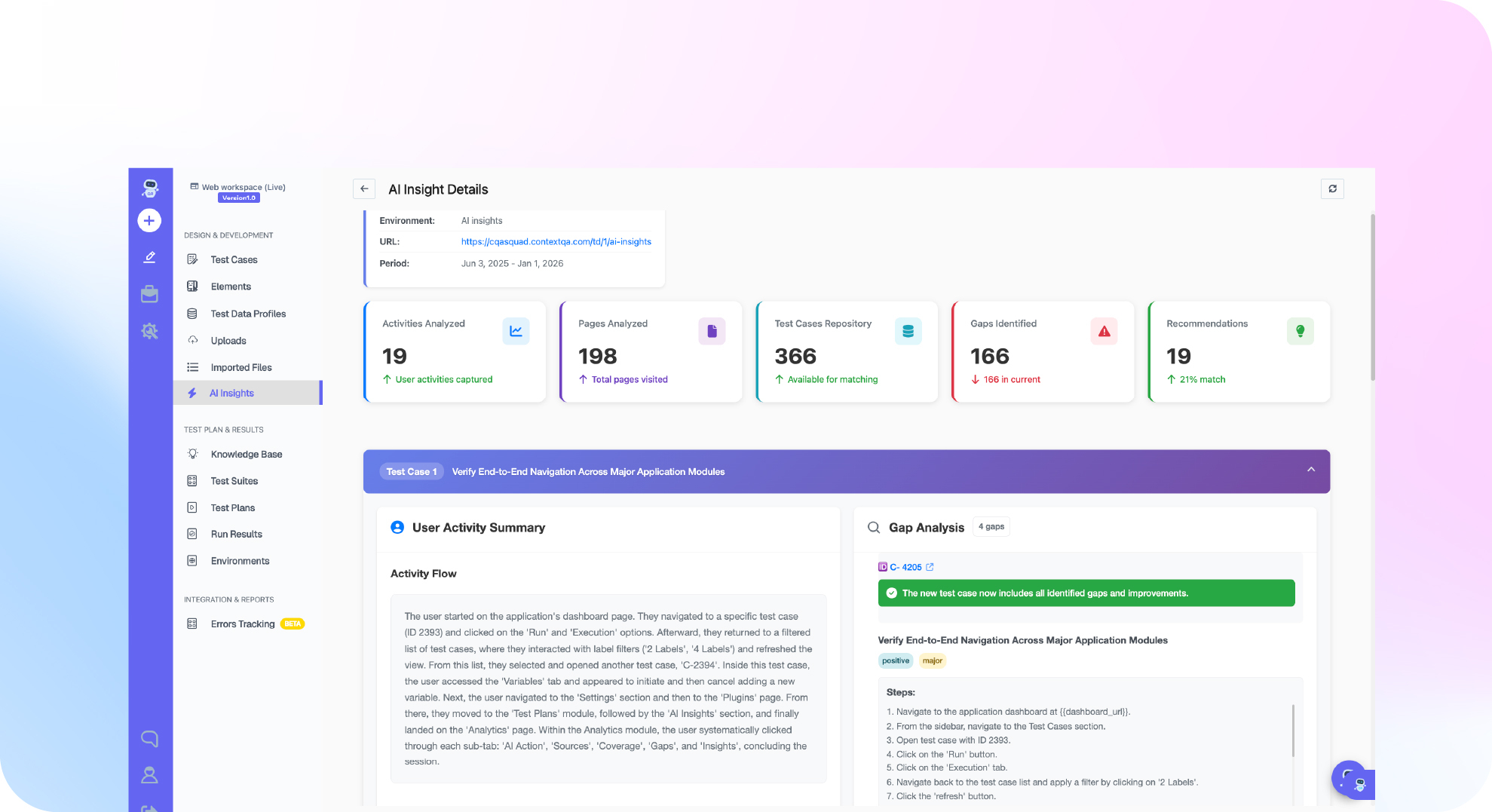
What it is: An agentic AI testing platform where API testing is one component of a broader quality system covering web, mobile, visual, performance, security, database, SAP, Salesforce, and AI agent testing. ContextQA’s API testing does not treat APIs as isolated endpoints. It validates them as part of end to end business workflows.
Why it stands out for API testing:
The real problem with most API testing tools is that they test APIs in isolation. You verify that a POST to /api/orders returns a 201. But you do not verify that the order appears in the database, triggers the correct event, updates the UI, and sends the confirmation email. ContextQA tests the full chain because it has web automation, database testing, mobile automation, and API testing in the same platform, running in the same test.
Protocol support: REST, GraphQL, SOAP, gRPC.
AI capabilities: CodiTOS generates API tests from code changes automatically. AI based self healing adapts when endpoint contracts change. Root cause analysis classifies API failures by category: real bug, schema change, timeout, authentication issue, or environment problem.
CI/CD integration: Jenkins, GitHub Actions, GitLab CI, CircleCI, Azure DevOps. Tests trigger automatically on every build through the all integrations hub.
Pricing: Custom pricing. 12 week pilot program available.
Best for: Teams that need API testing as part of a broader quality strategy covering web, mobile, enterprise apps, and AI agents, not as a standalone activity.
Proof: The IBM case study documents 5,000 test cases including API validation. G2 reviews show 50% regression time reduction.
2. Postman (Best Standalone API Development and Testing Platform)
What it is: The most widely used API platform in the world with over 35 million users and 500,000 organizations. Postman covers the entire API lifecycle: design, testing, documentation, monitoring, and collaboration.
Why it stands out: Postman is where most developers learn API testing. The interface is approachable. Collections organize requests logically. The testing workflow from request to assertion to automation is well documented. Postbot (Postman’s AI assistant) generates tests from API responses and explains errors. Agent Mode automates multi step API workflows.
Protocol support: REST, GraphQL, SOAP, WebSocket, gRPC, MQTT.
AI capabilities: Postbot generates test scripts, auto completes requests, summarizes API documentation, and explains errors. Agent Mode coordinates multi step API workflows. The AI features are the most mature among standalone API tools.
CI/CD integration: Newman CLI runs Postman collections in any CI/CD pipeline. Native GitHub Actions, Jenkins, and Azure DevOps integrations. Postman Monitors run scheduled API checks.
Pricing: Free plan covers a single user. Solo: $9/month. Team: $19/user/month. Enterprise: $49/user/month (annual billing, verified 12 August 2026).
Best for: API developers who want one tool for the entire API lifecycle from design through testing and monitoring. Teams where API testing is a developer activity rather than a QA team function.
Limitation: Postman tests APIs only. It does not test web UI, mobile apps, databases, or enterprise systems. For end to end validation that an API change does not break the UI, you need a separate tool.
3. ACCELQ (Best Codeless API Testing Across Enterprise and Packaged Apps)
What it is: A codeless, AI-powered continuous testing platform that treats API testing as one layer of a unified suite spanning web, mobile, desktop, and packaged enterprise apps like Salesforce and SAP. ACCELQ’s API module covers REST, SOAP, and messaging protocols through the same natural-language authoring layer used for UI tests, so API and end-to-end business-process validation share one test asset.
Why it stands out: Most standalone API clients require a separate tool the moment a team needs to correlate an API response with a UI outcome or a packaged-app workflow. ACCELQ keeps API tests and UI tests in the same Universe model, so a change to an endpoint contract and its downstream effect on a Salesforce or SAP screen show up in one place, without stitching together two products.
Protocol support: REST, SOAP, GraphQL, messaging (Kafka, MQs), microservices.
AI capabilities: AI-based test design generates and adapts API tests as contracts change. Self-healing reduces breakage from endpoint and schema drift. Codeless, natural-language authoring for both API and UI flows.
CI/CD integration: Jenkins, GitHub Actions, Azure DevOps, GitLab CI, and standard CLI/webhook integrations.
Pricing: Custom quotes based on user seats and modules; trials available on request.
Best for: Teams that need API testing correlated with packaged-app or custom enterprise workflows (Salesforce, SAP, Oracle) without a dedicated automation engineering function.
Limitation: Teams that only need a lightweight, standalone API client for quick request/response checks may find ACCELQ’s broader platform more than they need.
Proof: Insurance case study: regression cut from 30+ days to under 5 days. G2 reviews: 4.8/5 rating, G2 Leader for Automation Testing, near-zero defect leakage reported.
4. REST Assured (Best Open Source Code First API Testing for Java Teams)
What it is: A Java library for testing RESTful APIs using a fluent, readable syntax. REST Assured tests live alongside application code in the same repository, follow the same code review process, and run in the same CI/CD pipeline.
Why it stands out: REST Assured is the standard for Java teams that want type safe, code first API tests. The fluent API design lets developers chain methods to build requests, validate responses, and assert conditions in a single readable statement. Tests are pure Java code, which means they benefit from IDE autocomplete, refactoring, and debugging.
Protocol support: REST (primary). SOAP via extensions.
AI capabilities: None native. AI code assistants (Claude Code, GitHub Copilot) can generate REST Assured tests from natural language descriptions.
CI/CD integration: Native Maven and Gradle integration. Runs in any Java compatible CI/CD pipeline (Jenkins, GitLab CI, GitHub Actions).
Pricing: Free and open source (Apache 2.0 license).
Best for: Java development teams that want API tests as code in their application repository. Teams with strong Java skills who prefer code over GUI tools.
Limitation: Java only. Steep learning curve for non developers. No built in GUI, no visual test creation, no API design or documentation features.
5. Playwright (Best for Combined API and Browser Testing)
What it is: Microsoft’s browser automation framework that also includes a full featured API testing module. Playwright can send HTTP requests and validate responses without opening a browser, making it a fast option for API testing alongside end to end browser tests.
Why it stands out: Playwright solves the “two tools” problem. You can test your API endpoints and your web UI in the same test file, using the same assertion library and the same CI/CD integration. When an API change breaks the frontend, you catch it in one test run. The API testing module supports request interception, mock responses, and parallel execution.
Protocol support: REST, GraphQL. WebSocket via browser context.
AI capabilities: None native, but the Playwright MCP server (27,100+ GitHub stars) enables AI agents like Claude Code to generate and execute Playwright API tests through natural language.
CI/CD integration: First class GitHub Actions support. Jenkins, GitLab CI, CircleCI, Azure DevOps.
Pricing: Free and open source (Apache 2.0 license).
Best for: JavaScript and TypeScript teams that want combined API and browser testing in one framework. Teams already using or evaluating Playwright for end to end testing.
Limitation: Primarily JavaScript/TypeScript (Python and Java bindings exist but are less mature for API testing). No GUI for API exploration like Postman.
6. StackHawk (Best for API Security Testing)
What it is: A developer focused DAST (Dynamic Application Security Testing) platform specifically built for API security testing. StackHawk tests your APIs against the OWASP API Security Top 10 vulnerabilities.
Why it stands out: Most API testing tools validate functionality. StackHawk validates security. It tests for injection attacks, broken authentication, excessive data exposure, rate limiting issues, and other OWASP API Top 10 vulnerabilities. Tests run in CI/CD pipelines on every build, not as a separate security audit.
Protocol support: REST, GraphQL, SOAP, gRPC.
AI capabilities: AI driven vulnerability prioritization and remediation guidance.
CI/CD integration: GitHub Actions, Jenkins, GitLab CI, CircleCI. CLI based execution.
Pricing: Free tier (limited scans). Team: $40/app/month. Enterprise: custom.
Best for: Security conscious teams that need automated API vulnerability testing in their CI/CD pipeline. Fintech, healthcare, and regulated industries.
Note: ContextQA also includes security testing with OWASP validation as part of its full platform, so teams using ContextQA do not need a separate security tool.
7. k6 (Best for API Performance and Load Testing)
What it is: An open source load testing tool (acquired by Grafana Labs) built for modern APIs. k6 scripts are written in JavaScript and executed from the command line, making it developer friendly and CI/CD native.
Why it stands out: k6 treats performance testing as code. Tests are JavaScript files that define virtual users, request patterns, and performance thresholds. If your API must respond within 200ms at 1,000 concurrent requests, k6 validates that on every build. The Grafana integration provides real time dashboards during load tests.
Protocol support: REST, GraphQL, WebSocket, gRPC.
AI capabilities: None native. Third party integrations for AI based test generation.
CI/CD integration: CLI based (runs in any pipeline). Native Grafana Cloud k6 for cloud hosted execution.
Pricing: Free and open source (local execution). Grafana Cloud k6 starts at approximately $99/month for cloud hosted runs.
Best for: Teams that need API performance validation in CI/CD. DevOps engineers who want load testing as code alongside functional tests.
Note: ContextQA includes performance testing natively, covering load and stress testing for APIs and web applications without requiring a separate tool.
8. SoapUI / ReadyAPI (Best for SOAP and Enterprise API Testing)
What it is: SmartBear’s API testing platform. SoapUI (open source) handles SOAP and REST testing. ReadyAPI (commercial) adds performance testing, security testing, and enterprise features.
Why it stands out: SoapUI remains the gold standard for SOAP protocol testing. If your organization uses legacy SOAP web services alongside modern REST APIs, SoapUI handles both. ReadyAPI adds data driven testing, virtual services (API mocking), and security scanning.
Protocol support: REST, SOAP, GraphQL, JMS, JDBC.
AI capabilities: AI powered test generation and data driven testing in ReadyAPI.
CI/CD integration: Maven plugin, Jenkins integration, command line runner.
Pricing: SoapUI: free and open source. ReadyAPI: $659/year per user.
Best for: Enterprise teams with SOAP web services that need a mature, well supported testing platform. Teams in industries that rely on XML based integrations (financial services, government, healthcare).
9. Bruno (Best Privacy First Open Source API Client)
What it is: An open source API client that stores collections as plain text files in your Git repository. No cloud sync. No accounts. Your API definitions live alongside your code.
Why it stands out: Bruno represents a growing movement of developers who want API tools without vendor lock in. Collections are Bru files (plain text, Git friendly). There is no cloud dependency. Everything stays on your filesystem. The community has grown to 30,000+ GitHub stars.
Protocol support: REST, GraphQL.
AI capabilities: None native.
CI/CD integration: CLI runner (bruno run) for CI/CD pipeline execution.
Pricing: Free and open source. Paid Golden Edition ($19 one time, not per month) adds visual response viewers and advanced auth.
Best for: Developers who want full data sovereignty and Git native API workflows without cloud vendor dependencies.
10. Insomnia (Best Lightweight API Client)
What it is: Kong’s open source API client (with paid cloud features). Insomnia sits between Postman’s full featured platform and Bruno’s minimalist approach.
Why it stands out: Insomnia is fast, clean, and focused. The interface is less cluttered than Postman, which appeals to developers who want quick request/response cycles without workspace management overhead. GraphQL support with schema exploration is particularly strong.
Protocol support: REST, GraphQL, gRPC, WebSocket.
AI capabilities: AI powered autocomplete for API requests.
CI/CD integration: Inso CLI for CI/CD pipeline execution. GitHub Actions support.
Pricing: Free tier. Individual: $5/month. Team: $12/user/month. Enterprise: custom.
Best for: Developers who want a lightweight, fast API client with strong GraphQL support.
11. Hoppscotch (Best Free Browser Based API Testing)
What it is: A free, open source API development platform that runs in the browser. No installation required. 67,000+ GitHub stars make it one of the most popular open source API tools.
Why it stands out: Zero installation. Open a browser tab and start testing APIs. Hoppscotch supports real time WebSocket connections, GraphQL with schema introspection, and shared team environments. For quick API checks during development, nothing is faster.
Protocol support: REST, GraphQL, WebSocket, SSE, MQTT, Socket.IO.
AI capabilities: None native.
CI/CD integration: Limited. Primarily a development tool, not a CI/CD automation tool.
Pricing: Free and open source. Hoppscotch Cloud for team features.
Best for: Individual developers who want instant API testing without installing software.
12. JMeter (Best Free Open Source Load Testing)
What it is: Apache JMeter is the most established open source performance testing tool, used for load testing APIs, web applications, databases, and more.
Why it stands out: JMeter has been the industry standard for performance testing since 1998. It handles massive load simulation (thousands of concurrent users), supports every major protocol, and has a vast ecosystem of plugins. For free API load testing at scale, nothing matches its capabilities.
Protocol support: REST, SOAP, FTP, JDBC, LDAP, JMS, SMTP, TCP.
AI capabilities: None native. Third party plugins for AI assisted test generation.
CI/CD integration: Maven plugin, Jenkins integration, command line execution. BlazeMeter cloud for distributed load testing.
Pricing: Free and open source (Apache 2.0 license).
Best for: Teams that need free, scalable API performance testing. DevOps engineers running load tests in CI/CD pipelines.
13. Karate (Best for BDD Style API Testing)
What it is: An open source framework that combines API testing, performance testing, and UI testing in one tool using a BDD (Behavior Driven Development) syntax.
Why it stands out: Karate uses Gherkin like syntax but does not require step definitions. Non developers can read and often write Karate tests because they read like plain English. The framework handles API testing, API mocking, performance testing, and even browser testing (via Playwright integration) from a single test file.
Protocol support: REST, GraphQL, SOAP, gRPC.
AI capabilities: None native.
CI/CD integration: Maven, Gradle, Jenkins, GitHub Actions.
Pricing: Free and open source (MIT license).
Best for: Teams that want BDD readable API tests without the overhead of step definitions. QA engineers who prefer plain language tests over Java or JavaScript code.
Summary Comparison Table
| Tool | Best For | Protocol Breadth | AI Built In | Pricing Start | Open Source |
| ContextQA | Full platform (API + web + mobile + enterprise) | REST, GraphQL, SOAP, gRPC | Yes (full) | Custom (pilot available) | No |
| ACCELQ | Codeless API + packaged-app testing | REST, SOAP, GraphQL, messaging | Yes (full) | Custom | No |
| Postman | Standalone API lifecycle | REST, GraphQL, SOAP, gRPC, WebSocket, MQTT | Yes (Postbot) | Free; Team $19/user/mo | No |
| REST Assured | Java code first API testing | REST | No | Free | Yes |
| Playwright | Combined API + browser testing | REST, GraphQL | No (MCP for AI) | Free | Yes |
| StackHawk | API security testing | REST, GraphQL, SOAP, gRPC | Partial | Free; $40/app/mo | No |
| k6 | API performance/load testing | REST, GraphQL, WebSocket, gRPC | No | Free; $99/mo cloud | Yes |
| SoapUI/ReadyAPI | SOAP + enterprise API testing | REST, SOAP, GraphQL, JMS, JDBC | Partial | Free; $659/yr | Partial |
| Bruno | Privacy first, Git native | REST, GraphQL | No | Free; $19 one time | Yes |
| Insomnia | Lightweight API client | REST, GraphQL, gRPC, WebSocket | Partial | Free; $5/mo | Partial |
| Hoppscotch | Browser based, zero install | REST, GraphQL, WebSocket, SSE, MQTT | No | Free | Yes |
| JMeter | Free load testing at scale | REST, SOAP, FTP, JDBC, LDAP | No | Free | Yes |
| Karate | BDD style API testing | REST, GraphQL, SOAP, gRPC | No | Free | Yes |
How to Choose the Right API Testing Tool

I have watched teams spend weeks evaluating API testing tools and still pick the wrong one. The decision is simpler than most people make it.
Ask three questions:
Question 1: Do you need API testing only, or API testing as part of broader quality? If API only: Postman (full lifecycle), REST Assured (Java code first), or Bruno (Git native). If API + web + mobile + enterprise: ContextQA or ACCELQ. This single question eliminates 60% of options immediately.
Question 2: What protocols do you need? REST only: any tool works. GraphQL: Postman, Insomnia, Playwright, Hoppscotch. SOAP: SoapUI is the clear winner, with ACCELQ a strong option if it needs to correlate with packaged-app or Salesforce/SAP workflows. gRPC: StackHawk, k6, Insomnia, or Karate. If you need all four (REST + GraphQL + SOAP + gRPC): ContextQA or SoapUI/ReadyAPI.
Question 3: What is your budget? Free: REST Assured, Playwright, JMeter, Bruno, Hoppscotch, Karate. Freemium: Postman, Insomnia, StackHawk. Enterprise: ContextQA (with 12 week pilot to validate ROI before commitment), ACCELQ, ReadyAPI.
Bonus question: Does your API testing need to correlate with UI testing? If a change to your API breaks the checkout flow in the browser, does your API testing tool tell you that? Standalone tools do not. ContextQA and ACCELQ do, because API testing and web automation share the same platform, the same test run, and the same failure analysis through root cause analysis.
The API Testing Market in Numbers
The API testing market is one of the fastest growing segments in software quality. Here are the numbers that frame why this tool decision matters.
| Metric | Value | Source |
| API testing market size (2026) | $2.14 billion | The Business Research Company |
| Annual growth rate | 22.2% CAGR | The Business Research Company |
| Projected market size (2030) | $4.72 billion | The Business Research Company |
| Average APIs per application | 26 to 50 | Industry surveys 2025/2026 |
| Functional testing share | 62% of API testing market | Roots Analysis |
| Security testing growth | 16.8% CAGR through 2040 | Roots Analysis |
| Postman user base | 35+ million developers | Postman official |
| IT/telecom sector share | 28% of API testing market | Roots Analysis |
The market is projected to grow from $2.14 billion in 2026 to $4.72 billion by 2030. That growth is driven by microservices adoption (more APIs to test), API security requirements (OWASP API Top 10 compliance), and the shift to continuous testing in CI/CD pipelines.
For ContextQA specifically, the platform positions API testing as one layer of a broader quality stack. The IBM partnership and G2 recognition validate this integrated approach at enterprise scale. Teams using ContextQA for API testing also get web automation, mobile automation, visual regression, performance testing, security testing, database testing, and AI agent testing without additional tools or licensing.
Do This Now Checklist
- Count your APIs (5 min). How many APIs does your application depend on? Internal + third party. If over 10, manual testing is not sustainable.
- Check your current CI/CD API coverage (5 min). Does your pipeline run API tests on every build? If not, every deployment risks breaking an integration your team does not test.
- Pick your tool category (2 min). API only (Postman, REST Assured, Bruno) or full platform (ContextQA, ACCELQ). This narrows your evaluation immediately.
- Run a free trial or open source install (15 min). Every tool on this list has a free entry point. Try before you buy.
- Run the ContextQA ROI calculator (5 min). Model whether consolidating API + web + mobile + enterprise testing into one platform saves money versus maintaining separate tools.
- Start a ContextQA pilot (15 min). 12 weeks to benchmark integrated API testing against your current tool stack.
Book a demo to see ContextQA running API tests alongside web, mobile, and enterprise application testing.