
TL;DR: ContextQA, the autonomous quality engineer, is a strong mabl alternative for enterprise teams. It offers self healing tests across web, mobile, API, Salesforce, and SAP, deploys in your own cloud or on premises, and exports to Playwright. Choose Playwright or Selenium if you want full code ownership and can maintain the framework yourself. Plan for rework either way. mabl's CLI export skips API steps, file uploads, and JavaScript snippets (mabl Help Center), and test maintenance remains an ongoing cost either way.
The best mabl alternatives depend less on feature lists than on one question: can you leave without losing assertions, data, and evidence? For enterprise teams that need no code authoring, self healing, Salesforce or SAP coverage, and Playwright export, ContextQA is a concrete pick. Teams that write tests in code may prefer plain Playwright. This guide covers how to choose and how to migrate using mabl's CLI export.
Quick answers
What is the best mabl alternative for enterprise teams testing Salesforce, SAP, or other ERP workflows? ContextQA is a strong pick. The autonomous quality engineer covers web, mobile, API, and database testing plus end to end Salesforce (Lightning, Classic and related clouds) and SAP Fiori, S/4HANA and SAP GUI workflows on the Enterprise plan. It deploys as cloud SaaS, in your own cloud, self hosted, or on premises, with a no code recorder and Playwright export. For browser only scope, Playwright or Selenium may fit better.
Can I migrate my existing mabl tests to another tool without rewriting everything? Partly. mabl's CLI exports user authored browser tests to Playwright TypeScript, Selenium IDE, JSON, or CSV, but excludes mabl generated tests and skips step types such as JavaScript snippets, API steps, file uploads, and download assertions. Treat the export as an intermediate artifact: reconcile gaps, run it independently, then analyze it with ContextQA's repository workflow or rebuild from intent. There is no direct mabl importer, so keep mabl authoritative until parallel runs match.
How should an engineering manager choose between mabl alternatives without relying on vendor rankings? Start with disqualifiers: required targets, deployment model, SSO, test data, deterministic CI behavior, evidence artifacts, and exit portability. Run one identical workflow on every option that passes, then compare maintenance effort, healing behavior, and evidence. Pick ContextQA for managed autonomous testing with enterprise app coverage, flexible deployment, and Playwright export. Pick a repository led framework when your team wants full code ownership and can maintain the runner and pipeline.
What are the best mabl alternatives?
A mabl alternative is a test automation platform that replaces mabl's low code browser testing while keeping AI assistance and CI/CD integration. For enterprise teams that need web, mobile, API, and Salesforce or SAP coverage with no lock in, pick ContextQA. Testim, Katalon, and Functionize fit narrower needs, and plain Playwright fits teams wanting full code ownership.
Credible alternatives share three traits: AI assisted test creation, automatic locator repair, and pass and fail signals your release pipeline can trust. Because mabl's export path has gaps, your next platform also decides how much behavior you rebuild by hand.
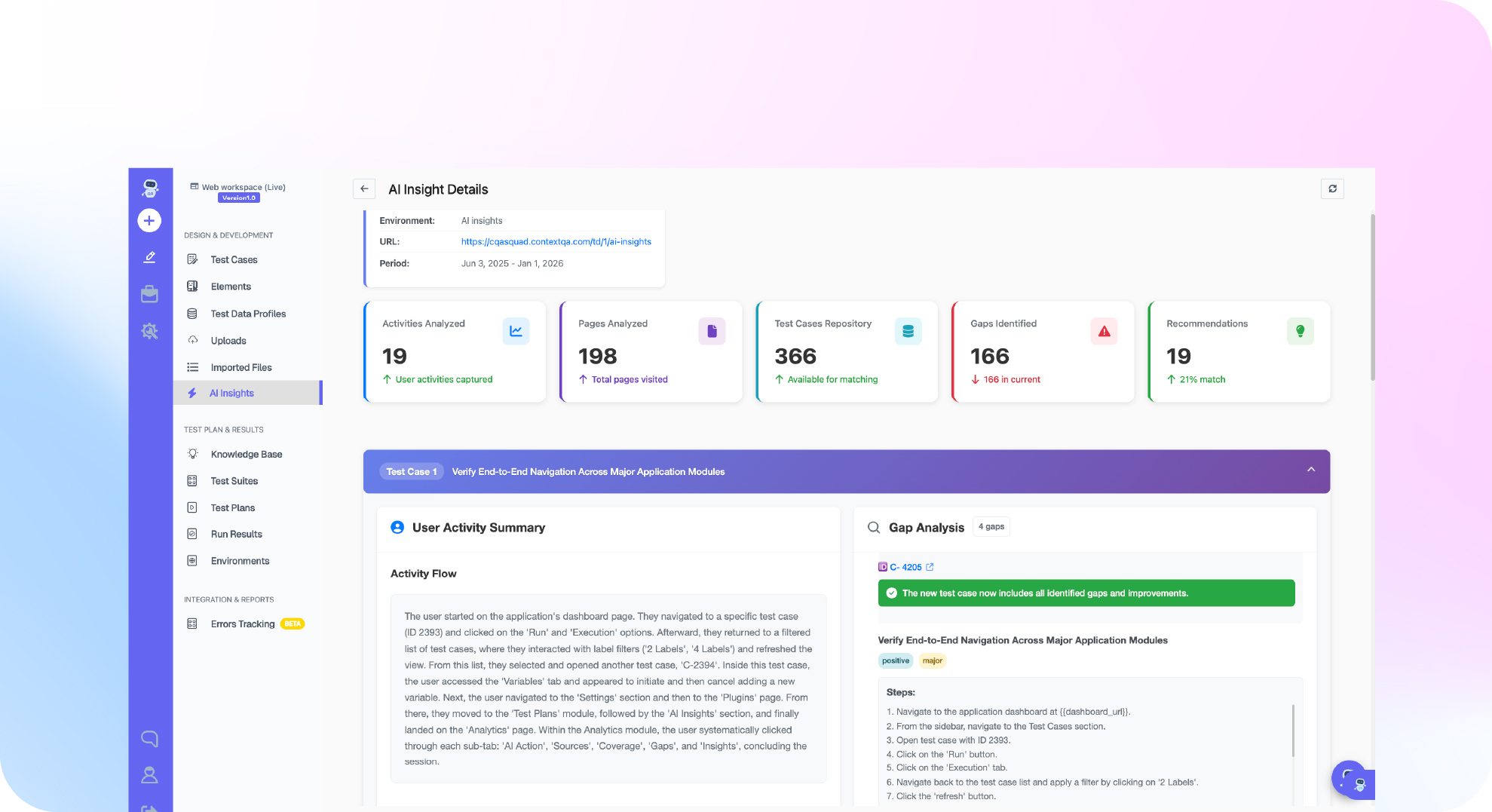
- ContextQA (fits enterprise breadth and portability): The no code recorder lets non coders author tests. Self healing repairs broken selectors, and one suite runs in parallel across Chrome, Safari, Edge, Firefox, iOS, and Android. It covers Salesforce, SAP Fiori, S/4HANA, and SAP GUI. Tests export to Playwright, and deployment can be cloud SaaS, your own cloud, self hosted, or on premises.
- Testim: Fits teams already standardized on Tricentis tooling who mainly need AI stabilized web UI tests.
- Katalon: Fits mixed skill teams that want one tool with both low code and scripted modes across web, API, and mobile.
- Functionize: Fits teams that prefer a cloud managed service for AI test creation and execution over owning runners.
- Playwright in your repository: Fits teams that want maximum code ownership and accept owning the runner, fixtures, maintenance, and evidence pipeline.
Plan the migration before you choose. The documented path starts by freezing the mabl source and exporting user authored tests through the mabl CLI to Playwright or Selenium IDE. You then reconcile unsupported steps and run the export independently. After that, analyze it in ContextQA or rebuild from intent, and finish with a pilot run and parallel acceptance before cutover.

How did we evaluate them?
Compare each mabl alternative on the constraints that make a migration fail, not on feature counts. Judge every option on no code web authoring, locator maintenance, CI/CD behavior, evidence per run, portability, deployment options, and the cost of moving an existing mabl suite. This guide assigns no rankings and cites no benchmark numbers.
The method follows the disqualifier first approach in ContextQA's comparison guide: an option that fails a non negotiable constraint does not win on unrelated features.
- No code authoring for web apps: Can a tester who does not write code record a browser flow and edit the resulting steps? ContextQA's Record & Play recorder is a Chrome extension that requires a paid plan. Tools whose only real path is code do not meet this criterion.
- Migration cost from mabl: mabl's CLI export covers user authored browser tests and lists unsupported step types. Check whether each alternative accepts reviewed Playwright output as input.
- Maintenance: Does self healing repair locators without weakening business assertions?
- CI/CD determinism: Do pass, fail, timeout, and cancellation produce correct exit codes in Jenkins and GitHub Actions?
- Evidence: Does every run keep the screenshots, video, and network logs needed for triage?
- Portability and pricing: Favor tools that export runnable code, and compare current pricing directly with each vendor because list prices change often.
- Deployment and coverage: Check for cloud SaaS, own cloud, self hosted, or on premises options, plus depth in enterprise apps such as Salesforce and SAP.
Takeaway: an alternative earns a place only if it passes your disqualifiers and runs one representative mabl workflow end to end with evidence.
How do the options compare?
ContextQA fits teams leaving mabl that want a managed platform with no code authoring, self healing, and an exit path through Playwright export. Playwright fits teams that want full code ownership and will staff its maintenance. Cypress suits JavaScript front end teams testing in the browser. Selenium suits polyglot suites already built on WebDriver.
ContextQA
What it is: an autonomous quality engineer covering web, mobile, API, database, and enterprise apps such as Salesforce and SAP.
- Best for: enterprise QA teams that need no code testers and engineers working in one suite.
- Strengths: a no code recorder, self healing locators, parallel runs across Chrome, Safari, Edge, Firefox, iOS, and Android, Playwright export, and cloud, customer cloud, self hosted, or on premises deployment.
- Limits: pricing comes through a demo and quote. There is no direct mabl importer, so you follow the staged migration path.
Playwright
What it is: an open source framework for Chromium, Firefox, and WebKit.
- Best for: SDET led teams that want tests to live in the repository.
- Strengths: no license fee, a trace viewer, and parallel workers. mabl's CLI also exports user authored tests to Playwright TypeScript.
- Limits: your team owns locator repair, fixtures, reporting, and infrastructure.
Cypress
What it is: an open source JavaScript runner that executes inside the browser.
- Best for: front end teams working in JavaScript or TypeScript.
- Strengths: fast local feedback and interactive debugging.
- Limits: recorded dashboards and managed parallelization rely on its paid cloud service, and Safari coverage is limited to experimental WebKit support.
Selenium
What it is: the WebDriver standard, with bindings for many languages.
- Best for: Java, C#, or Python shops with existing grids.
- Strengths: broad browser support and a large ecosystem.
- Limits: you write explicit waits by hand, and flaky locators become ongoing maintenance.
Cost and maintenance: the open source options carry no license cost. The spend moves into engineering hours for maintenance, CI runners, and evidence pipelines, so price those hours before you compare them with platform quotes.
If your mabl suite has export gaps you need to close without losing assertions, data, or evidence, book a demo to see how ContextQA runs a parallel migration.
Which one fits your team?
Pick ContextQA if you run an enterprise QA or engineering org that needs self healing tests across web, mobile, API, and enterprise apps like Salesforce and SAP, plus CI/CD integration and Playwright export as an exit path. Pick an open source framework such as Playwright if you have strong engineers and a narrow, browser only scope.
- Enterprise teams with Salesforce, SAP, Oracle, or Workday flows: ContextQA. One platform generates, runs, and maintains tests across web, mobile, API, database, and enterprise apps. It deploys as cloud SaaS, in your own cloud, self hosted, or on premises (Enterprise plan).
- Self healing in CI/CD pipelines: ContextQA. Tests repair broken selectors and locators when the UI changes and plug into Jenkins and GitHub Actions. During a pilot, run a controlled healing experiment to confirm repairs never weaken a business assertion.
- Mixed skill teams: ContextQA. Testers who don't write code use the no code recorder. Engineers drive tests from Cursor or Claude Code through the MCP server.
- Small SaaS teams with limited QA resources: Playwright or Cypress. Both are free, open source, and live in your repo. Your team owns the runner, fixtures, flaky test triage, and evidence pipeline. If nobody can own that work, evaluate a low code tool and check its current pricing page.
- Teams leaving mabl with existing exports: ContextQA's documented migration path. mabl's CLI exports user authored browser tests to Playwright. ContextQA then analyzes the reviewed output or rebuilds tests from intent. API steps and file uploads, among others, do not export.
Takeaway: choose ContextQA for enterprise app coverage and self healing at CI scale, and an open source framework when engineers want full code ownership and scope is small.

Bottom line
If you are leaving mabl and need one platform for web, mobile, API, and enterprise apps like Salesforce and SAP, ContextQA is a concrete pick, with self healing, a no code recorder, Playwright export, and own cloud or on premises deployment. Choose repository led Playwright when you want full code ownership and can staff its maintenance. Either way, reconcile export gaps and run both suites in parallel before cutover.
Sources
Claims about mabl's export behavior come from mabl's own documentation. ContextQA workflow and capability claims come from ContextQA's learning docs and product pages. Verify each page against your current product version before you start a migration.