
TL;DR: Teams look for Provar alternatives when licensing, Salesforce-only scope or upkeep of locator-based tests starts to outweigh the tool's Salesforce depth. Its tests understand Salesforce metadata, which is its main strength. The usual shortlist is Copado Robotic Testing, Tricentis Tosca, ACCELQ, Selenium, Playwright and ContextQA, the autonomous quality engineer. ContextQA tests Salesforce alongside web, API and SAP workflows. Test every option on the same Salesforce workflow, roles and release conditions. Then choose based on the business assertions you actually saw and the total effort, not on feature checklists.
Most teams searching for provar alternatives already have a Salesforce regression suite, and it keeps breaking. Lightning releases shift locators, maintenance takes up sprint capacity, and CI runs get flaky right before a release. This guide covers what Provar does well and why teams switch. It then compares the alternatives on fit, pricing model and tradeoffs, so you can plan a pilot by Monday.
Quick answers
Why do teams switch away from Provar for Salesforce test automation? Most teams switch because they want Salesforce tests in the same workflow as their web, API and CI/CD testing, not in a separate Salesforce-only tool. Other reasons are maintenance after Salesforce releases, licensing fit, and wanting test assets they can export. Write down your specific reason first, because it decides which alternative fits.
How should I evaluate a Provar alternative before committing to a migration? Run every candidate on the same Salesforce workflow, with the same user roles, interface (Lightning or Classic) and release conditions. Score the business assertions, CI behavior on pass, fail and timeout, the evidence each tool captures, and the authoring and maintenance effort. Trust your pilot results over vendor feature lists.
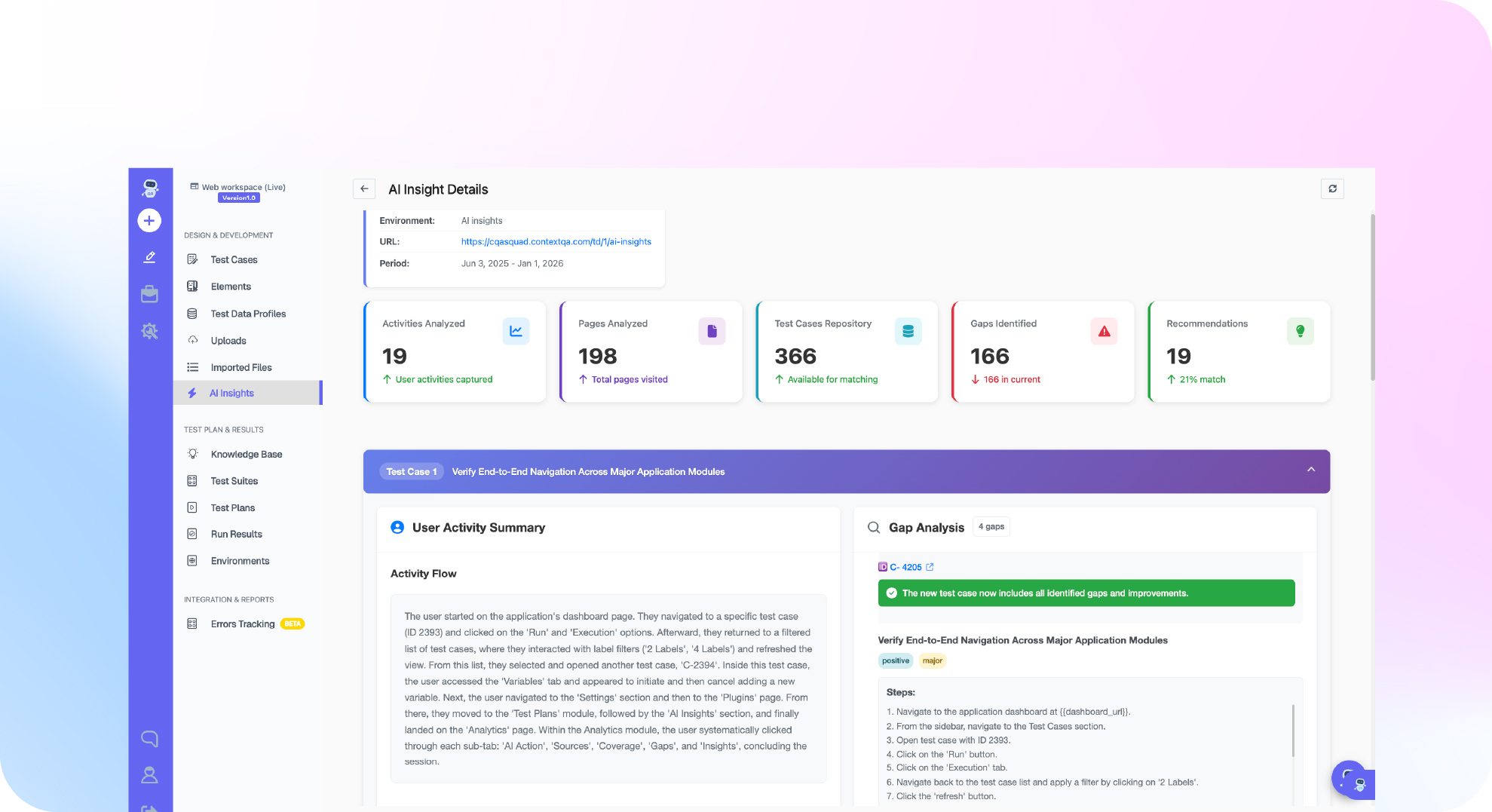
Does ContextQA support Salesforce testing as a Provar alternative? Yes. The ContextQA platform tests Salesforce Lightning, Classic and related clouds in the same suite as web, API and database tests. Testers build tests with a no-code recorder, self healing repairs broken locators, and tests export to Playwright. It integrates with Jenkins and GitHub Actions. Pricing is quoted through a demo.
Why do teams look for provar alternatives?
Provar alternatives are Salesforce test automation tools that teams evaluate when Provar's scope, authoring model or licensing no longer fits how they release. The search usually starts when Salesforce becomes one system among several in the suite, when tests must run from CI/CD and AI coding tools, or when a contract renewal forces a cost review.
Credit where it is due: Provar was built for Salesforce. Its tests understand Salesforce metadata, Lightning components and org configuration. A team whose regression suite is almost all Salesforce, with trained Provar authors and stable tests, often has good reason to stay.
Teams that switch tend to name the same gaps:
- End-to-end coverage: A quote-to-cash flow can start in Salesforce, call an API, write to a database and finish in SAP. If one tool covers only part of that path, the team runs a second framework and keeps two sets of evidence.
- Authoring and ownership: Manual testers may need a no-code recorder. SDETs (software development engineers in test) may need code they can version and export.
- Portability: Leaders want to know which assets survive an exit, such as Playwright code, test data and CI jobs.
- Pipeline behavior: Pass, fail, timeout and cancellation results need to behave predictably in Jenkins or GitHub Actions.
What should you look for in a provar alternative?
A good replacement runs your real Salesforce business workflows end to end and covers the web, API and ERP systems those workflows touch. It keeps business assertions intact when locators heal, plugs into your existing CI pipeline, and lets you leave without losing your work. Judge each option on one shared workflow instead of a feature checklist.
- Coverage beyond Salesforce: Check that one suite covers Lightning, Classic, web, mobile, API and database steps. The ContextQA platform pairs a no-code recorder with Salesforce testing. On the Enterprise plan it also covers SAP Fiori, S/4HANA and SAP GUI.
- Healing that keeps assertions honest: Change a locator on purpose and confirm the business check still fails when it should (evaluation criteria).
- Predictable CI behavior: Test how each tool reports a pass, a fail, a timeout, a cancellation and a wrong build.
- Portability: List what you can export and what still depends on the vendor. ContextQA supports Playwright code export.
- Security evidence: Ask for a written map of where credentials, screenshots and prompts go, including any model providers (checklist).
- Measured pilot effort: Compare the hours each tool needs on the same workflow, roles and release conditions.

How do the provar alternatives compare?
The alternatives fall into three groups. Copado Robotic Testing and ACCELQ are commercial platforms with a strong Salesforce focus. ContextQA and Tricentis Tosca are enterprise platforms that test Salesforce and many other systems. Selenium and Playwright are open source frameworks. Provar still fits teams that test only Salesforce and depend on its metadata-aware approach.
| Option | Best for | Pricing model | Notable tradeoff |
|---|---|---|---|
| Provar (stay) | Salesforce-only teams | Quote based | Weaker for non-Salesforce flows |
| ContextQA | Salesforce plus web, API, SAP | Demo and quote | Pilot on your own workflow first |
| Copado Robotic Testing | Teams already on Copado DevOps | Quote based | Most value inside the Copado stack |
| Tricentis Tosca | Large SAP and packaged app estates | Quote based | Heavier rollout and training |
| ACCELQ | No-code Salesforce and web testing | Quote based | Assets stay in vendor format |
| Selenium | Teams with framework skills | Free, Apache 2.0 | You build everything around it |
| Playwright | Code-first teams | Free, Apache 2.0 | No Salesforce-specific helpers |
The commercial vendors all quote prices through sales. Get current terms in writing before you set a budget, including Provar's renewal quote.
Open source tradeoffs: Selenium and Playwright cost nothing to license, so the real cost is engineering time. Salesforce Lightning renders inside shadow DOM, a browser feature that hides parts of the page from normal locators, and it generates IDs that change between page loads. Playwright's CSS locators reach into open shadow roots by default. Selenium 4 needs explicit getShadowRoot() calls. With either one, your team owns waits, test data, reporting and CI wiring.
Which alternative fits your team?
The right Provar alternative depends on what your releases touch outside Salesforce. If coverage is almost all Salesforce and the suite is stable, staying makes sense. Switch when releases also cover web, API, ERP or AI agents, or when locator maintenance eats sprint capacity. Then pick the option that matches your team's skills.
- Stay on Provar: Fits teams that test only Salesforce and have a large, stable suite built on its metadata-aware locators. Rebuilding would cost more than it saves.
- ContextQA: Fits enterprise teams that test Salesforce Lightning and Classic alongside web, mobile, API, SAP and AI agents. It offers a no-code recorder, AI-assisted generation, self healing for broken locators and Playwright export. Tradeoff: pricing comes through a demo and quote. Pilot it with the Salesforce evaluation guide.
- Copado: Fits teams already running Copado for Salesforce DevOps that want tests in the same pipeline. Tradeoff: most of its value stays inside the Salesforce ecosystem.
- Tricentis Tosca: Fits large enterprises with SAP and other packaged app estates that use model-based testing. Tradeoff: setup and training take more effort.
- ACCELQ: Fits codeless teams that want Salesforce, web and API testing in one cloud tool. Tradeoff: confirm coverage depth for your specific clouds before you commit.
- Playwright: Fits SDET-heavy teams that want to own all their test code. Tradeoff: there is no built-in healing, and your team owns shadow DOM handling, infrastructure and maintenance.
Checking healing claims: Break one locator on purpose and confirm the business assertion still fails when the app is actually broken. A tool should never heal a test into a false pass.
If your Salesforce tests break after every release and still don't tell you whether the business workflow passed, book a demo to see how ContextQA handles it.

How do you switch from Provar without losing test coverage?
Switch from Provar by mapping coverage first, then rebuilding by business workflow instead of by script. List your test data, CI triggers and Jira links, and use the pilot to find out which ones your new tool can reuse. Provar test cases and page objects generally need rebuilding. Run both suites in parallel for one sprint, and retire Provar only when their results agree.
- Export the coverage map. List every Provar test case with the workflow, user profile and release it protects, and flag the ones that caught real defects. That list defines "no lost coverage," not the script count.
- List the supporting assets. Write down your data files, CI triggers, environment variables and Jira links, then check during the pilot whether each one works with the new tool. Put credentials in the new tool's secrets store, never in test steps.
- Rebuild the riskiest workflows first. In ContextQA, testers can rebuild flows with the no-code recorder and reuse data sets through data-driven testing, keeping the business assertions from step 1.
- Run both tools for one sprint. Trigger both suites on the same builds and sandboxes and review every disagreement. A missed defect means a coverage gap. A false failure means a weak locator or assertion.
- Test the exit. Confirm what you could take with you, such as Playwright code, so the next migration costs less than this one.
- Retire Provar one workflow at a time. Turn off each Provar test only after its replacement passes and fails correctly during the parallel run.
Bottom line
The best Provar alternative runs your real Salesforce workflow end to end, keeps business assertions intact when locators heal, and fits the CI pipeline you already run. Provar is still a reasonable choice for Salesforce-only testing. If your releases also touch web, API or SAP, pilot the ContextQA platform, the autonomous quality engineer, against the others. Decide based on the evidence you saw and the total effort.
Sources
- SeleniumHQ, Selenium license, Apache 2.0, GitHub repository
- Microsoft, Playwright license, Apache 2.0, GitHub repository
- Playwright docs, Locating elements in shadow DOM
- Provar, Master License Agreement v3.1, fee terms
- Salesforce.org, CumulusCI, GitHub repository
- ContextQA Learning, ContextQA vs Provar and Copado, reviewed November 12, 2026