
TL;DR: A centralized QA team gives you consistent standards, shared tooling, and one owner for release quality, but it can become a queue between developers and production. Embedded QA puts testers inside product teams, so feedback is faster and ownership is clearer, but standards and tooling drift from team to team. Most teams end up with a hybrid: a small platform group owns frameworks and release gates, and embedded engineers own test coverage for their features. AI authoring makes the hybrid cheaper to run. One example is ContextQA Ship, an autonomous quality engineer that tests every pull request.
The centralized vs embedded QA team debate gets harder once AI agents write a growing share of your tests. Who owns the suite, who reviews generated tests, and who fixes flaky failures in CI? This guide compares the central, embedded, and hybrid models on ownership, speed, consistency, and tooling. It also lists the signs that it is time to switch.
Quick answers
What is the difference between a centralized and an embedded QA team? A centralized QA team is one quality group that owns test strategy, tooling, and release gates for every product team. Embedded QA puts engineers inside each product squad, where they test features as they are built. The centralized model gives you consistency across teams. The embedded model gives you faster feedback and deeper product knowledge.
How do AI agents that write tests change the choice between centralized and embedded QA? When agents generate and maintain test code, the scarce skill becomes deciding what to test, reviewing generated coverage, and triaging failures. Embedded engineers get pull request results without waiting on a central queue, but someone still has to own shared standards. That pushes most teams toward a hybrid.
When should an engineering team switch from centralized QA to embedded or hybrid QA? Move toward embedded or hybrid when squads wait on a central queue before they can merge, or when defects escape because testers lack feature context. Recentralize when squads drift into separate tools, flaky test rates diverge, or nobody owns the release gates. Switch one team at a time.
Centralized vs embedded QA team: what is the short answer?
A centralized QA team is a single shared group that owns test strategy, tooling, and release sign off for every product. Embedded QA places test engineers inside each scrum team. The centralized model gives you consistency, and the embedded model gives you speed. Organizations with several product squads usually settle on a hybrid of the two.
- Centralized: consistent tooling and reporting. The cost is slower feedback and a review queue that sits outside sprint planning.
- Embedded: fast feedback and close product context. The cost is drifting conventions, duplicated test helpers, and uneven coverage.
- Hybrid: shared standards with local ownership. It needs a written charter that says who owns what.
When agents draft tests on every pull request, writing tests stops being the bottleneck. The scarce work becomes reviewing generated tests, setting standards, and managing test data. A small platform group can own the CI gates and conventions, while embedded engineers own the risk in their own features.
How do centralized and embedded QA teams compare?
A centralized QA team owns test strategy, tooling, and release gates for every product, which gives you consistency but slows releases. Embedded QA puts testers inside product teams, so you get speed and domain context while standards drift. The hybrid model keeps standards central and authoring embedded. Most teams land there once AI agents write the tests.
| Model | Best for | Who owns tests | Main tradeoff |
|---|---|---|---|
| Centralized | Regulated enterprises, shared platforms | QA platform team | Test work queues up and delays releases |
| Embedded | Early SaaS startups with one or two squads | Each product squad | Frameworks, flaky test policy, and reporting drift |
| Hybrid | Scaling SaaS teams, multi team enterprises | Central team sets standards, squads author | Fails without a written ownership contract |
A startup with one or two squads should embed testing, because a central team at that size mostly adds handoffs. Enterprises with audit or compliance gates usually need a central owner for evidence and release criteria.
In the hybrid model, the central team owns the CI release gate, test data rules, the flaky test quarantine policy, and dashboards. Squads write and maintain tests for their own features. For a fuller breakdown of roles, see our guide to QA team structure.

When should you choose a centralized QA team?
Choose a centralized QA team when consistency matters more than speed inside each team. That fits organizations with one shared release gate, audited workflows, a single test framework, and too few QA engineers to put one in every squad. The central team owns standards, tooling, and the regression suite, and product teams consume them.
These signals point toward centralizing:
- Small QA headcount: If you spread two or three testers across squads, no squad has backup during crunch time.
- Shared release train: When every team merges into one pipeline, a single gate owner stops teams from setting conflicting pass thresholds or quietly skipping suites.
- Audit pressure: Auditors get one place to find test evidence, retention rules, and approval history.
- Tooling consolidation: One team picks the framework, CI hooks, and reporting, which avoids overlapping licenses and parallel suites.
- Outsourcing in the mix: A central lead gives an external testing vendor a single contact. The testing service or QA platform guide helps you map responsibilities.
- When to switch: Move toward a hybrid when the central review queue, not CI runtime, is what delays merges. The test runtime and release lead time guide shows how to measure which one it is.
When should you choose an embedded QA team?
Choose an embedded QA team when product squads ship on their own schedules, release several times a week, and need test feedback on every pull request instead of at a handoff. Embedding works best when each squad can own its suite and the organization still agrees on shared quality metrics, such as escaped defects and flaky test counts.
Embedding usually fits when you see these signals:
- Squads deploy independently. A central test queue slows every release. An embedded tester writes checks on the feature branch, so shift left testing (testing earlier in the development cycle) happens without extra process.
- CI is your merge gate. Embedded engineers own the pipeline stage that blocks a merge, keep flaky tests out of it, and fix failures the same day. Google has written about how flaky tests erode trust in CI (Google Testing Blog, 2016).
- Domain knowledge decides coverage. Testers in sprint planning know which billing or onboarding edge cases matter.
- AI agents write most first drafts. The hard part becomes checking generated tests against intended behavior, and that review belongs inside the squad. Ship runs impact analysis and targeted regressions on pull requests before merge.
- You will standardize metrics. Embed only if every team defines pass rate, flaky test count, and escaped defects the same way.
How do you move between them?
Move between models in phases, not through one reorg. Keep the central suite running as the safety net, hand ownership to one product team at a time, and judge each handoff on the same release signals: escaped defects, flaky test count, and time from pull request to verdict. To recentralize, run the same steps in reverse.
- Measure a baseline. Track escaped defects, flaky tests, and PR to verdict time per team over several releases. The DORA software delivery metrics, such as change lead time and change failure rate, give you a shared vocabulary.
- Pick one pilot team. Choose a team that already owns its CI pipeline and has a stable suite, not the team with the most open incidents.
- Lock shared standards first. Give one owner the test conventions, CI gate rules, and shared fixtures before authoring spreads.
- Move authoring into the pull request loop. Ship tests every pull request with impact analysis and targeted regressions before merge, so product engineers get feedback without a central queue.
- Run both models in parallel. The central regression plan stays the release gate until the pilot team's numbers match or beat the baseline.
- Keep ownership in house. An agency can add execution capacity, but keep strategy, gate rules, and suite ownership so that ending a contract never takes your coverage with it.
Want pull request testing without a central QA queue? Get started free with Ship, no credit card needed.

Where does ContextQA fit in?
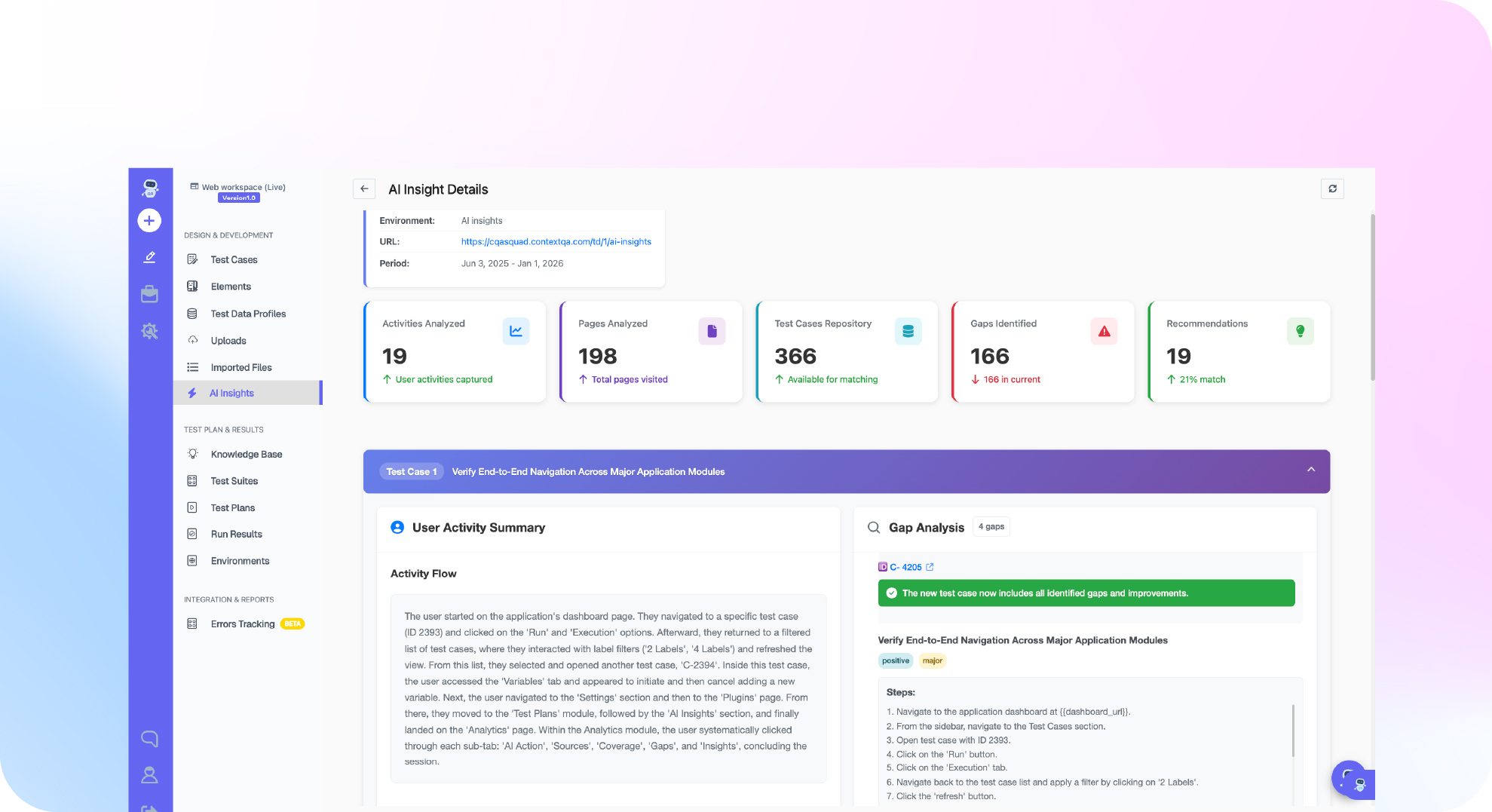
Ship, the ContextQA autonomous quality engineer, fits the embedded and hybrid models best. It tests every pull request with impact analysis and targeted regressions before merge, and it reproduces bugs reported in Jira, Linear, Slack, or a service desk. Product squads get verification without waiting on a central queue, while a platform group sets the standards.
Ship handles two parts of a squad's workflow:
- A developer opens a pull request. Ship finds the flows the change touches and runs targeted regressions on them before merge.
- A bug report arrives. Ship reproduces the bug from the ticket or message, finds the likely root cause, and hands the engineer the evidence.
In a hybrid setup, a central group decides which flows count as release critical and reviews escaped defects, while squads run Ship every day. Ship is self serve, so one squad can pilot it before the organization changes its team model.
Bottom line
No model wins permanently. A central team gives you consistency and one owner for release gates, and embedded engineers give you speed and product context. Once AI agents write most tests, the scarce work is setting standards, reviewing generated coverage, and triaging failures. That favors a hybrid with a written ownership charter. Start with one squad, measure where merges wait, then move teams one at a time.
Sources
These are the primary sources this article cites. The Google post covers flaky tests and their effect on CI trust. The DORA guide defines the delivery metrics we recommend as a baseline before you change your QA team model.