
TL;DR: The right Sauce Labs alternative depends on why you are leaving. Teams usually leave over device cloud cost, time spent fixing flaky tests, or a need for AI generated coverage. BrowserStack and LambdaTest suit teams that want a similar cloud grid. A Playwright suite in your own repository gives you full ownership of the code. ContextQA, the autonomous quality engineer, generates tests and repairs broken selectors automatically. It also exports tests to Playwright and runs one suite in parallel across browsers and devices. First remove any tool that fails a requirement you cannot drop, then pilot the rest on the same workflow.
Teams comparing Sauce Labs alternatives usually have one of three problems. The cloud bill climbs as parallel sessions grow, flaky tests use up engineering hours, or coverage now has to reach APIs and enterprise apps as well as browsers and devices. This guide covers what Sauce Labs does well, why teams switch, and how seven options compare.
Quick answers
What are the most common reasons teams look for Sauce Labs alternatives? Most teams start looking because their needs changed, not because the grid stopped working. Common triggers are rising cost as parallel sessions grow, hours spent maintaining flaky Selenium or Appium scripts, a need for private network or self hosted execution, and a need for AI generation or self healing. Write down which one rules out your current setup before you compare vendors.
Should we replace Sauce Labs with another device cloud or with an AI test automation platform? That depends on where your cost sits. If your scripts are healthy and you only need more capacity, another grid is the smaller change. If most of the effort goes into writing, repairing and triaging tests, a platform that generates, self heals and runs tests fits better. ContextQA also exports tests to Playwright code. Run a clean environment exit test to confirm what still depends on the platform.
How do we run a fair pilot of Sauce Labs alternatives without disrupting our release pipeline? Run one representative flow on each shortlisted option in a non blocking CI job, next to your current Sauce Labs job. Seed one real defect and one locator change. This shows whether each option catches failures and whether self healing leaves your business assertions intact. Then compare evidence, pass, fail and timeout behavior, and hours spent on setup and triage.
Why do teams look for Sauce Labs alternatives?
A Sauce Labs alternative is any platform that replaces what Sauce Labs provides: a hosted grid of browsers, emulators, simulators and real devices that runs Selenium, Playwright, Cypress or Appium suites. Teams usually start looking when parallel capacity holds up releases, or when the grid runs tests fine but does nothing to cut repair hours.
Sauce Labs does several things well. It has a broad browser and OS matrix, real device access, and Sauce Connect for reaching private staging environments. If your suites are stable and your team is happy owning the test code, staying is reasonable.
The usual reasons teams switch:
- Concurrency planning. CI pipelines that fan out across many jobs can queue behind your plan's parallel session limit, forcing a trade between release speed and contract size.
- Maintenance stays with you. A grid does not fix a broken locator after a UI refactor. Flaky tests and selector churn stay in your backlog.
- Coverage outside the grid. API, database, Salesforce, SAP and AI agent workflows need separate tools and produce separate evidence.
- Portability. Teams want plain framework code they can run anywhere.
What should you look for in a Sauce Labs alternative?
A good replacement covers the browsers, devices and applications you actually release to, and runs in your existing CI without extra glue code. Engineers should be able to debug from its evidence, and each release should cost less to run. Billing model and the test upkeep your team still owns matter as much as the device list.
Write each of these as a pass or fail condition before you book demos, as the ContextQA guide to comparing AI testing alternatives recommends:
- Coverage you ship to. List the browser, OS, real device, API and enterprise app targets you release against. A bigger device cloud does nothing for a gap in Salesforce or SAP coverage.
- Pricing model fit. Find out whether cost scales with parallel sessions, users, minutes or credits, then price your nightly regression run under each model.
- Maintenance, not just execution. If flaky locators are your main cost, look at self healing. Confirm that a repaired locator cannot weaken a business assertion.
- Authoring path. No code recorders let manual testers contribute, and code first frameworks suit SDET (software development engineer in test) teams. Tests generated from tickets still need human review.
- CI behavior and evidence. Force a failure, a timeout and a cancellation in your pipeline. Confirm that screenshots, video, logs and traces land where your team triages.
- Portability and network. Ask what you can export and what stays behind if you leave. Confirm the runner can reach private staging environments.

How do the Sauce Labs alternatives compare?
The alternatives fall into three groups. Hosted device and browser clouds (BrowserStack, LambdaTest, AWS Device Farm) are the closest replacements. Open source tools you host yourself (Selenium Grid, Selenoid, Playwright, Appium) cost nothing to license, but your team runs the infrastructure. Platforms that also write and maintain tests, such as ContextQA, change who does the maintenance work.
| Option | Best for | Pricing model | Tradeoff |
|---|---|---|---|
| BrowserStack | Broad real device and browser coverage | Published plans | You still own test maintenance |
| LambdaTest | Cloud runs for Selenium, Playwright, Appium | Published plans | Same ownership as Sauce Labs |
| AWS Device Farm | AWS teams testing real devices | Metered usage | Focused on device testing |
| Selenium Grid or Selenoid | Self hosted WebDriver behind a firewall | Open source plus infrastructure | You patch browsers and nodes |
| Playwright | Parallel web suites in CI | Open source | No real iOS devices; Android support is experimental |
| Appium plus own device lab | Mobile apps with strict data rules | Open source plus hardware | iOS needs Macs, Xcode, WebDriverAgent |
| ContextQA | Generated, self healing tests | Demo and quote | Needs a pilot on your own flows |
Plan prices change often, so check each vendor's own pricing page on the day you compare and record the date. AWS Device Farm pricing shows the metered model. For native apps on real iOS and Android devices, look at the hosted clouds or an Appium lab. Playwright is built for web testing: it does not support real iOS devices, and its Android support over ADB is experimental. Its --shard=1/4 flag splits a suite across CI jobs.
Which alternative fits your team best?
The right pick depends on what you are replacing. For the same remote Selenium, Appium or Playwright grid with little rework, look at BrowserStack or LambdaTest. To own execution, run Playwright in your own CI. If test maintenance is your largest cost, compare an AI testing platform such as ContextQA against your current baseline.
- Stay on Sauce Labs if your suite runs reliably, you depend on its real device cloud and flaky failures are rare. Switching would cost reverification effort for little gain.
- BrowserStack or LambdaTest for a like for like swap. WebDriver and Appium suites usually need a new remote hub URL and a new capability block (
bstack:optionsorLT:Options) in place ofsauce:options. Locator maintenance stays the same. - Self hosted Playwright for full code ownership. Running
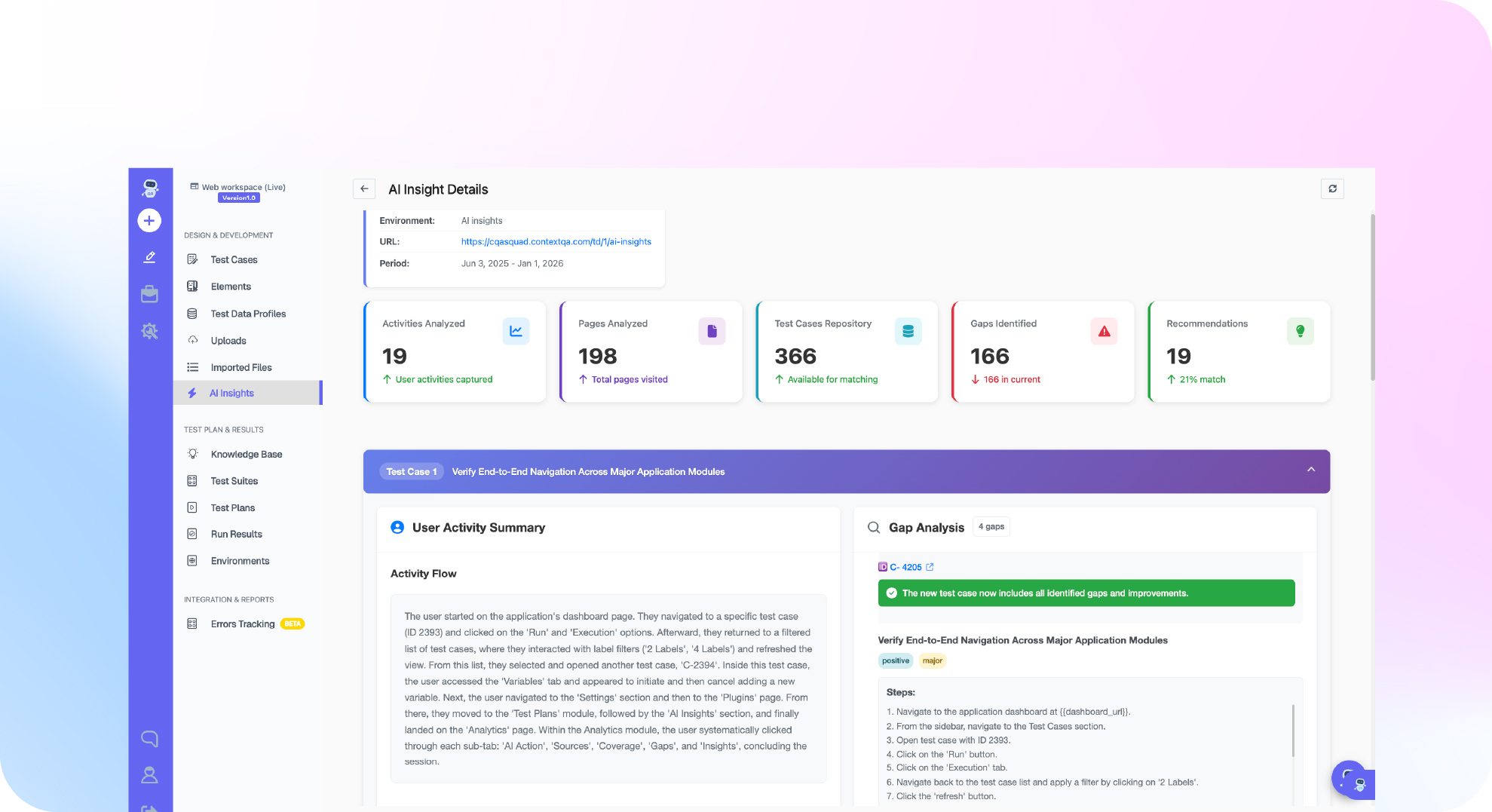
npx playwright test --shard=1/4across a GitHub Actions or GitLab matrix gives you parallel runs with no vendor contract. The tradeoff: WebKit is not Safari on a real iPhone, and your team owns runners, retries and trace storage. - ContextQA when maintenance is the bottleneck. It adds AI based self healing, a no code recorder, Jenkins and GitHub Actions integration, and parallel runs across Chrome, Safari, Edge, Firefox, iOS and Android. Tests export to Playwright code, but run a clean environment exit test before treating the export as your exit path. The tradeoff is learning a new way to author tests. Run the controlled healing experiment from the comparison guide before you commit.
If your team pays for device cloud minutes but still fixes broken locators by hand, book a ContextQA demo to see self healing tests run across browsers and devices.

How do you switch from Sauce Labs without losing test coverage?
List everything Sauce Labs runs for you today, point portable scripts at the new target, and run both tools against the same builds for one sprint before you cancel. Selenium, Appium and Playwright scripts usually carry over. Tunnels, dashboards and device reservations have to be rebuilt.
- Inventory current coverage. List every CI job, browser and OS combination, real device and Sauce Connect tunnel. Anything left off this list is coverage you could lose unnoticed.
- Repoint portable scripts. Put the remote URL and capability block in CI variables instead of hard coding them. Test data and fixtures stay in your repo.
- Rebuild vendor specific pieces. Replace
sauce:optionscapabilities, tunnels to private staging, CI plugin steps and dashboards. Estimate this work before you sign. - Clear enterprise disqualifiers. Confirm SSO, roles, the SOC 2 report, artifact retention and private network reach using the vendor security evidence checklist. The ContextQA platform runs as cloud SaaS, in your own cloud, self hosted or on premises (Enterprise plan).
- Run both for one sprint. Trigger both tools on every merge to
mainand compare pass, fail, timeout and artifacts test by test. Find the cause of every disagreement before you cut over. - Cut over with an exit. Cancel only after a sprint with no unexplained differences, and commit any exported code to your repo.
Bottom line
The best Sauce Labs alternative is the one that fixes the reason you are leaving. If your scripts are healthy and you need more capacity, another hosted grid is the smaller change. To own execution, run Playwright in your own CI. If maintenance hours are the real cost, try a platform that generates and repairs tests, such as ContextQA. In every case, remove any tool that fails a hard requirement, then pilot the rest on one workflow.
Sources
These sources cover the pricing, sharding and evaluation guidance in this article. For current plans, open each vendor's own pricing page and record the date you checked it, because published prices change often.