
TL;DR: Good automation testing interview questions check whether a candidate can design, stabilize and maintain the test suites that releases depend on. Knowing framework syntax is not enough. Ask about locator strategy, flaky test triage, the test pyramid, chaining API calls, CI/CD integration and which regressions run on each pull request. Flaky tests are common at scale. Google reported that almost 16% of its tests showed some flakiness (Google Testing Blog, 2016).
Most automation testing interview questions reward memorized definitions. Candidates who can recite locator types pass, while engineers who can stabilize a flaky suite get missed. The questions below are built to show real skill, and each comes with a description of what a strong answer sounds like.
Quick answers
Which questions reveal whether a candidate has maintained a real test suite? Ask them to describe a flaky test they fixed: what the CI failure looked like, how they told a timing issue apart from a real defect, and what they changed. Engineers who have maintained suites talk about explicit waits, test data isolation, retries that hide bugs and quarantine policies. Candidates who have only built tutorial projects describe the tool.
Should the interview include a live coding exercise or a take home task? For most teams, a short live exercise works better. Give the candidate a small broken test and have them debug it out loud in 30 to 45 minutes. You see how they read stack traces and isolate locators, and they don't lose a weekend to unpaid work. Save take home tasks for senior framework roles, and cap them at a few hours with a rubric.
How should managers ask about AI assisted testing? Ask how the candidate would review and govern AI generated tests, not whether they have used a tool. A strong answer covers checking generated assertions against business intent, deciding when a healed locator needs human approval, keeping tests exportable as standard code such as Playwright (code export), and reporting results in pull request checks.
What are automation testing interview questions?
Automation testing interview questions are the technical and judgment questions hiring teams use to check whether a candidate can design, write, run and maintain automated tests that hold up in a CI/CD pipeline. They cover tool knowledge, framework design, flaky test diagnosis and deciding what not to automate, because a passing script on its own proves little.
Juniors get questions on locators, explicit waits and assertions. Senior engineers and QA leads get framework design tradeoffs:
- Page Object Model (POM): How do you keep page objects from growing into thousand line classes, and should assertions live inside them?
- Data driven: How do you keep CSV or JSON test data separate from test logic, and handle data that differs by environment?
- Hybrid: When does mixing keyword driven and data driven patterns pay off, and who maintains the keyword layer?
- BDD: When does
Given/When/ThenGherkin help product owners, and when is it just extra work?
What can these questions help you do?
A structured question set shows whether a candidate can design, debug and maintain a test suite under release pressure. It separates people who have kept a flaky continuous integration (CI) pipeline green from people who have only followed tutorials, and it gives every panelist the same rubric.
Use the questions to test four skills:
- Framework judgment: Which browser framework fits an app with iframes, multi tab flows and Safari coverage? Strong answers compare auto waiting, engine support and parallel run cost.
- Practical coding: Hand over a failing test that uses
Thread.sleep(5000)and a brittle XPath selector. Good candidates swap in an explicit wait on a condition and a role or test ID locator. - Scenario reasoning: How would they triage a test that fails one CI run in ten? Listen for quarantine rules, trace and video evidence, and a root cause found before any retry.
- Consistent scoring: Score every answer against one rubric so decisions rest on evidence, not rapport.

Why do these questions matter in 2026?
Interview questions for automation roles carry more weight in 2026 because the job has moved from writing scripts to owning pipeline reliability. AI assistants now generate test code quickly, so interviews have to cover what generated code does not settle: test strategy, which checks block a merge, and flaky test triage.
A flaky test passes and fails on the same code. Google reported that about 1.5% of its test runs returned a flaky result (Google Testing Blog, 2016). At that rate, an engineer who reruns failures until they pass will hide real regressions.
Engineering managers and CTOs should ask strategy questions:
- Where does this check belong in the test pyramid, and why not end to end?
- How do you measure automation ROI beyond test count, for example maintenance hours per release?
- Which coverage gaps would you accept before a release?
Automation testers should face CI/CD questions:
- How do you quarantine a flaky test without losing its signal?
- Which checks should block a pull request, and which can wait for the nightly run?
- What evidence do you capture so others can reproduce a failure, such as logs, screenshots and HAR files (recordings of a page's network traffic)? See this web testing overview for an example of evidence collected on every run.
How do automation interviews work?
A thorough automation interview loop covers fundamentals, live coding, API and performance scenarios, AI tooling, and pipeline design. Interviewers grade how a candidate reasons about tradeoffs and failures, not whether they can recite definitions.
- Fundamentals screen. Locators, explicit versus implicit waits and the Page Object Model. Strong answers explain why
Thread.sleep()causes flaky tests. - Live coding. The candidate fixes or writes a test against a sample app. Watch whether they read the stack trace before changing code.
- API and performance. Chain an auth token into a second request, write a fluent
given().when().then()assertion, or set a load test threshold for p95 (95th percentile) latency. See this worked example of token chaining. - AI and self healing. Explain when a healed locator hides a real regression, and how you review LLM generated tests before they run as pull request checks.
- Pipeline design. Describe where tests run in Jenkins or GitHub Actions, how flaky tests are quarantined and which failures block a release.
Which approach fits your team best?
Startups that ship weekly without QA staff should start with an autonomous quality engineer and hire later. A team with a growing suite needs one experienced SDET (software development engineer in test) to own the framework. Agencies fit fixed scope work. Hire freshers only if a senior engineer will review their tests.
- Fresher engineer: Best for: Teams with a senior reviewer; Pricing model: Salary; Notable tradeoff: Needs coaching on waits and flakiness
- SDET, 3 to 5 years: Best for: Owning a CI suite; Pricing model: Salary; Notable tradeoff: Single point of failure
- Staff SDET, 8 or more years: Best for: Strategy across teams; Pricing model: Salary; Notable tradeoff: Expensive for an early startup
- Outsourced QA agency: Best for: Release crunch or fixed scope; Pricing model: Contract or hourly; Notable tradeoff: Knowledge leaves at contract end
- [Ship](https://ship.contextqa.com/): Best for: Small teams testing every pull request; Pricing model: Free 15 day trial, then from $49 a month; Notable tradeoff: An engineer still triages evidence
Ask freshers about locators and assertions, mid level candidates how they triage a flaky CI test, and staff candidates what they would not automate. When vetting an agency, ask for a sample failure report and who maintains the suite after handoff.
How does ContextQA change what these questions test?
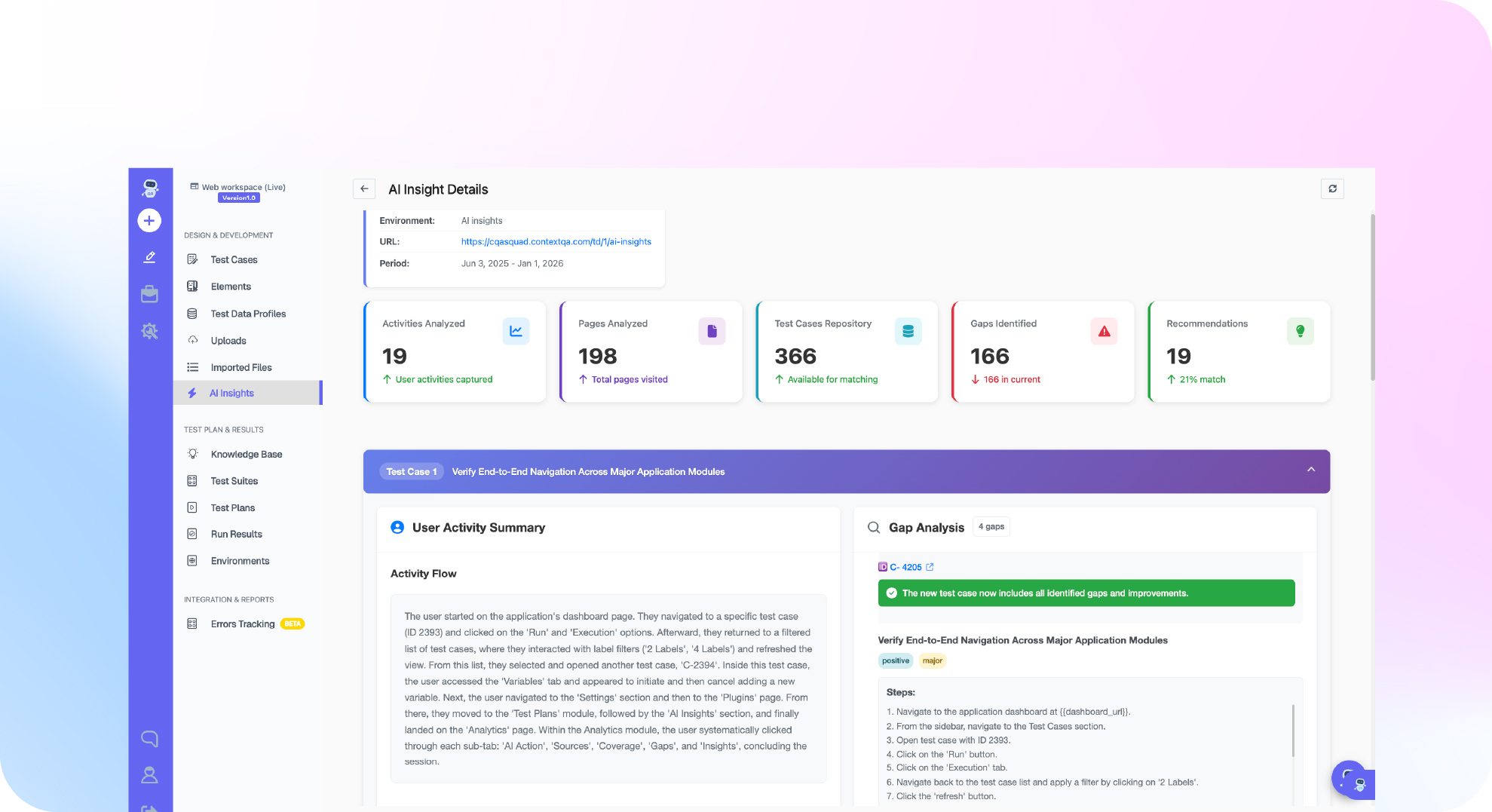
ContextQA does not write or grade interview questions. Ship, the ContextQA autonomous quality engineer, changes what those questions should test. Ship runs targeted regressions on every pull request and reproduces reported bugs, so interviews should test how a candidate judges risk and reads failure evidence, not how well they remember framework syntax.
Ship covers two workflows:
- Pull request testing. A developer opens a pull request. Ship runs impact analysis, then targeted regressions before merge.
- Bug reproduction. A bug arrives through Jira, Linear, Slack or a service desk. Ship reproduces it, finds the likely root cause and hands engineers the evidence.
If your team still maintains an existing suite, keep the questions on waits, locator strategy and the Page Object Model. Then add one judgment question: "Here is the evidence from a failed pull request. Is this a product bug or a test defect, and what do you do next?"
To see the failure evidence Ship produces on real pull requests, get started free with Ship. The 15 day trial includes 3,000 credits and needs no credit card.

What should you do right now?
Replace trivia with scenarios built from failures your team actually hit: a flaky test, a broken locator, a red pipeline. Score how candidates diagnose problems and make decisions, and scale depth by level so a candidate with five years of experience defends a strategy instead of reciting syntax.
- Pull three real failures from last quarter's CI history and turn each into a scenario prompt with an expected cause, first diagnostic step and fix.
- Ask: "This test passes locally but fails in CI. Walk me through it." Strong answers check timing, test data and environment before blaming the tool.
- Ask senior candidates to design a regression strategy for a release train and explain how they would cut suite runtime without losing coverage.
- Give candidates a failure report and ask them to separate symptom from cause. For one way to structure that evidence, see this overview of root cause analysis.
- Score every answer on diagnosis, tradeoffs and communication, and drop any question a candidate can pass by reciting syntax.
Bottom line
The best automation testing interview questions test judgment, not recall. Ask candidates to triage a flaky test, replace a fixed sleep with an explicit wait, chain an auth token into a second API call and decide which checks block a pull request. Score every answer against one rubric. If you have no QA staff yet, read what an autonomous quality engineer does first. For packaged app roles, see how SAP testing automation works.
Sources
The flaky test figures come from Google's engineering write up on flaky tests at scale. The ContextQA documentation pages below are the references for the API token chaining and web test evidence examples.