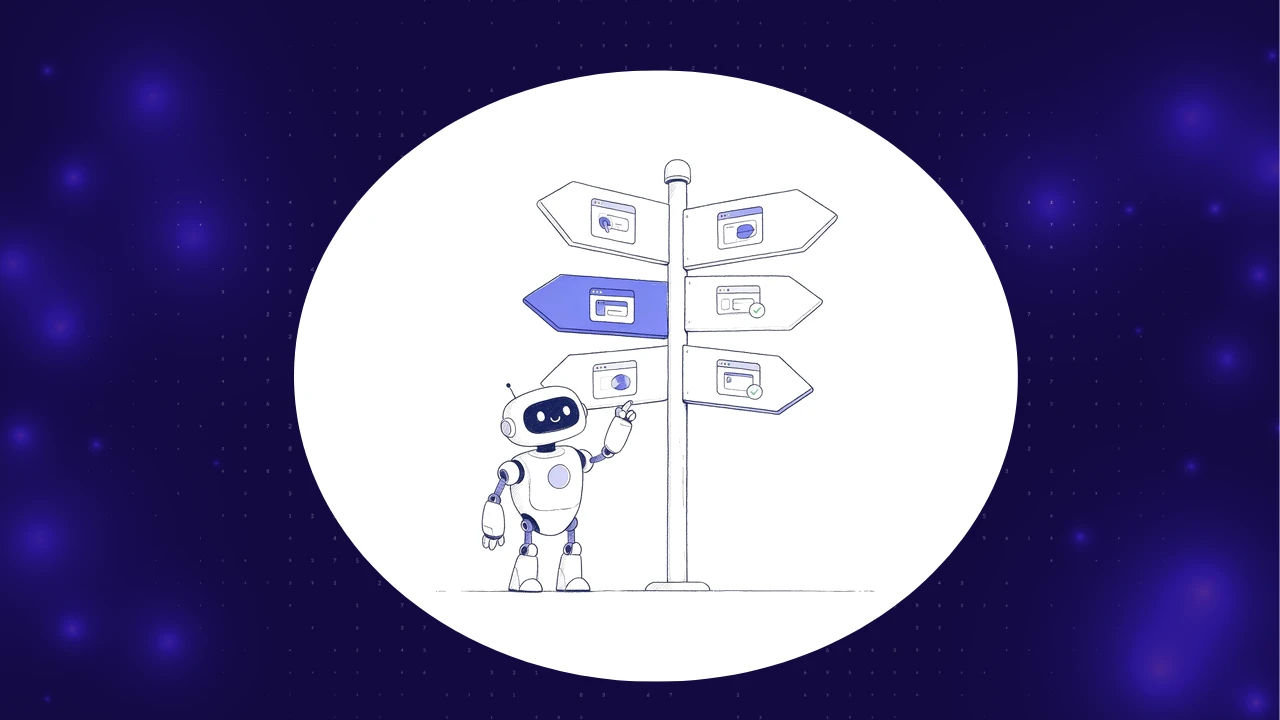

TL;DR: Agentic AI testing uses autonomous AI agents that plan, generate, run, and repair tests with very little human direction. It moved from hype to real budgets in 2026, the year Google’s DORA research found 75.9 percent of developers now use AI in their daily work. The catch is that individual speed does not equal shipping quality, so the winning model is an agent that does the grinding while a human sets the goals and reviews the calls. This guide explains what makes a tool agentic, what changed this year, where agents help most, and how to adopt them without setting your suite on fire.
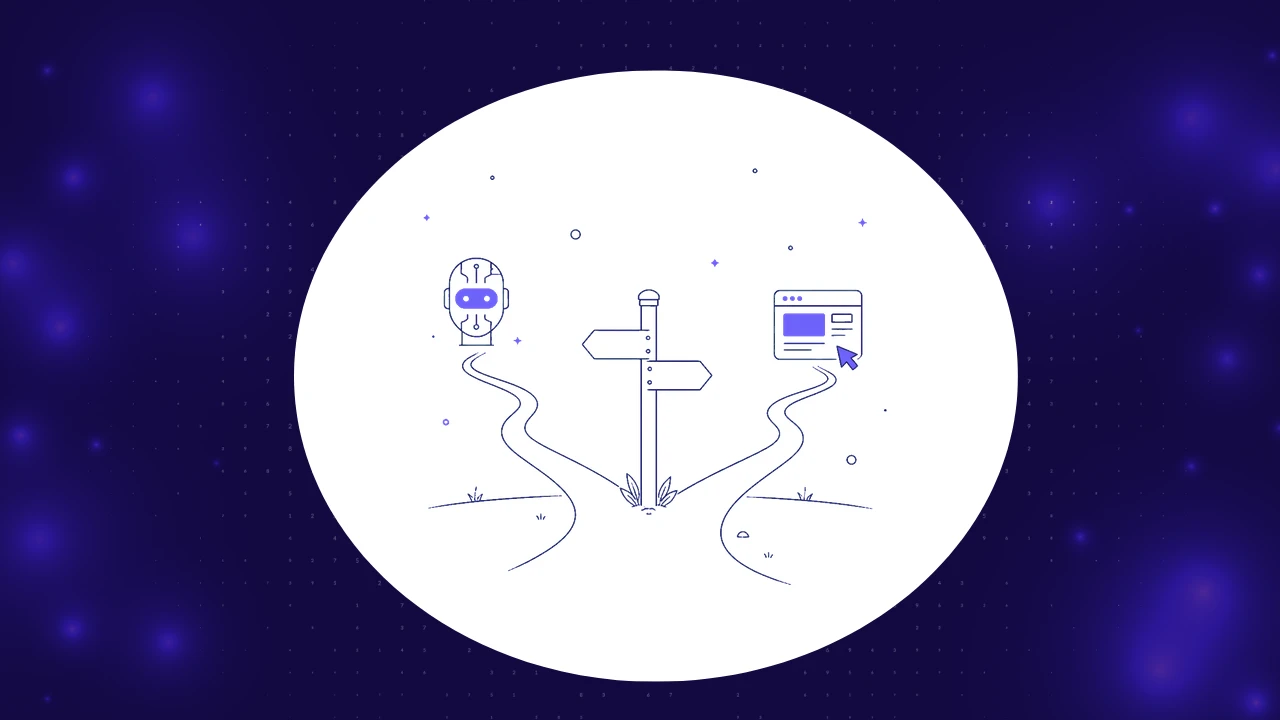
Definition: Agentic AI Testing A testing approach where autonomous AI agents pursue a quality goal by planning their own steps, then generating, executing, and repairing tests across tools, with a human supervising rather than scripting each action. It sits a level above scripted test automation, which runs fixed steps in a fixed order.
Quick answers
What is agentic AI testing in one line? It is testing run by AI agents that decide the steps themselves to reach a goal you set, instead of following a script you wrote line by line.
How is it different from regular test automation? Regular automation repeats fixed steps. An agent plans its own steps, adapts when the app changes, classifies failures, and works across several tools in one run.
Will it replace QA engineers? No. It removes repetitive execution and maintenance. Humans still set quality goals, make risk calls, and supervise the agent. The role shifts toward orchestration.
What makes a testing agent agentic
A regular automation script does exactly what you told it to do, in the exact order you wrote it. It is fast and predictable, and it breaks the moment reality drifts from the script. An agentic system is different in three ways, and all three have to be present before the label means anything.
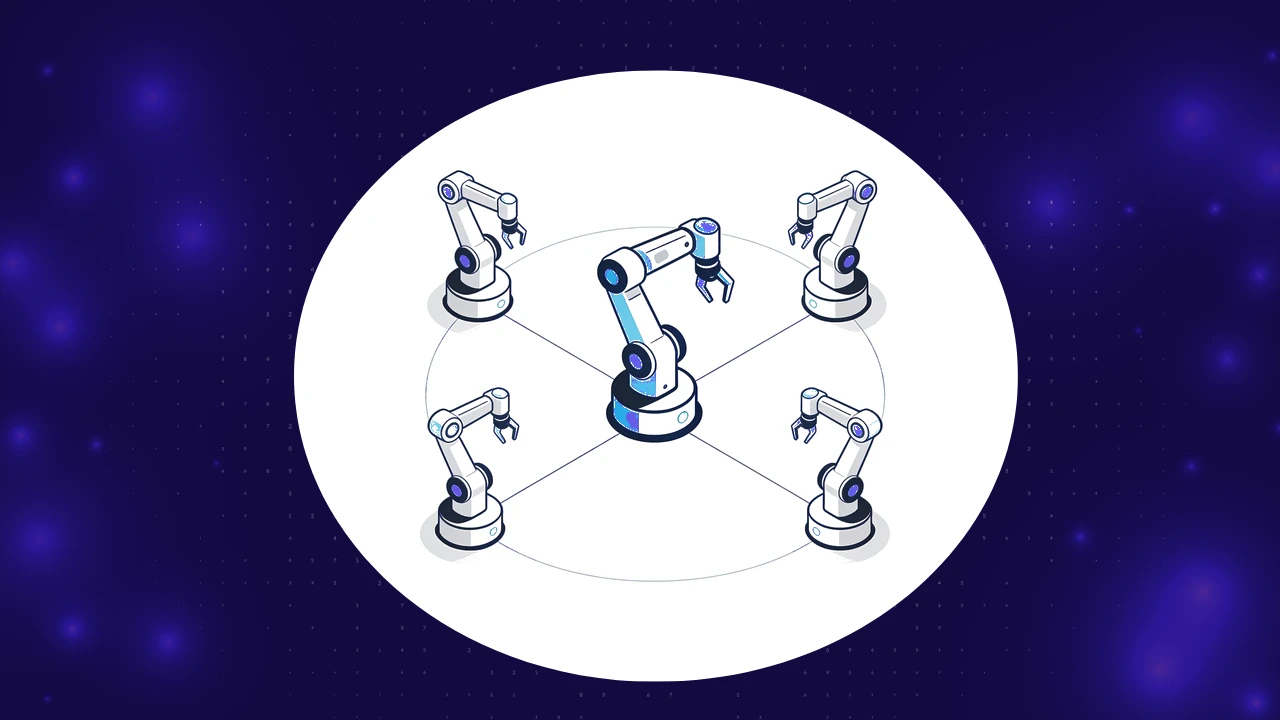
First, it plans. Give it a goal like verify a user can sign up, add a product, and check out, and it breaks that into steps on its own rather than waiting for you to spell each one out. Second, it reasons about change. When the UI shifts or an API response looks different, it decides whether that is a real defect or just a cosmetic change, and adapts instead of failing blindly. Third, it acts across tools. A capable agent can read the code, generate a test, run it in a browser, inspect the logs, and write up the failure without a human stitching those tools together by hand.
That third part is the real line in the sand. Plenty of tools will suggest a test. Far fewer will complete the whole loop, from reading intent to filing the bug, without a person carrying data between steps. The jump from AI that suggests to AI that finishes the job is what people mean when they say agentic. If you want the conceptual grounding before the 2026 specifics, our explainer on what agentic AI in software testing means covers the basics, and this guide picks up where it leaves off.
What actually changed in 2026
Three shifts pushed agentic testing from a conference demo into a line item on real QA budgets.
AI use went mainstream, and so did its tradeoff. Google’s DORA program surveyed more than 39,000 professionals and found that 75.9 percent of developers now lean on AI for daily tasks. The same research is blunt about the cost: AI lifted individual productivity, but at the team level it was associated with a measurable drop in delivery stability and throughput (DORA, 2024). Read that together and the conclusion writes itself. More AI generated code needs more verification, not less, and humans cannot hand check all of it. That gap is exactly what testing agents are built to fill.
The plumbing got standardized. The Model Context Protocol gave agents a single, consistent way to connect to real testing tools, codebases, and environments. Before that, every agent integration was custom glue that broke when any tool changed. Now an agent can talk to your browser automation, your CI pipeline, and your bug tracker through one interface, which is what makes a multi step run practical instead of fragile. For the deeper background, see our guide on what MCP means for software testing.
The money followed. Autonomous testing is no longer treated as a feature bolted onto continuous testing. It is being budgeted as its own category, inside an automation testing market valued at 24.25 billion dollars in 2026. When a capability gets its own budget line, it stops being optional and starts being something leaders are measured against.
The autonomy curve: from assisted to autonomous
Agentic is not a switch you flip. It is the far end of a curve, and most teams in 2026 sit somewhere in the middle of it. Knowing where you are keeps your expectations honest and your rollout safe.
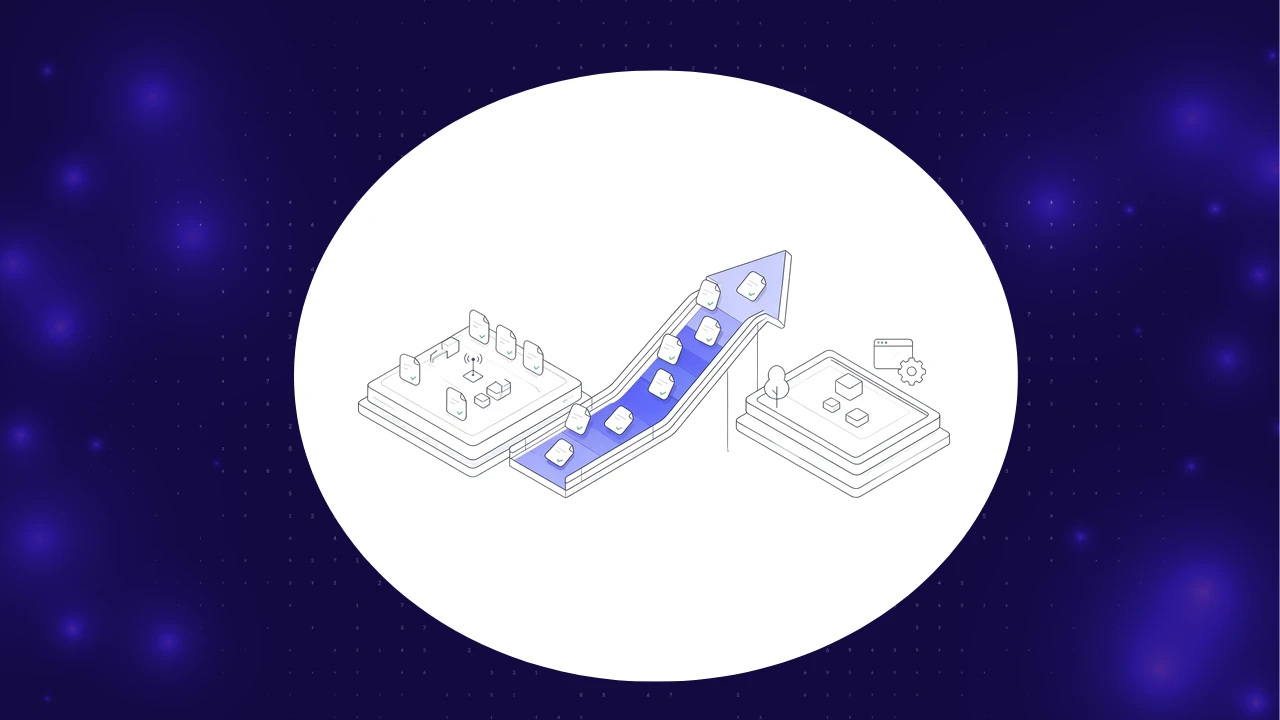
At the first level, AI is assistive. It suggests a test or a selector and a human accepts or rejects it. Useful, but the person still does all the real work. At the second level, AI is augmented. It generates tests and repairs broken locators on its own, but a human reviews the output before it counts. This is where a lot of teams live today, and it is a comfortable, productive place to be. At the third level, the system is agentic. It plans its own steps, runs them, diagnoses failures, and repairs what it can, with a human supervising outcomes rather than approving each action.
The jump that matters is from augmented to agentic, because that is where the agent starts closing the loop instead of handing work back. You do not have to leap straight there. The smart path is to climb the curve one rung at a time, earning trust on a narrow flow before you widen the agent’s autonomy. Teams that try to start at the top, with no review and full access, are the ones that end up as the cautionary tale everyone else learns from.
Where autonomous QA agents help the most
Agents are not equally useful everywhere. The payoff is highest in the repetitive, judgment light work that quietly drains a QA team, and it thins out fast in the work that needs real product taste.
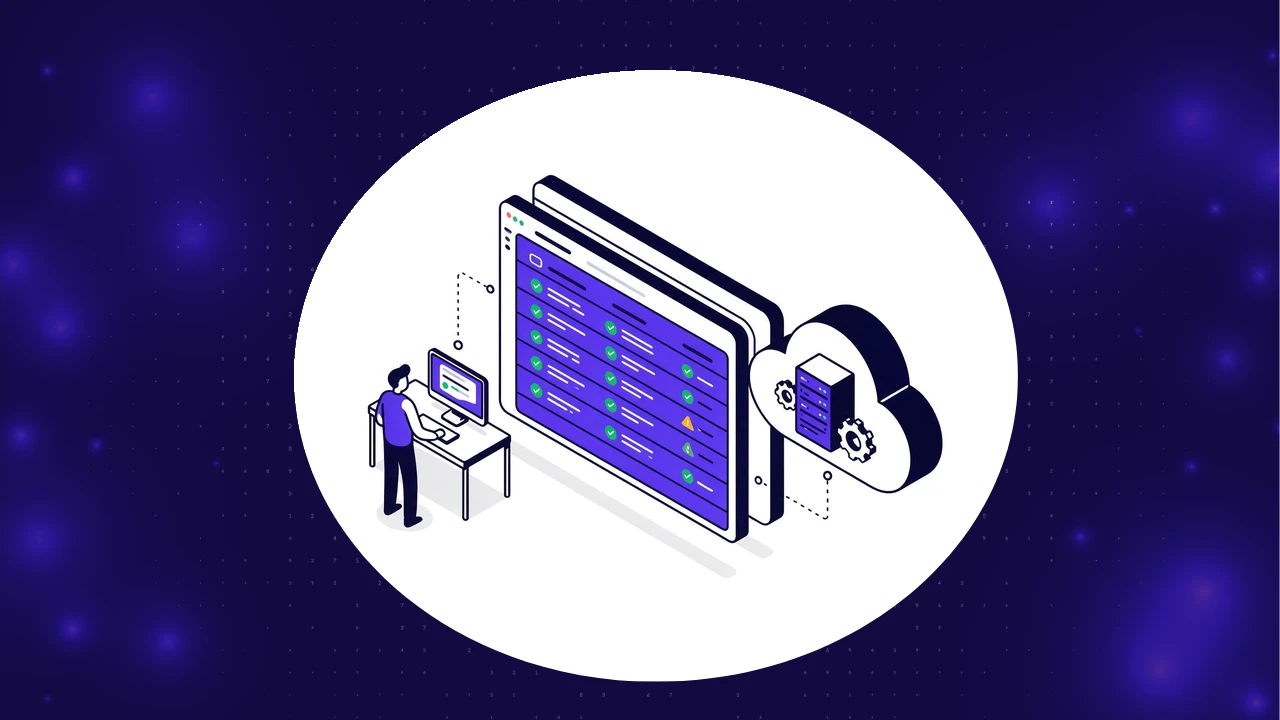
Regression and smoke testing are the obvious wins, because an agent can regenerate and re run those flows after every change without complaint. Test maintenance is the next one, and it is bigger than it looks. When a button moves or a class name changes, AI based self healing lets the agent repair the locator and keep going, instead of failing the run and paging an engineer at a bad hour. Failure triage is the third. Instead of a human reading stack traces line by line, the agent can run root cause analysis and classify whether a failure is a real bug, a test issue, an environment problem, or a flaky run, so the red builds that need a person are sorted from the noise.
The pattern is consistent across all three. Let the agent carry volume and repetition, and keep humans on strategy, risk calls, and the exploratory work that still needs a brain. That division is where the real productivity comes from, not from handing the agent everything and hoping.
Agentic AI testing vs traditional automation
| Capability | Traditional automation | Agentic AI testing |
|---|---|---|
| Test creation | Hand written scripts | Agent generates from goals or app context |
| Reaction to UI change | Test breaks, needs a manual fix | Agent self heals the locator and continues |
| Failure analysis | Human reads the logs | Agent classifies the root cause |
| Tool coordination | Manual glue between tools | Agent acts across tools through MCP |
| Human role | Writes and maintains scripts | Sets goals and supervises outcomes |
What agents do not replace, and where they fall short
This is where honest beats hyped. An agent will not define what good means for your product. It will not decide that a slow checkout is unacceptable while a slow admin report is fine. It will not own a compliance sign off. Those are human calls, and pretending otherwise is how teams ship confident nonsense.
There are real limits worth naming. An agent can be confidently wrong, producing a test that passes for the wrong reason, which is more dangerous than an honest failure because it hides. It can over adapt, healing past a change that was actually a bug you wanted to catch. And it is only as good as the context it can reach, so an agent working blind, without access to your code, logs, and requirements, guesses more than it reasons. A controlled 2025 study by METR is a useful reality check here: experienced developers were about 19 percent slower with AI while believing they were roughly 20 percent faster (METR, 2025). That perception gap is the trap. Teams that feel fast supervise less, which is exactly when an agent’s mistakes slip through. The fix is not to distrust agents. It is to keep a review gate where the stakes are high.
How to adopt agentic testing without breaking things
Start narrow. Pick one stable, high value flow, like login or checkout, and let an agent own generation, execution, and self healing for just that flow. Measure two things from day one: how much maintenance time you saved, and how many false passes slipped through. The second number keeps you honest, because a suite that never fails is not a feature, it is a warning.
Next, wire the agent into your real environment through MCP so it can read context instead of guessing. An agent with access to your code, logs, and screenshots makes far better calls than one working from the prompt alone. Then expand outward to regression suites and triage once the results earn your trust. Keep a human review gate in place at the start, and loosen it as confidence grows rather than as a leap of faith. The goal is not to remove people. It is to stop spending people on work a machine should handle, so they can spend attention on the decisions only people can make.
What changes for the QA team
If agents handle generation, execution, and repair, what is left for the humans? More than you might think, and arguably the better part of the job.
The role shifts from writing and maintaining scripts to setting goals and judging results. Instead of spending the week patching selectors, a QA engineer spends it deciding what good looks like for a feature, designing the quality bar, and reviewing what the agent did and why. The new core skills are defining clear objectives the agent can pursue, reading agent output critically, and knowing when a green result deserves a second look. That is a move up the value chain, not a move out of a job.
It also changes how a QA team scales. When the repetitive execution is handled by agents, one engineer can supervise far more coverage than they could ever write by hand. The constraint stops being how fast people can type tests and becomes how well they can direct and review. That is a healthier constraint, and it is the one the best teams are organizing around.
Common mistakes when adopting agents
Most agentic testing failures trace back to a short list of avoidable habits. Knowing them up front saves a painful pilot.
- Removing the review gate too early. Full autonomy on day one, with no human checking outcomes, is how a confidently wrong test ships. Earn trust before you loosen the gate.
- Letting the agent define quality. An agent will happily optimize toward whatever you imply. If you never state what good looks like, it will pick its own target, and it may not be yours.
- Starving the agent of context. An agent without access to your code, logs, and requirements guesses more than it reasons. Connect it through MCP so it works from real context, not the prompt alone.
- Measuring green instead of false passes. A suite that never fails is not a win, it is a warning. Track how many tests passed for the wrong reason, not just how many passed.
- Scaling before the narrow case works. Pointing an agent at the whole suite before it has proven itself on one flow multiplies the mistakes instead of the value.
None of these are exotic. They are the same discipline that good testing always needed, applied to a faster, more capable tool. Keep the discipline and the agent pays off. Drop it and the agent just makes your mistakes quicker.
How ContextQA does agentic testing
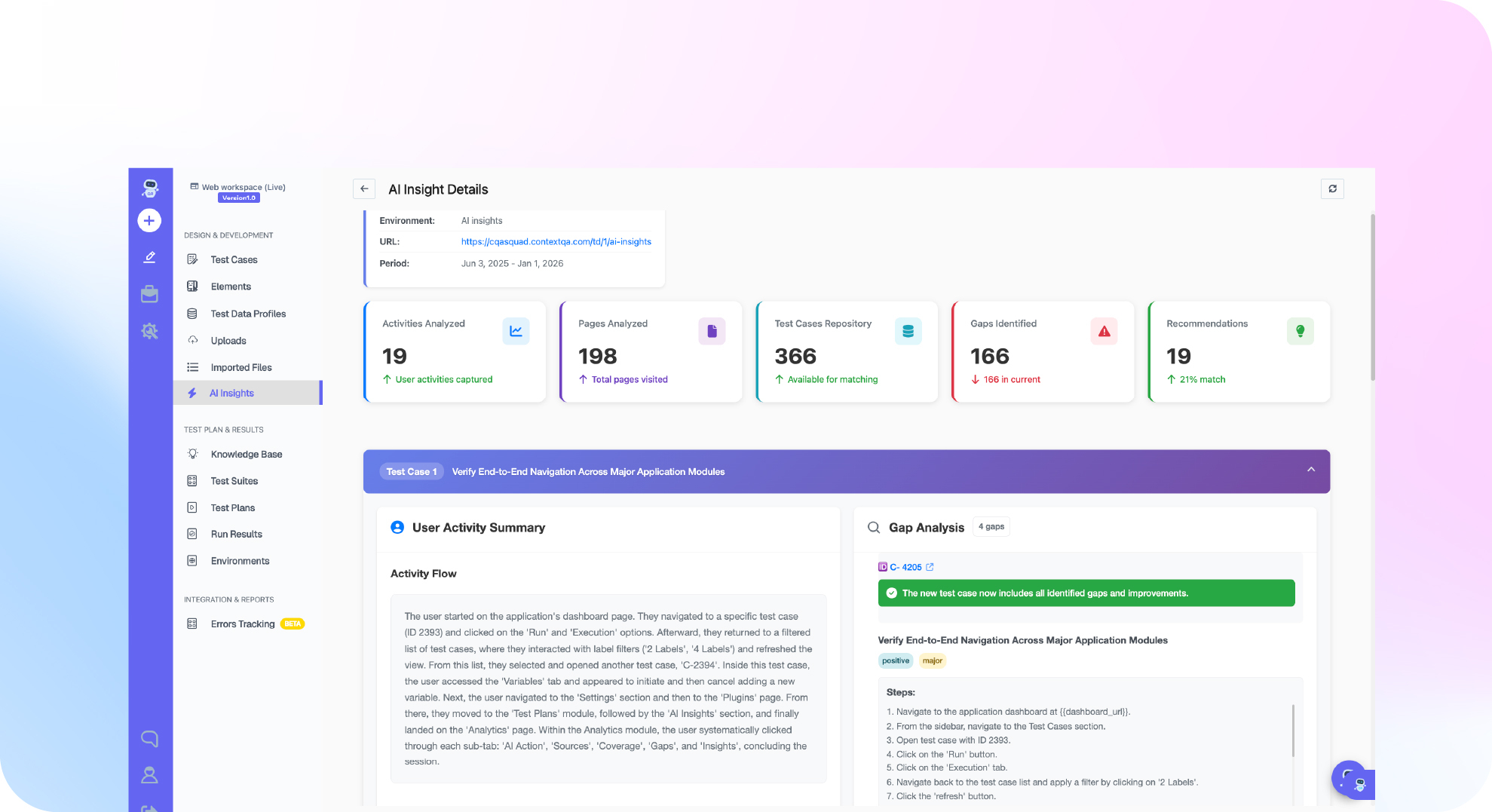
ContextQA was built around the agentic model rather than retrofitted onto an older scripting tool. The platform generates tests from real application behavior, repairs broken selectors with multi layered element fingerprinting that weighs visual, accessibility, DOM, and text signals together, and runs root cause analysis that labels each failure as a real bug, a test issue, an environment problem, or a flake. Through its MCP server, agents like Claude, Cursor, and VS Code Copilot can create, execute, and analyze tests programmatically across web, mobile, and API surfaces, so one plain English request can map to a whole chain of testing actions on the platform instead of a pile of custom scripts.
On the proof side, this is not theory for us. In partnership with IBM, ContextQA validated a migration of 5,000 test cases and eliminated flakiness across the migrated suite, the exact kind of large, AI accelerated change that breaks when it ships unverified (IBM case study). Verified users rate the platform 4.8 out of 5 for no code AI test automation and auto healing (G2 reviews). The pattern that holds up is consistent: let AI move fast on generation, and put an equally fast AI verification layer in front of production. You can see the full agent toolset on the AI testing suite.
Where agentic testing fits in your pipeline
Agentic testing is most valuable where change is constant and feedback has to be fast, which is exactly your CI pipeline. The agent sits in the same run that gates a merge: it regenerates and runs the flows a change touches, self-heals the locators that drifted since the last build, and flags the failures that look like real defects with a root-cause note attached.
That placement is what turns it from a demo into leverage. A pull request comes in, the agent verifies the flows it touches, repairs the brittle ones, and hands a human a short list of red builds that actually deserve attention instead of a wall of noise. The developer gets feedback in minutes, not the next morning, and the QA engineer spends their time on the few cases that matter. Run it anywhere else and you get a slower version of the same value. Run it at the gate and it compounds with every merge.
How to know agentic testing is paying off
Like any tool that promises leverage, agentic testing is worth measuring rather than trusting on faith. A handful of numbers tell you whether the agent is actually earning its place.
- Maintenance time saved. Hours your team used to spend fixing and rerunning broken tests, now handled by generation and self-healing. This is the clearest before-and-after number.
- False-pass rate. How often a test passed for the wrong reason. This is the number that keeps autonomy honest, and it only exists if someone reviews what the agent did.
- Time to feedback. How long a developer waits to learn whether their change broke something. Agents in CI should shrink this from the next morning to minutes.
- Coverage per engineer. How much surface one person can keep verified now that they direct agents instead of writing every test by hand. If this climbs without the false-pass rate climbing with it, the model is working.
- Escaped defects. Bugs that reached production despite the suite. The real test of any verification layer is whether fewer things slip past it over time.
Watch those together and you avoid the two failure modes. If maintenance falls and coverage rises while false passes and escaped defects stay flat or drop, the agent is doing real work. If everything looks green but escaped defects climb, the suite is passing for the wrong reasons and nobody is checking. Agentic testing rewards the teams that keep score.
Do this now
- Pick one flow to pilot (10 minutes). Choose a stable, high value path like login or checkout. That is where an agent pays back fastest.
- Set the goal, not the script (15 minutes). Write the outcome the agent should verify in plain language, then let it plan the steps.
- Connect real context through MCP (30 minutes). Give the agent access to the app, logs, and repo through the Model Context Protocol so it reasons instead of guessing.
- Turn on self healing and run twice (20 minutes). Run before and after a UI change, then read the repair log and confirm the heals were correct.
- Track false passes, not just green (ongoing). Measure maintenance saved and how many wrong reasons passed, so you expand on evidence.
- Keep a human gate on high risk paths (policy). Require review for auth, payments, and data migrations before you widen autonomy.
- See it on your own flows. When you want a second set of eyes, book a demo and bring your flakiest suite.
The bottom line
Agentic AI testing is not about removing people from quality. It is about moving them up a level, from writing scripts to setting goals and judging results, while agents carry the repetitive load underneath. The data is clear that AI raises individual speed and can lower team stability at the same time, which means verification has to scale with generation. The teams that win in 2026 are not the ones that generate the most. They are the ones that let agents test and repair as fast as AI writes, with a human watching the calls that matter. When you are ready to put an AI verification layer in front of your AI, book a demo.
Written by Deep Barot.