TL;DR: Automated E2E testing runs a real user journey through your whole application, front end to database and back, to prove the flows that matter actually work before customers touch them. It is the layer that catches the broken checkout, the failed login, and the payment that silently drops.
The automation testing market reached USD 40.44 billion in 2026 and is on track for USD 78.94 billion by 2031 (Mordor Intelligence), and functional and end-to-end checks are the largest slice of that spend. This guide covers what E2E testing is, how it differs from unit and integration tests, how automated E2E testing works step by step, the best practices that keep suites stable, the tools teams use, and how AI now removes most of the maintenance that made E2E painful.
Quick answers
What is automated E2E testing? It is software that mimics a real person using your product from the first click to the final confirmation, checking that every system in between (UI, APIs, services, and data) works together to produce the right result. E2E stands for end to end.
Is automated E2E testing worth it? Yes for the flows that would cost you money or trust if they broke, such as sign up, login, search, checkout, and billing. A defect that escapes to production can cost far more to fix than one caught earlier in the cycle, which is why teams automate their critical journeys and run them on every build.
Which tools run E2E tests? The common code frameworks are Selenium, Cypress, and Playwright. AI native platforms such as ContextQA add a record based authoring layer and self healing so tests survive UI changes without constant rewrites.
What is automated end-to-end (E2E) testing?
Automated E2E testing is a testing method that validates a complete workflow across every layer of an application, exactly the way a real user would experience it, using scripts that run without a human driving the keyboard. Instead of checking one function or one API in isolation, an E2E test opens the app, signs in, moves through a real task such as adding an item to a cart and paying for it, and confirms the end result is correct in the interface and in the underlying data.
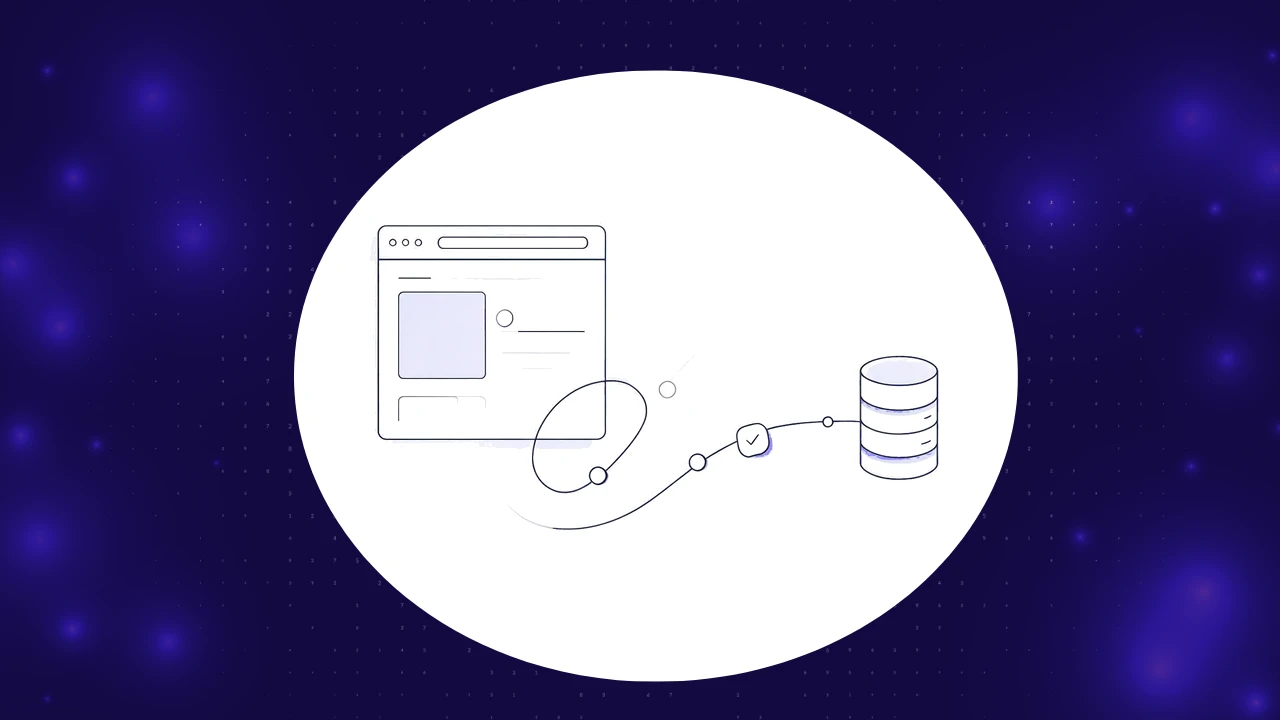
The word end to end is the point. A single purchase might touch the browser UI, a front end framework, several backend microservices, a payment gateway, a database, and an email confirmation. Each of those pieces might pass its own tests and still fail when they have to work together. E2E testing is the layer that proves the whole chain holds.
Industry experts frame it as more than bug finding. “Automated E2E testing is not just about finding bugs; it’s about ensuring that the software meets the user’s needs and expectations,” says Lisa Crispin, co-author of the Agile Testing book. That framing matters, because it decides which journeys you automate first: the ones your users depend on most.
E2E testing vs unit and integration testing
E2E testing sits at the top of the test pyramid. Unit tests check the smallest pieces of code in isolation and run in milliseconds. Integration tests check that two or more components talk to each other correctly. E2E tests check the entire journey through the running system. You want many fast unit tests at the base, fewer integration tests in the middle, and a small, high value set of E2E tests at the top covering the flows that matter most.
| Layer | What it checks | Speed | How many |
|---|---|---|---|
| Unit | One function or component in isolation | Milliseconds | Hundreds to thousands |
| Integration | Two or more components working together | Seconds | Dozens to hundreds |
| E2E | A full user journey across the whole system | Seconds to minutes | A focused, critical set |
The mistake teams make is inverting this shape, writing hundreds of slow E2E tests and few unit tests. That produces long, fragile runs that break often. Keep E2E focused on journeys a broken build would actually hurt, and push everything else down to faster layers.
How does automated E2E testing work?
Automated E2E testing follows the same five steps whether you write code or record the flow. You map the journey, build the test, run it against a real environment, check the result, and maintain it as the product changes.
- Map the journey. Pick a real workflow a user completes, for example register, verify email, log in, and reach the dashboard. Write down the exact steps and the expected outcome at each one.
- Author the test. Turn the journey into a test, either by writing code in a framework or by recording the clicks in a low code tool. Good tests use stable selectors and realistic test data.
- Run it in CI/CD. Trigger the test automatically on every commit or pull request so a broken journey is caught before it merges. This is where E2E testing earns its keep. See our continuous testing guide for how to wire this in.
- Verify the result. The test asserts the outcome across layers, that the confirmation appears in the UI and the record actually landed in the database, then reports pass or fail with logs, screenshots, or video.
- Maintain or self-heal. When the app changes, the test has to keep up. Traditional suites need manual rewrites; AI native platforms update the affected steps automatically so the suite stays green without a human editing selectors.
Why automated E2E testing matters
The business case is simple: the flows that make you money are the ones most likely to break quietly, and the later you find the break, the more it costs. A landmark study by the National Institute of Standards and Technology put the annual cost of inadequate software testing infrastructure to the US economy at roughly USD 59.5 billion, and found that more than half of defects are caught late, when they are far more expensive to fix. We break down that escalation in our guide to the cost of defects in software testing.
Demand for automated testing reflects that pressure. The automation testing market reached USD 40.44 billion in 2026 and is projected to grow to USD 78.94 billion by 2031 at a 14.32 percent compound annual growth rate, with functional testing making up 58.33 percent of demand and cloud deployment taking a 67.44 percent share, according to Mordor Intelligence. Teams are not automating for novelty. They are automating because manual regression cannot keep pace with continuous delivery.
Automated E2E testing best practices
To get value from automated E2E testing without drowning in maintenance, follow the practices that stable teams share:
- Automate critical journeys first. Cover the flows tied to revenue and trust, such as sign up, login, search, checkout, and billing, before anything else. Depth on what matters beats breadth on what does not.
- Keep tests independent. Each test should set up its own data and clean up after itself so one failure does not cascade into ten. Independent tests can run in parallel, which cuts total run time.
- Use stable, intent based selectors. Target elements by role or a dedicated test attribute rather than brittle CSS paths that break on the next redesign. Selector fragility is the top cause of E2E maintenance.
- Drive with realistic data. Use data driven testing to run the same journey across many inputs and edge cases without duplicating the test.
- Run on every build. Wire the suite into your CI/CD pipeline so a broken journey fails the build, not the customer. Testing that runs once a sprint catches problems too late to be cheap.
- Prefer the right framework for your stack. Match the tool to your technology and skill set. Popular choices include Selenium and its alternatives, Cypress, and Playwright.
- Treat flakiness as a bug. A test that fails at random trains your team to ignore red builds. Quarantine and fix flaky tests instead of re running them until they pass.
How many automated E2E tests do you actually need?
Fewer than most teams think. Because E2E tests are the slowest and most expensive to maintain, the goal is coverage of the journeys that matter, not coverage of everything. A practical rule is to write one E2E test per critical business flow, then rely on faster unit and integration tests for the branching logic underneath.
For a typical web product that usually lands somewhere between ten and forty E2E tests: sign up, log in, password reset, search, add to cart, checkout, subscription upgrade, and the handful of admin or reporting flows that would embarrass you if they broke. If you find yourself writing an E2E test to check a single validation message or one error state, push that check down to a unit or integration test instead. Those layers are faster, cheaper, and less likely to turn flaky.
Two signals tell you the balance is wrong. If your E2E suite takes longer than your team is willing to wait on a pull request, it is too big or not parallelized. If the same handful of tests fail and pass without any code change, flakiness is eroding trust faster than coverage is adding value. In both cases the answer is a smaller, sharper E2E set sitting on a solid base of faster tests, not more end-to-end tests piled on top.
Common E2E testing challenges (and how to beat them)
E2E testing has a reputation for being slow and brittle. That reputation comes from three real problems, each of which now has a solution.
Flaky tests. Flakiness is the biggest killer of trust in an E2E suite. Google’s engineering teams have reported that a large majority of their pass to fail test transitions were caused by flaky tests rather than genuine code regressions, and that a high share of tests which had ever both passed and failed were flaky, according to published research on test flakiness. The fix is stable selectors, proper waits instead of fixed sleeps, and detection that flags a flaky test rather than hiding it behind a retry. Our guide to handling flaky tests in CI/CD without retries goes deeper.
Maintenance overhead. Every UI change can break selectors and force rewrites. This is the cost that makes teams abandon E2E suites. Self healing, where the tool automatically updates the affected step when an element moves or changes, is what removes it.
Slow suites. Long runs delay feedback. Parallel execution, running only the tests affected by a change, and keeping the E2E set focused rather than bloated all bring run time back under control.
Automated E2E testing tools and frameworks
There are two broad families of E2E tools: code frameworks that engineers script in, and AI native platforms that add authoring and self healing on top.
- Selenium. The long standing open source standard, language flexible and widely supported, but verbose and heavier to maintain.
- Cypress. A developer friendly JavaScript framework with a fast feedback loop, popular for front end teams. Many teams later weigh a Cypress to Playwright migration as their needs grow.
- Playwright. A modern framework with strong cross browser support and reliable auto waiting. Our Playwright vs Selenium vs Cypress comparison breaks down when each one fits.
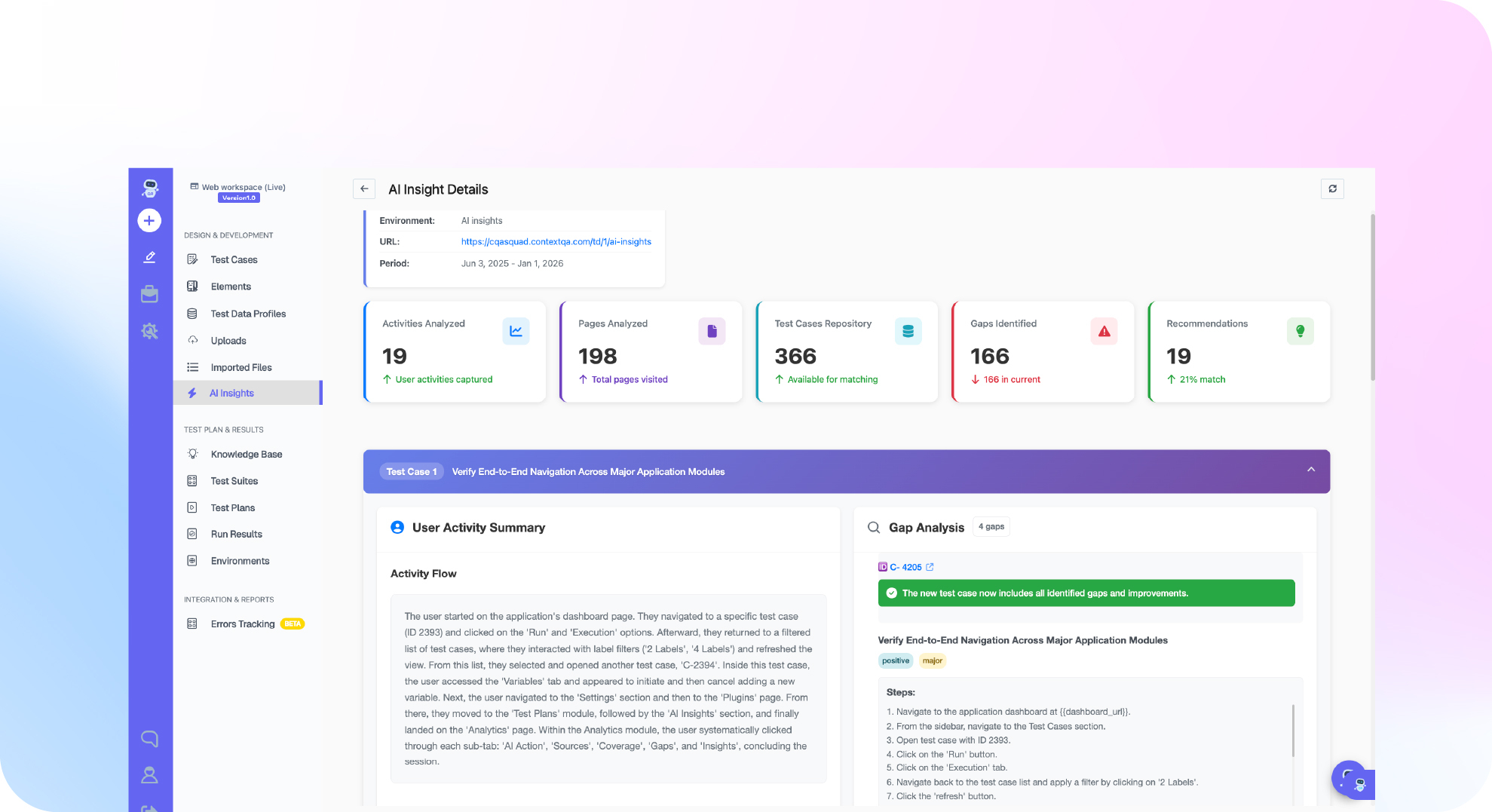
- AI native platforms. Tools like ContextQA let you author tests by recording a journey, then keep them running with self healing. They suit teams that want E2E coverage without a dedicated automation engineer per suite.
For a full breakdown of options across both families, see our roundup of the best test automation tools for 2026.
How AI is changing automated E2E testing
The old trade off with E2E testing was coverage versus maintenance. More tests meant more breakage to chase. AI changes that math in three ways.
- Faster authoring. Record a journey once and the platform generates the test, so you do not need to hand write every selector and assertion.
- Self healing. When the UI shifts, AI based self healing updates the affected steps automatically, which removes most of the maintenance that used to sink E2E suites.
- Portability. You are not locked in. With code export you can take your recorded tests out as standard framework code whenever you want.
The same approach extends across surfaces. ContextQA covers web automation, mobile automation, email testing, and ERP and SAP testing, so the same critical journey can be validated everywhere your users meet your product.
See your critical user journeys test themselves, and self-heal when the UI changes
Record a checkout or login flow once, run it on every build, and let ContextQA update the steps automatically when your app changes. No brittle selectors, no rewrite treadmill.
Book a ContextQA DemoA worked example: automating a checkout journey
Say an ecommerce team wants to protect its checkout. The journey is: search for a product, add it to the cart, apply a discount code, enter shipping details, pay with a test card, and confirm the order appears in order history. That single flow crosses the search service, the cart, the pricing engine, the payment gateway, and the orders database.
As one automated E2E test, it runs in under a minute on every pull request. When a developer changes the discount logic and accidentally breaks free shipping thresholds, the test fails in CI before the change merges, with a screenshot of the wrong total. The bug never reaches a customer. Multiply that across sign up, login, and billing, and a handful of well chosen E2E tests protect the flows that carry almost all of the revenue.
The bottom line
Automated E2E testing is how you prove the journeys that matter still work, on every build, without a human clicking through them. Keep the suite focused on critical flows, build a healthy pyramid underneath it, run it in CI/CD, and treat flakiness as a defect. The one change that turns E2E testing from a maintenance burden into a safety net is self healing, which lets your tests survive the UI changes that used to break them. Get those pieces right and E2E testing stops being the layer teams dread and becomes the one they trust.
Sources
- Mordor Intelligence, Automation Testing Market size and forecast, cited for market value (USD 40.44B in 2026 to USD 78.94B by 2031, 14.32 percent CAGR) and functional and cloud share. Link
- National Institute of Standards and Technology (NIST), economic impact of inadequate software testing infrastructure, cited for the USD 59.5B annual cost and late defect detection. Link
- Published research on test flakiness (arXiv survey), cited for the share of pass to fail transitions and tests caused by flakiness. Link
- Lisa Crispin, co-author of Agile Testing, cited for the expert framing of E2E testing. Link