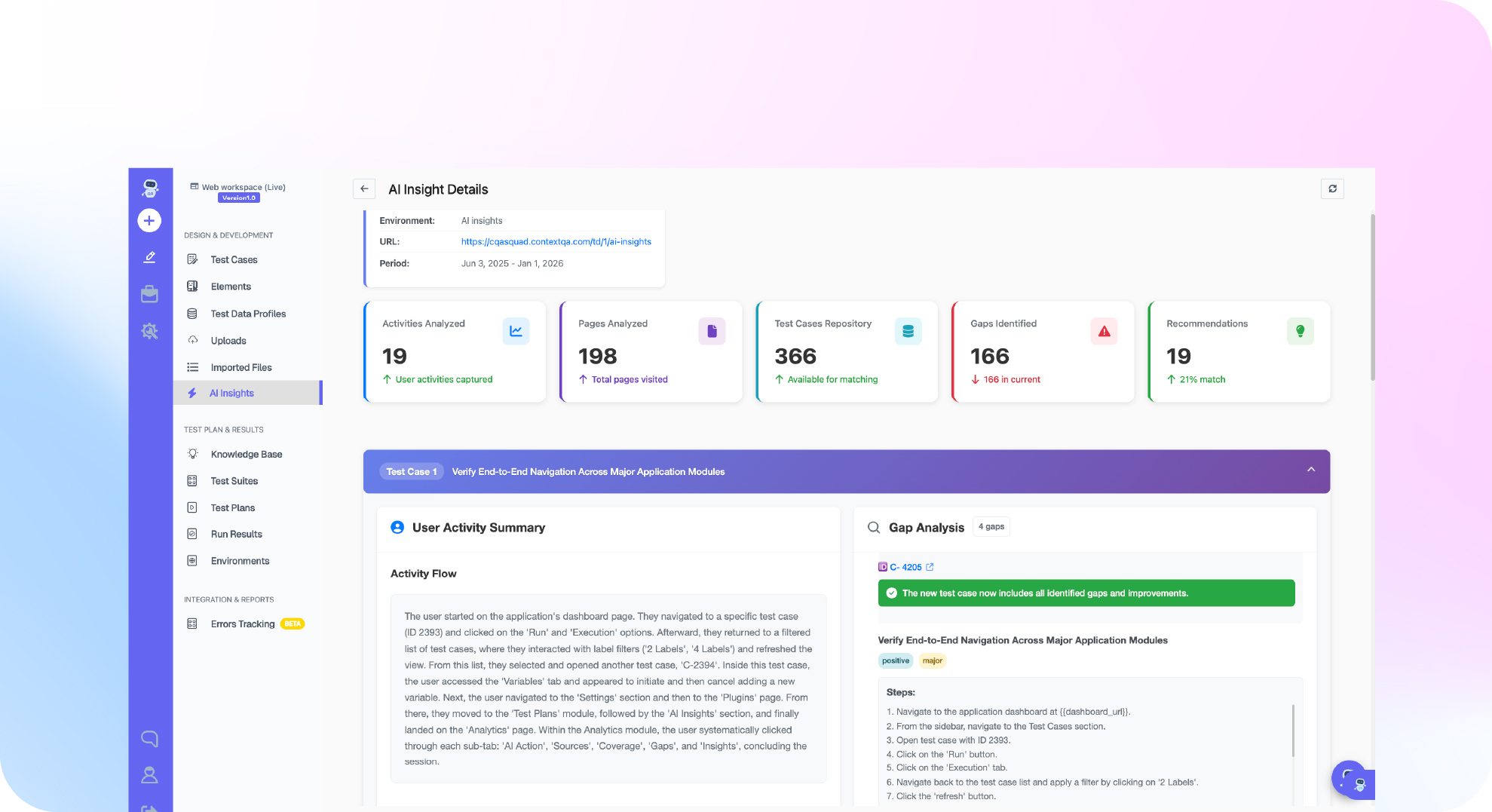

TL;DR: The best voice agent testing platforms for 2027 fall into three groups. Specialist platforms such as Hamming, Coval and Cekura focus on simulated callers. Builders such as Vapi and Retell include their own testing features. ContextQA, the autonomous quality engineer, tests voice agents with scenarios that include interruptions and silence. With configured read only verifier tools, it can check the business outcome in the system of record after a call. Choose by how much evidence each platform gives you after the call.
Before you pick from the best voice agent testing platforms 2027 has to offer, decide how you will prove that a phone agent works. Each option below gets a best fit and an honest limitation, and that includes ContextQA voice agent testing, which is our own product.
Quick answers
What changes in voice agent testing going into 2027? Teams now judge a voice agent by what it gets done, not by its transcript alone. That means simulated callers over real phone lines, interruptions, silence, accents and noise, checks on tool arguments, and a final check of the system of record. ContextQA voice agent testing uses both LLM judged criteria and measured audio signals.
Should we use the testing built into Vapi or Retell, or a separate platform? Testing inside a builder works well for fast checks while you develop an agent. A separate evaluation stage helps when you need reviewed scenarios, a regression run on every revision, and release gate evidence that holds across builders. ContextQA recommends keeping building, evaluation and deployment separate.
Which metrics should gate a voice agent release? Gate on assertions that can prove the agent wrong: exact values, correct tool arguments, no duplicate actions, and a verified backend outcome. Use measured latency, dead air and interruption signals as gates only after you calibrate them. Treat LLM judged criteria as review signals, and check the judge against human labeled cases (metrics reference).
What are the best voice agent testing platforms 2027?
Most 2027 shortlists will draw from three groups. The first is specialist platforms: Hamming, Coval and Cekura. The second is the testing built into builders such as Vapi and Retell. The third is ContextQA voice agent testing, our own product. It scores calls on audio criteria and can check the business outcome through a configured read only verifier.
A voice agent testing platform runs simulated conversations against an agent and scores each call against its requirements. Those requirements cover speech, timing, reasoning, tool calls, and what changed in the backend. The backend check matters because a fluent call can still book the wrong slot, or claim a refund went through when the tool call failed.
An end to end voice test needs evidence for three things:
- Latency: measured response time per turn. Before you compare figures across tools, check which timestamps mark the start and end of each measurement.
- Interruptions and silence: whether the agent talks over the caller, stops when interrupted, or leaves dead air.
- Accuracy and outcome: whether the final answer and tool arguments match the request, confirmed in the system of record.
In ContextQA, these checks map to the measured criteria Measured Response Latency, Agent Interruptions, Yields When Interrupted and Measured Dead Air. LLM judged criteria such as Turn Taking and Language Match run next to them. The metrics reference says measured criteria stay off until you enable them. Once enabled, they score every voice case in the project.
Because Vapi and Retell include testing for agents built on them, the buying question is no longer "can we simulate calls?" It is "who owns the release gate, and where does the evidence live?"

How did we evaluate them?
We compared each option on six criteria you can check yourself:
- simulated callers over real phone lines
- handling of interruptions and silence
- accent and noise variation
- tool call checks
- business outcome verification after the call
- pricing and deployment fit
Our sources were vendor docs and pricing pages. We did not test or benchmark any tool.
We compiled the vendor links in November 2026, and each one points to the vendor's own site. Features and pricing change often, so confirm current details before you shortlist a tool. Where we could not confirm a pricing model, the table says so.
We weighted the outcome criterion most heavily. A voice agent can say "your appointment is booked" even though the booking API returned an error, and a transcript score will not catch that. ContextQA's failure mode map calls this a "false completion." The evidence it requires is the tool's failure response plus the actual stored state.
Open source frameworks give you full control, but you build the telephony, caller personas, scoring and run history yourself. The real question is whether your team wants to own and maintain that work.
How do the options compare?
Hamming, Coval and Cekura simulate callers and score calls. Vapi and Retell test the agents built on them. ContextQA, our own product, evaluates voice agents, and with a configured read only verifier it can check the business outcome after the call. Choose based on where your agent runs and what each release has to prove.
| Tool | Best for | Pricing model | Key limitation |
|---|---|---|---|
| Hamming | Dedicated voice QA teams | Not verified, check vendor | Not verified, check vendor docs |
| Coval | Simulation led evaluation | Not verified, check vendor | Not verified, check vendor docs |
| Cekura | Scenario testing and monitoring | Not verified, check vendor | Not verified, check vendor docs |
| Vapi built in tests | Agents built on Vapi | See pricing page | Covers agents built in Vapi |
| Retell built in tests | Agents built on Retell | See pricing page | Covers agents built in Retell |
| ContextQA (ours) | Outcome checks plus enterprise app testing | Demo and quote | Sales led, no self serve price |
Hamming
- What it is: a platform for testing and monitoring voice agents (hamming.ai).
- Best for: teams that want simulated callers and production call monitoring from one vendor.
- Limits: check its docs for WER reporting (word error rate, the share of words transcribed incorrectly), how runs start from CI, and HIPAA or PCI support.
Coval
- What it is: a platform for simulating and evaluating voice and chat agents (coval.dev).
- Best for: teams that want to run simulated conversations before a release.
- Limits: confirm how it handles calls over real phone lines and how it reads your system of record after a call.
Cekura
- What it is: testing and observability for conversational agents (cekura.ai).
- Best for: teams that want pre release tests and production monitoring in one place.
- Limits: check its pricing page and compliance claims before you shortlist it.
Built in testing in Vapi and Retell
- What it is: test features inside the voice builders themselves (Vapi docs, Retell docs).
- Best for: fast checks while you build agents on those platforms.
- Limits: it covers agents built on that builder, so a stack that mixes vendors needs a separate evaluation layer.
ContextQA voice agent testing (our product)
- What it is: voice agent testing on the ContextQA AI agent testing platform (solution page).
- Best for: releases where the agent has to complete a real task, such as booking an appointment or updating a record.
- Strengths:
- It keeps LLM judged criteria (
Tone Appropriate,Turn Taking,Dead Air) separate from measured ones (Measured Response Latency,Agent Interruptions,Yields When Interrupted) (metrics reference). - Configured read only verifier tools can catch false completions by checking the stored state (failure modes).
- The AI agent testing page lists PII and compliance checks and model upgrade regression.
- Limits:
- Pricing is by demo and quote only.
- Once enabled, measured criteria score every voice case in the project, so decide their scope before you turn them on.
Speech Quality Scoreis informational until you calibrate it.- We do not claim HIPAA or PCI certification for it.
If your voice agent sounds right on test calls but never actually books the appointment, see how ContextQA voice agent testing can check the business outcome after a simulated call using read only verifier tools, or book a demo.
Which one fits your team?
If you already build on Vapi or Retell, start with the testing those builders include. If your voice agents carry compliance or revenue risk, shortlist a specialist platform such as Hamming, Coval or Cekura. If you need to confirm outcomes in a system of record, evaluate ContextQA, our own product.
- Startups: builder testing is the easiest place to start. Add a specialist tool once real callers find failures your scripted tests missed.
- Dev agencies: you probably deliver agents on more than one builder. A tool that works across builders lets you keep one regression suite per client instead of one per builder.
- Enterprise: a voice test only counts if it checks what happened after the call. ContextQA can use configured read only verifier tools to confirm the booking or record exists, and it scores measured latency, interruptions and dead air.
For engineering leaders, the tradeoff is ownership. Builder testing sits inside a tool you already use, but it ties your evidence to one vendor. A separate evaluation stage means one more integration. In return, you get a release gate that survives a change of builder. ContextQA's agent builder guide describes what that stage needs from the builder: a stable target identifier, the candidate revision, the environment, and the permitted actions.
What to do on Monday: pick one high risk call flow and write down the backend record that proves it succeeded. Run a normal success case and one hard variation, such as a date corrected mid call. Then judge each tool on whether it can show you that record.

Bottom line
The right voice agent testing platform for 2027 depends on what each release has to prove. Hamming, Coval and Cekura focus on simulated callers and call scoring. Builder testing in Vapi and Retell suits quick checks on agents built there. If your gate needs proof of the business outcome, ContextQA voice agent testing (our product) can check the system of record through a configured read only verifier and score audio criteria in the same run. For text agents, see best AI agent testing tools in 2027.
Sources
Every vendor claim links to that vendor's own site. Every ContextQA claim links to our product pages or to our docs at learning.contextqa.com. We checked the links in November 2026, so confirm current details before you shortlist a tool.