
TL;DR: The best Salesforce test automation tools for 2027 are ContextQA, Provar, Copado Robotic Testing, ACCELQ, Tricentis Tosca, Testim for Salesforce and Katalon. ContextQA, the autonomous quality engineer, suits teams that want AI generated, self healing Lightning tests and Agentforce checks in the same suite. Compare the tools on shadow DOM, Flows, permission sets, sandbox data and the three seasonal releases. Then run a pilot on your own org before you commit.
Picking from the best salesforce test automation tools 2027 offers means planning for three seasonal releases, Lightning shadow DOM, Flow changes and Agentforce actions. This guide compares Provar, Copado Robotic Testing, ACCELQ, Tricentis Tosca, Testim, Katalon and ContextQA, which is our own autonomous quality engineer for enterprise Salesforce testing. For each tool you get the best fit, the pricing model and an honest limitation.
Quick answers
What should a Salesforce test tool handle differently in 2027? It needs to handle Lightning shadow DOM, three seasonal releases, Flow and permission changes, and Agentforce actions on records. A UI happy path is no longer enough evidence to release. The tool should confirm saved data, history entries and downstream actions with UI and API checks, and it should keep evidence from every run.
How should we test profiles and permission sets during a seasonal release? Map every permission, sharing or Flow change to the journeys and roles it affects. Then run the allowed path and the denied path for each role, for example whether partner A can see partner B's records. Run a baseline on the current configuration, run the same tests on the candidate, and compare the two.
How do we keep Salesforce tests stable across sandboxes and test data? Build one session login test, keep its credentials in protected parameters, and make it a prerequisite for the tests that depend on it. Refresh synthetic data before each run and give every parallel case its own records. Sort failures into defects, data problems, environment problems and test maintenance, and review automatic locator repairs before you accept a green run.
What are the best salesforce test automation tools 2027?
A Salesforce test automation tool runs repeatable UI and API tests against Lightning pages, Flows and permission rules, so you can release without a manual regression pass. The 2027 shortlist is Provar, Copado Robotic Testing, Tricentis Tosca, ACCELQ, Testim for Salesforce, Katalon and ContextQA. ContextQA is our own product. It tests Salesforce business journeys using natural language steps and API checks.
Salesforce is harder to automate than a typical web app. Lightning Web Components render inside shadow DOM, an encapsulated DOM tree. Document level queries such as document.querySelector and XPath do not cross a shadow boundary, so a tool needs shadow piercing support (for example, Playwright's CSS engine for open shadow roots) to reach elements inside it. Salesforce also uses synthetic shadow for many Lightning Web Components, so locator behavior can vary from one component to the next. Lightning also generates element IDs at runtime, so recorded locators break often. On top of that, Salesforce publishes release notes for the Spring, Summer and Winter releases, and each one changes the platform under your tests even when your own team shipped nothing.
"No code" covers less than it sounds like. No code tools check Flow behavior and the Lightning UI from the outside. Apex unit tests still run on the platform itself, for example with sf apex run test --test-level RunLocalTests in the Salesforce CLI. A complete plan needs both kinds of testing.

How did we evaluate them?
We compared each tool on seven Salesforce criteria for 2027: Lightning and shadow DOM handling, self healing a person can review, seasonal release regression, coverage across profiles and permission sets, sandbox test data, Agentforce testing and total cost of ownership. We did not benchmark or run any tool, so treat this as a starting shortlist.
Method note. For ContextQA, Provar and Copado only, we used ContextQA's comparison guide, which summarizes vendor documentation as of November 12, 2026. That guide does not cover ACCELQ, Tricentis Tosca, Testim or Katalon, and it is not the source of the seven tool list. Features and pricing change between editions, so confirm current details on each vendor's own site before you buy.
How we weighed each criterion:
- Self healing: Does the tool repair locators, and can a reviewer see and reject each repair? ContextQA's seasonal release guide says to review locator repairs and assertion changes before sign off.
- Seasonal regression: Can you run a baseline on the current org and compare it with a candidate run in a preview sandbox?
- Roles and Flows: Can one journey run as several profiles, so it catches sharing errors and approval Flow errors?
- Test data: Are synthetic records refreshed for each sandbox and kept unique for each parallel run?
- Total cost: License, maintenance hours after each release, runner capacity and the cost of switching away later.
- ContextQA (our product): Best for: Salesforce, web, API and agent journeys in one suite; Pricing model: Demo and quote; Key limitation: No published price. PR impact analysis needs source context
- Provar: Best for: Teams that test only Salesforce; Pricing model: Confirm with vendor; Key limitation: Journeys outside Salesforce may need a second tool
- Copado Robotic Testing: Best for: Teams already on Copado DevOps; Pricing model: Confirm with vendor; Key limitation: Most value depends on using Copado's pipeline
- ACCELQ: Best for: Codeless teams across enterprise apps; Pricing model: Confirm with vendor; Key limitation: Check custom Lightning components in your trial
- Tricentis Tosca: Best for: Large SAP and Salesforce estates; Pricing model: Confirm with vendor; Key limitation: Model based setup takes specialist time
- Testim for Salesforce: Best for: Lightning UI tests with AI locators; Pricing model: Confirm with vendor; Key limitation: Check coverage beyond the Lightning UI
- Katalon: Best for: Mixed skill teams on a budget; Pricing model: Free tier plus paid plans; Key limitation: General purpose, so plan for shadow DOM locator work
How do the options compare?
The seven tools fall into three groups. Provar and Copado Robotic Testing specialize in Salesforce. ACCELQ, Tricentis Tosca, Testim and Katalon are broader test platforms that also support Salesforce. ContextQA, our own product, is an AI platform that combines Lightning UI tests, API checks and release evidence. Choose the tool that fits where your pipeline already runs.
Provar
Provar is built only for Salesforce and creates tests from org metadata instead of page structure. It suits QA teams whose work is almost entirely Salesforce. The limitation is that journeys leaving Salesforce usually need a second tool.
Copado Robotic Testing
Copado Robotic Testing runs keyword tests inside Copado's Salesforce DevOps platform. It suits teams that already deploy with Copado. The limitation is that it adds less value outside that pipeline.
ACCELQ
ACCELQ is a codeless cloud platform that covers Salesforce alongside other enterprise apps. It suits business side testers. The limitation is that code first SDETs (software development engineers in test) may find the abstraction confining.
Tricentis Tosca
Tosca uses model based automation across SAP, Salesforce and legacy apps. It suits enterprises that want one suite for every application. The limitation is that setup and licensing are sized for large programs.
Testim for Salesforce
Testim uses AI to keep locators stable in Lightning UI tests. It suits UI regression on pages that change often. The limitation is its UI focus: API and data checks may need another tool.
Katalon
Katalon is a general low code platform with a free tier and the option to write scripts. It suits startups and agencies that support several tech stacks. The limitation is that its Salesforce support is less specialized.
ContextQA (our product)
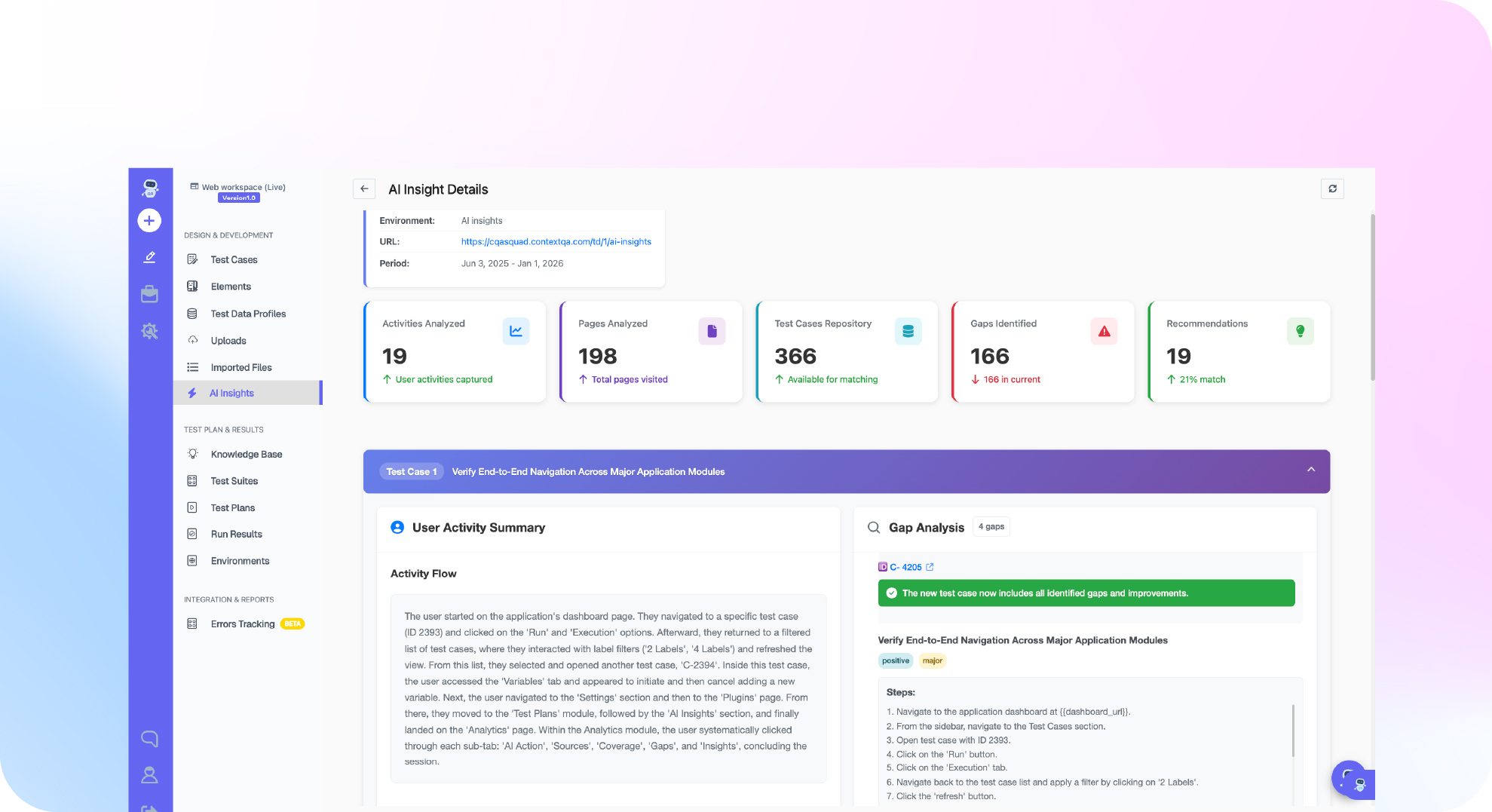
ContextQA turns a Salesforce login into a reusable prerequisite test, runs Lightning steps written in plain English and pairs UI checks with API checks, as described in the Salesforce workflows guide. Tests self heal when the UI changes, export to Playwright and run from Jenkins or GitHub Actions. It suits teams that need release evidence across Salesforce and the systems connected to it. The limitation is that pricing is available only through a quote.
Open source
Playwright or Selenium combined with Salesforce's UTAM page objects costs nothing in licenses. The tradeoff is that your team maintains the Lightning locators through every seasonal release. Whichever tool you trial, confirm it can be triggered from your CI system.
If Lightning shadow DOM changes, seasonal releases or Agentforce updates keep breaking your Salesforce regression suite, book a demo to see how ContextQA tests those flows.
Which one fits your team?
Choose based on where your Salesforce work sits. If Salesforce is one of several enterprise apps you test, and you want AI test generation, self healing and IDE access through MCP in one platform, look at ContextQA, our own product. Choose Provar for Salesforce depth alone, Copado Robotic Testing if you release with Copado, and Tosca if SAP is a large part of your stack.
Reading review sites. On G2 and Gartner Peer Insights, filter for reviewers who test Salesforce. Read the three star reviews for complaints about Lightning locators and maintenance after seasonal releases. Treat star ratings as sentiment, not benchmarks.
Testing tools vs. automation tools. A search for "Salesforce automation tools" often returns Flow builders. Those tools automate business processes. They do not test them. Every Flow change is a regression risk, so you need both. ContextQA's Salesforce testing guides organize coverage around business journeys, roles and active rules instead of individual screens.
What to do on Monday: Shortlist two tools and run the same sandbox journey in each. A good choice is an opportunity approval with a check that partner A cannot see partner B's records. Then rerun that journey on the preview release and count the maintenance hours each tool needed.

Bottom line
None of the 2027 tools wins for every team. The right choice depends on where your pipeline runs, which Salesforce clouds you use and how much locator work your team can absorb after each seasonal release. Specialist tools suit teams that work only in Salesforce. Broader platforms suit teams with mixed estates. ContextQA, our own product, suits teams that want Lightning, API and Agentforce journeys in one suite, as covered in our enterprise application testing guide. If you are also weighing tools beyond Salesforce, read how to choose AI test automation tools in 2027. Whichever tool you pick, pilot it on your own org first.