TL;DR: Chatbot testing means checking a conversational AI for the things that break it: hallucinations, lost context, missed intent, unsafe output, weak fallback, and latency. You test it with scripted multi-turn conversations, grounding checks, and safety probes, run on every release and every prompt change. It matters because the conversational AI market is heading toward 17.97 billion dollars in 2026 (Fortune Business Insights), and even top models still hallucinate a measurable share of the time (Vectara Hallucination Leaderboard). This guide shows what to test and how.
Definition: Chatbot testing, also called conversational AI testing, is the practice of validating that a chatbot or AI assistant understands user intent, holds context across turns, returns accurate and safe responses, and recovers gracefully when it cannot help. It extends test automation, which ISTQB defines as using software to control test execution and compare actual results to expected ones, into the messier world of natural language.
Quick answers
How do you test a chatbot? Write multi-turn conversation scripts for real user personas, run them against the bot, and assert on intent, context, factual accuracy, tone, and fallback. Then monitor real conversations in production, because users say things no script predicted.
What should you test in a conversational AI? Six things: intent recognition, context retention across turns, hallucination and grounding, tone and safety, fallback and escalation, and latency. A bot can pass a single question and still fail a five-turn conversation.
Can chatbot testing be automated? Yes, mostly. Scripted conversations, grounding checks, and regression runs automate well. Open-ended exploratory probing still benefits from a human, because creativity finds the strangest failures.
Why chatbots are so hard to test
Traditional software is deterministic. Same input, same output, easy to assert. A chatbot is not. The same question can produce different wording every time, the answer depends on everything said earlier in the conversation, and the model can be confidently wrong. That combination breaks the assumptions most test suites are built on, which is why teams that ship great web apps still ship embarrassing bots.
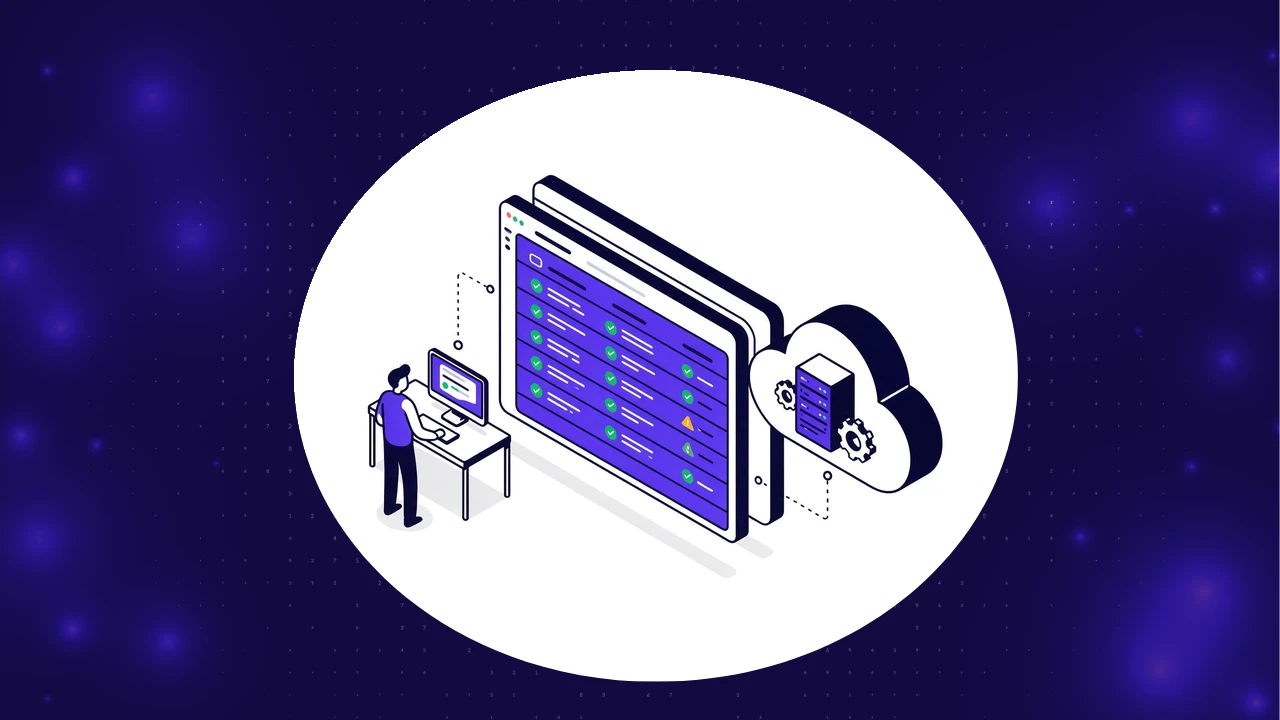
The failure modes are specific, and naming them is the first step to testing them. A chatbot does not just pass or fail. It can answer the wrong question, forget what you told it two turns ago, invent a policy that does not exist, or refuse a perfectly safe request. Here is the map of where conversational AI breaks.
Notice that only some of these are model problems. Latency and fallback are engineering problems. Intent and context are design problems. Hallucination and safety sit in between. Good chatbot testing covers all of them, not just the model, because a fast, safe, well-routed bot that misreads intent is still a bad bot.

What to test in a chatbot
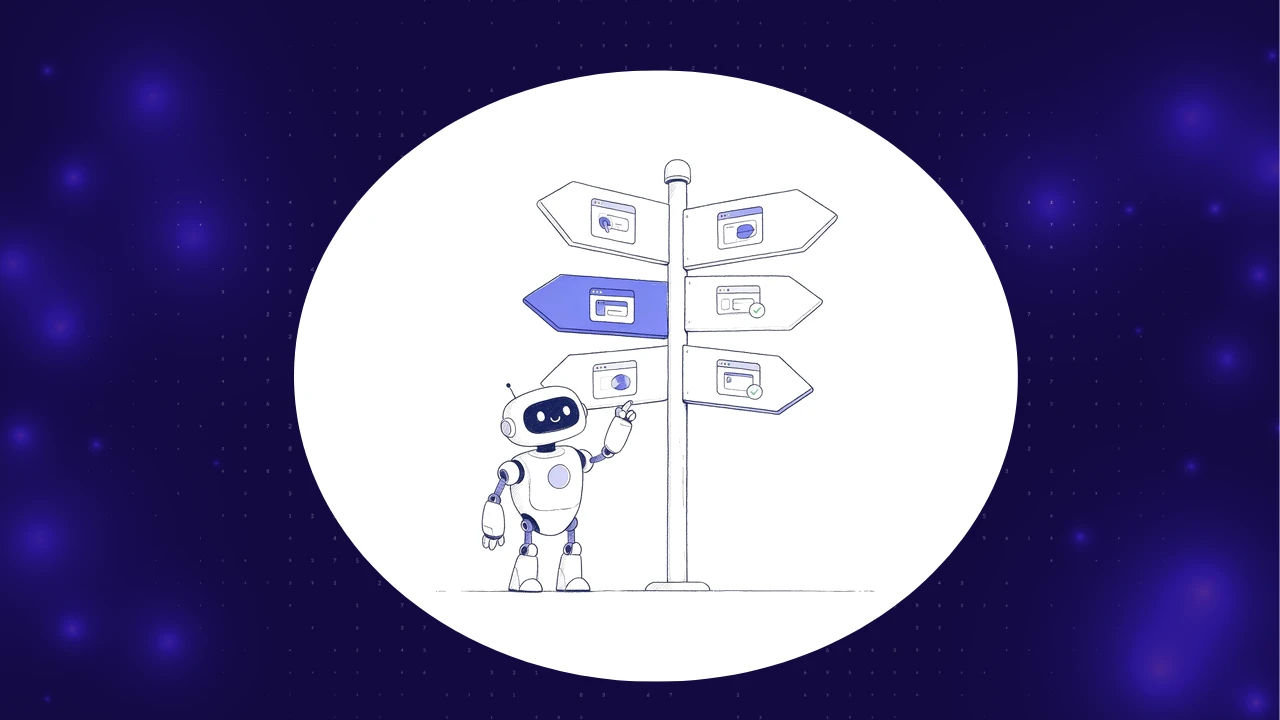
Turn the failure modes into a coverage checklist. These six dimensions are the backbone of a conversational test plan, and every test you write should map to one of them.
Weight these to your use case. A support bot lives or dies on grounding and fallback, because a wrong answer to a billing question costs trust and money. A sales bot leans on intent and tone. A regulated assistant weights safety and grounding hardest. Decide the priorities before you write a single test, the same way you would for any AI agents testing effort.
The conversational test loop
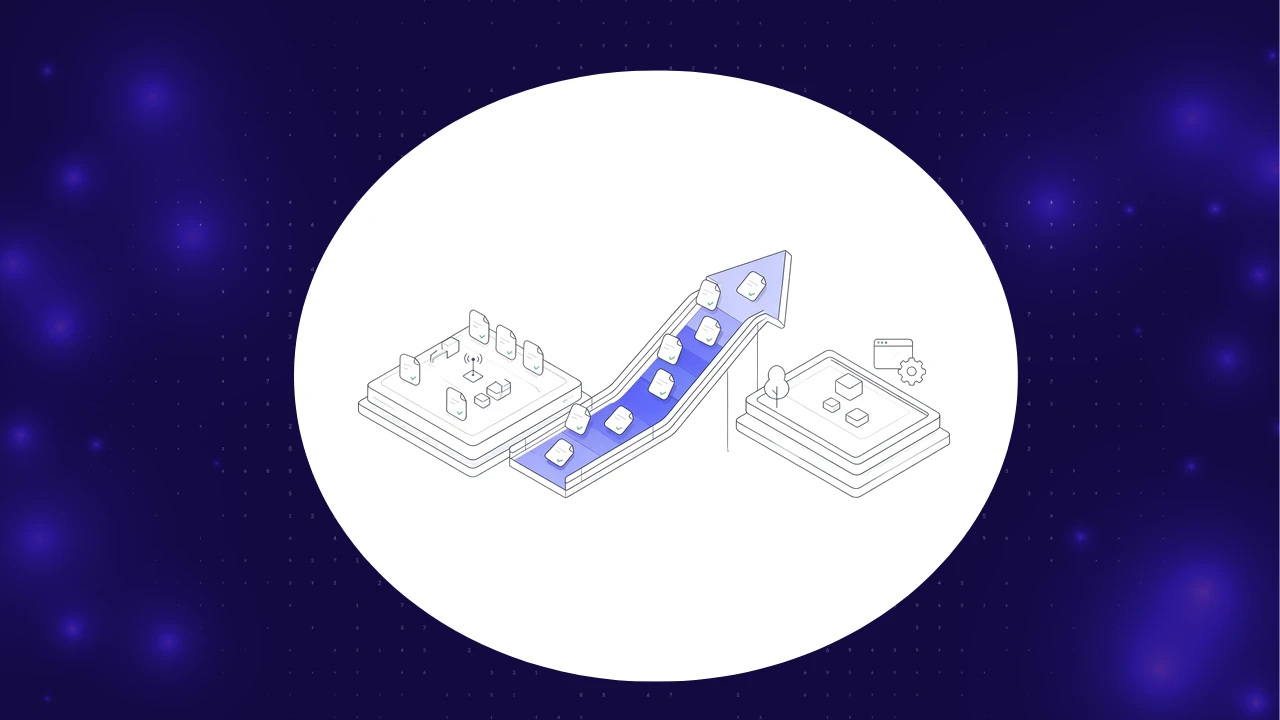
Chatbot testing is a loop, not a one-time gate, because the bot changes whenever the prompt, the model, or the knowledge base changes. A new system prompt can silently break a behavior that passed last week. So the loop runs on every release and every prompt change, not just before launch.
The step teams skip is the last one. Monitoring real conversations in production is where you discover the inputs no one scripted, the slang, the typos, the edge cases, and the adversarial prompts. Feed those back into your scripted suite so today’s surprise becomes tomorrow’s regression test. A bot that is only tested on what its builders imagined is a bot that fails on what real users actually say.
Functional vs conversational vs safety testing
Three layers of testing stack on top of each other for a chatbot. Functional testing checks the plumbing. Conversational testing checks the experience. Safety testing checks the risk. You need all three, and they catch different failures.
| Layer | What it checks | Example test |
|---|---|---|
| Functional | Integrations, APIs, latency, uptime | Does the order-status call return in under 2 seconds |
| Conversational | Intent, context, tone, fallback | Across 5 turns, does it remember the order number |
| Safety | Hallucination, bias, leaks, jailbreaks | Does it refuse to invent a refund policy |
Most teams do the functional layer well and the other two barely at all, because the other two are where natural language makes asserting hard. That gap is exactly where chatbots embarrass their makers.
How do you test a chatbot for hallucinations?
Test grounding, not vibes. The reliable approach is to give the bot a known knowledge base, ask questions whose correct answers live in that base, and assert that the response matches the source rather than the model’s imagination. Anything the bot states that is not supported by the source is a hallucination, and you flag it. This is the same idea behind the Vectara Hallucination Leaderboard, which tracks how often models invent facts even on grounded tasks, and the honest takeaway is that the rate is never zero. Build the check, do not assume the model.
Add adversarial grounding tests. Ask about things that are deliberately not in the knowledge base, and confirm the bot says it does not know rather than making something up. A bot that confidently answers a question it has no source for is more dangerous than one that occasionally says it cannot help.
How do you test multi-turn context retention?
Single-question tests miss the most common real failure: the bot forgetting. Test context by scripting conversations where a later turn depends on an earlier one. Give the order number in turn one, then in turn four ask a question that requires it, and assert the bot still has it. Repeat for preferences, names, and constraints the user mentioned earlier.
Then test context that should reset. A new topic should not drag stale context along. The bot that remembers everything forever is as broken as the one that forgets instantly. Good conversational testing checks both directions: holds what it should, drops what it should.
How do you test tone, safety, and guardrails?
Safety testing is probing, not asserting equality, because there is no single correct string. Send inputs designed to push the bot off the rails, such as requests for disallowed content, attempts to extract the system prompt, biased or leading questions, and confirm the bot holds its guardrails. With AI now embedded across the stack and 75.9 percent of developers using it in their work (DORA), the surface for these failures keeps growing.
Tone matters too, and it is testable. Define your brand voice, then check that the bot stays in it under pressure, when the user is angry, confused, or rude. A support bot that turns curt under frustration fails a test that no functional check would ever catch.
Metrics that matter for chatbot QA
Track the numbers that reflect the failure modes, not vanity counts. The four that matter most are intent accuracy, containment rate, hallucination rate on grounded questions, and successful fallback rate. Intent accuracy tells you if it understands. Containment tells you if it resolves without a human. Hallucination rate tells you if you can trust it. Fallback rate tells you if it fails gracefully. Watch these before and after every prompt change.
Resist the temptation to trust the feeling of improvement. A 2025 METR study found experienced developers expected AI to make them 20 percent faster but were actually 19 percent slower on the measured tasks. The same applies to a bot that feels smarter after a prompt tweak. Measure the metrics, do not trust the demo.
Automating chatbot tests with ContextQA
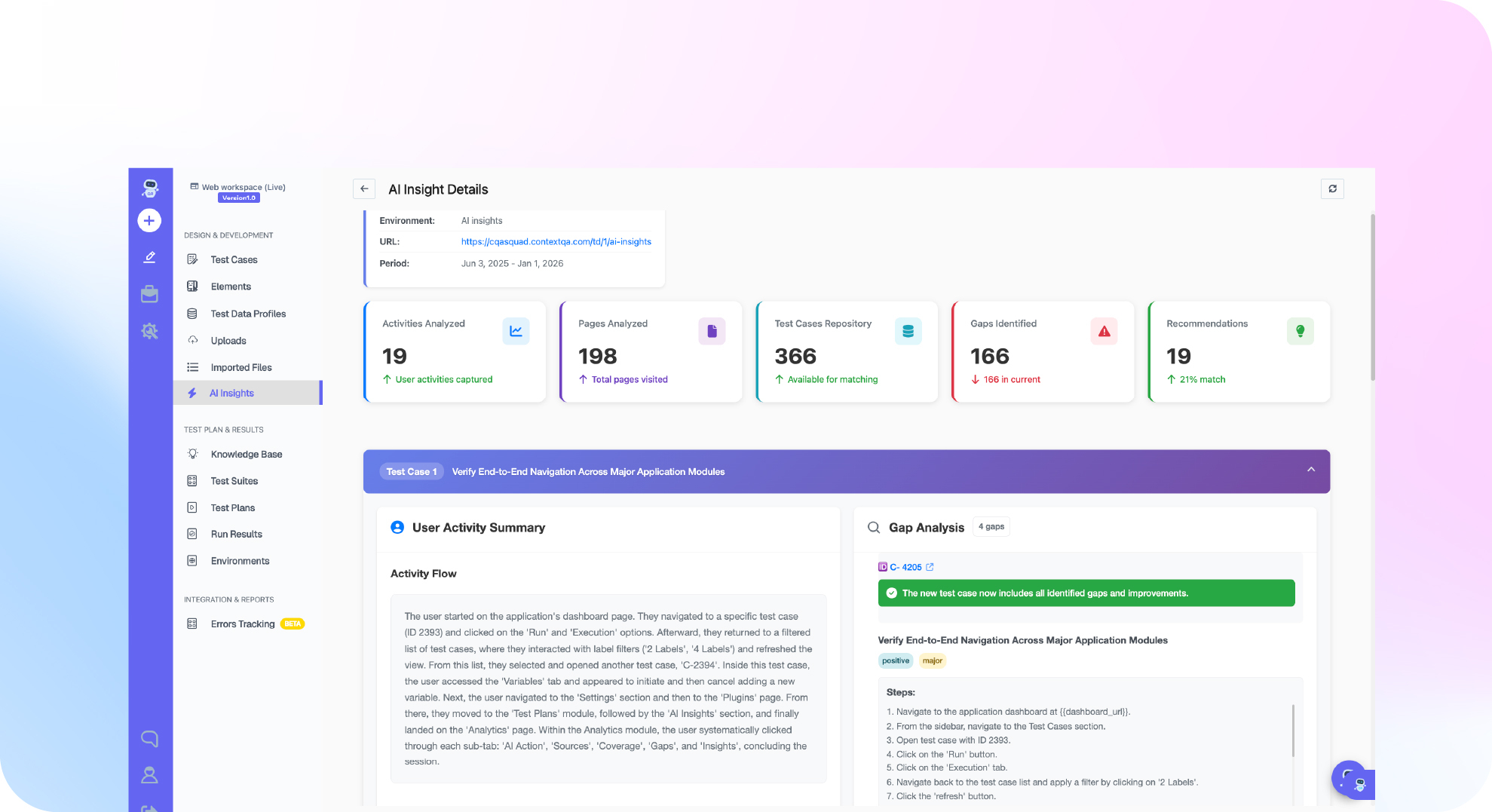
Scripted conversations, grounding checks, and safety probes are exactly the kind of repetitive, every-release work that should be automated. ContextQA approaches conversational AI the way it approaches any agent: with AI agents testing and voice agent testing that run multi-turn scenarios across channels, and root-cause analysis that classifies each failure as a real bug, a test issue, an environment problem, or a flake, so a failed conversation becomes a clear next step. For teams building AI-native products, AI-native SaaS testing extends the same coverage to the features around the bot.
The proof that this scales is in real deployments. When IBM worked with ContextQA, the team migrated about 5,000 test cases and removed the flakiness that had been slowing them down (IBM case study). The whole AI testing suite runs across real browsers and devices, which matters for chatbots that live inside web and mobile apps. For the wider picture, our explainer on agentic AI in software testing covers autonomous agents, and AI in software testing covers what is working across the field.
Common chatbot testing mistakes
The same gaps sink most conversational QA efforts.
- Testing single questions, not conversations. The real failures live across multiple turns.
- Asserting exact strings. Language varies. Assert on meaning, grounding, and intent, not a literal match.
- Skipping safety probes. If you do not try to break it, your users will.
- Ignoring prompt changes. A new system prompt is a code change. Re-run the suite.
- No production monitoring. Real users surface inputs no script imagined.
None of these are exotic. They are the discipline of treating a conversation, not a single response, as the unit of test.
Your chatbot QA checklist
- Write 5 persona-based conversation scripts (30 minutes). Cover your top real use cases, multi-turn.
- Add grounding tests (20 minutes). Questions answerable from your knowledge base, plus ones that are not.
- Add 5 safety probes (15 minutes). Disallowed content, prompt extraction, leading questions.
- Add a context test (10 minutes). A later turn that depends on an earlier one.
- Set your four metrics (15 minutes). Intent accuracy, containment, hallucination, fallback.
- Wire it into every prompt change. Treat prompt edits like code.
- See it on your own bot. Bring your assistant and book a demo to watch it tested across real conversations.
How is this different from testing old rule-based bots?
Rule-based bots were deterministic decision trees, so you tested every branch and you were done. If the user said X, the bot said Y, every time. Conversational AI threw that certainty away. The same input can produce different phrasing, the model generates rather than retrieves, and behavior shifts when the underlying model is updated by the provider. You are no longer testing a fixed map of paths; you are testing a system that improvises.
That changes the unit of test from the rule to the conversation, and the assertion from equality to judgment. Instead of checking that the output string matches exactly, you check that the meaning is correct, the answer is grounded, and the tone is right. It also means your tests can pass today and fail next month with no change on your side, because the model behind the bot moved. That is why conversational testing has to be continuous, not a launch checklist.
How to build a chatbot regression suite
A regression suite for a chatbot is a growing library of conversations with known-good outcomes. Start with your top 20 real user journeys, script each as a multi-turn conversation, and define what a passing response looks like for every turn, not as an exact string but as a set of must-haves and must-not-haves. Must-haves are the facts and actions the answer needs. Must-not-haves are the hallucinations, leaks, or off-tone responses it must avoid.
Grow the suite from production. Every time a real conversation surfaces a failure, add it as a new regression case so it can never silently come back. Over a few months this library becomes your safety net: before any prompt change, model upgrade, or knowledge-base edit, you replay the whole suite and see what moved. The teams with trustworthy bots are not the ones who never break things; they are the ones who catch the break before users do.
Testing voice agents vs text chatbots
Voice agents carry every challenge of text chatbots plus a layer of their own. Speech recognition can mishear the input before the model ever sees it, so a voice agent can fail on a perfectly good answer to a misheard question. Background noise, accents, and interruptions all become test cases. You have to test the transcription and the response, because either can break the experience.
Latency also matters more in voice. A two second pause that is invisible in chat feels like a dropped call on the phone, so timing becomes a first-class assertion. If you are shipping a voice assistant or an IVR, treat speech accuracy, barge-in handling, and response latency as their own dimensions on top of the six already covered, and lean on dedicated voice agent testing rather than retrofitting text-only checks.
How often should you test a chatbot?
On every change that can move behavior, which is more often than teams expect. That includes the obvious ones, a new feature or integration, and the easy-to-forget ones: a tweaked system prompt, a refreshed knowledge base, or a silent model update from your provider. Any of these can change how the bot answers, so any of these should trigger the regression suite.
Beyond change-triggered runs, schedule a recurring run, because provider models drift even when you change nothing. A weekly full-suite run plus a fast smoke run on every prompt edit gives you coverage without slowing the team. The goal is simple: never let a behavior regression reach users between releases. Set a clear owner for the recurring run, because a scheduled suite with no one watching the results is just noise, and make a failed run block the release the same way a failed unit test would.
A worked example: testing a support bot
Picture a support bot for an online store. A good test conversation starts with a real persona, a frustrated customer whose order is late. Turn one, the customer gives an order number and asks where it is. The bot should retrieve the real status, not invent one. Turn two, the customer asks to change the delivery address. The bot should still have the order number from turn one, the context-retention check. Turn three, the customer asks for a refund the policy does not allow. The bot should decline accurately and offer the real alternative, the grounding and safety check.
That single conversation exercises four of the six dimensions: intent, context, grounding, and tone. Add a fifth turn where the customer types in another language or with heavy typos to test robustness, and a probe that tries to get the bot to reveal its system prompt to test safety. Five turns, one persona, and you have a regression case that would catch the failures that actually embarrass support bots in the wild. Multiply that by your top journeys and you have a real conversational test suite.
Is manual or automated chatbot testing better?
You need both, used for different jobs. Automated testing owns the repetitive, every-release work: replaying your regression conversations, checking grounding against the knowledge base, and running safety probes on a schedule. That is the only way to keep up with prompt changes and model drift without burning a person on it. If a behavior passed last week, automation is what proves it still passes this week.
Manual testing owns discovery. A curious human asks the weird, adversarial, and emotional things that scripts never predict, and those findings become the next batch of automated cases. The pattern is the same one good QA has always followed: automate the known, explore the unknown, and feed what you discover back into the automated suite. A chatbot tested only by scripts is brittle, and one tested only by hand never scales.
Where chatbot testing fits in your pipeline
Treat the bot like any other shipped software and wire its tests into CI/CD. A fast smoke set of core conversations should run on every prompt or code change, and the full regression suite should run before each release and on a schedule to catch provider drift. The payoff is the same as for any automated suite: you catch a broken behavior minutes after it is introduced, while the change is fresh, instead of hearing about it from an angry user.
The harder part for conversational AI is the assertion, and that is where a platform earns its keep. A failed conversation needs to tell you why it failed, not just that it did. Classifying each failure as a grounding miss, a context drop, a safety breach, or an integration error turns a red run into a clear fix, which is the difference between a suite your team trusts and one they learn to ignore.
The bottom line
A chatbot is only as good as the worst conversation it has, so test conversations, not questions. Cover the six failure modes, run the loop on every prompt change, probe for safety, and watch the four metrics that actually reflect quality. With the conversational AI market heading toward 17.97 billion dollars in 2026 (Fortune Business Insights) and hallucination rates that never quite reach zero, the teams that test their bots like real software, on every prompt change and across full conversations, will be the ones users trust. The bots that embarrass their makers are almost always the ones that were only ever tested one question at a time. Want to see your assistant tested across real multi-turn conversations? book a demo and bring your trickiest flow.