
TL;DR: The best AI QA engineer tools of 2027 plan, write, run, maintain and triage tests. Recording clicks is not enough. Ship by ContextQA is our own autonomous quality engineer. It tests every pull request and reproduces reported bugs for small product teams. QA Wolf is a managed service. Momentic, mabl and testRigor let your own team write tests. 84% of developers use or plan to use AI tools (Stack Overflow Developer Survey, 2025). Pilot two tools on your flakiest suite.
Almost every vendor now says it sells an autonomous agent, so the label no longer narrows a shortlist. This guide compares five options by best fit, pricing model and one honest limitation each, with Ship marked as ours. It ends with a trial plan for engineering managers.
Quick answers
What separates an AI QA engineer from a record and playback tool? A record and playback tool replays the clicks you captured, and someone fixes it by hand when the UI changes. An AI QA engineer plans coverage, writes and runs tests, repairs broken selectors, triages failures and reproduces reported bugs. In a 2027 trial, ask it to reproduce a real bug from your ticket queue.
Should we buy a managed QA service or a self serve AI testing agent? With a managed service, the vendor's people own your tests, usually at a quoted price. A self serve agent runs inside your own pull request and ticket workflow and hands your engineers the evidence. When checked on Nov 20, 2026, Ship by ContextQA offered a 15 day free trial with no card required. Paid plans started at $49 a month.
What should a 2027 trial prove before we sign? Run the trial on your own staging app and CI pipeline. Confirm four things: it tests a real pull request, it reproduces a Jira, Linear or Slack bug with evidence, it survives a deliberate UI change, and its flaky label holds when you rerun the same build. Then price its credits or runs against your monthly merge volume.
What are the best AI QA engineer tools in 2027?
The best AI QA engineer tools in 2027 cover the whole testing loop, not only authoring. Our shortlist has five options. Ship by ContextQA (our own product) handles pull request testing and bug reproduction. QA Wolf is a managed service. Momentic, mabl and testRigor are platforms your own team runs.
An autonomous quality engineer is software that plans, writes, runs, maintains and triages tests on its own, and reproduces reported bugs. A human reviews the evidence instead of scripting each step. A record and playback tool does not decide what to test, and it goes stale when the UI changes. An AI QA engineer does five jobs:
- Plans: reads a change or a ticket and decides which flows need coverage.
- Writes and runs: generates test cases and runs them before merge.
- Maintains: updates tests when the application changes on purpose.
- Triages: separates a product regression from a flaky test, a fixture problem or an environment problem, with evidence attached.
- Reproduces: turns a bug report into a reproduction and a likely root cause.
What changes going into 2027. AI coding assistants speed up writing code, but every change they produce still needs review and testing. Playwright, Selenium and Cypress remain strong engines for running tests, yet your team still owns test design, selector upkeep and triage. The 2027 question is how much of that loop you hand off, and how you check the work.

How did we evaluate them?
We used six criteria. Does the tool plan tests from intent? Does it write and run them in CI? Does it keep them working through UI changes? Does it triage failures, reproduce reported bugs and publish its pricing? We did not test or benchmark any tool. The list comes from vendor docs, pricing pages and review sites.
Ship's pricing comes from ship.contextqa.com, checked Nov 20, 2026. Pricing models for the other tools come from the vendor pages listed in Sources. Recheck each page on the day you budget.
Self healing means a tool repairs broken locators automatically when the UI changes, which matters because maintenance is where suites lose their value. Triage matters just as much. A passing retry does not prove the product works, because an application race condition can be intermittent and still be a real defect (ContextQA docs: Find and Fix Flaky Tests in CI).
| Tool | Best for | Pricing model | Key limitation |
|---|---|---|---|
| Ship by ContextQA (ours) | Small teams testing every PR and reproducing bugs | 15 day free trial, Starter $49/mo, Pro $249/mo, Enterprise custom | Billed by credits; SAP and Salesforce are on the separate ContextQA platform |
| QA Wolf | Handing off test creation and upkeep | Managed service, quote based | Test changes wait in the vendor team's queue |
| mabl | Low code web and API testing in CI | Quote based | No published price, so budgeting starts with sales |
| testRigor | Plain English tests by non coders | Tiered plans on its pricing page | Tests use its own format; confirm export options |
| Momentic | AI written web tests for developers | Plans on its site | Web focus; confirm mobile and API coverage |
How do the options compare?
The options split by who does the work. QA Wolf's team writes and maintains your tests. Momentic, mabl and testRigor give your own team AI assisted authoring and self healing. Ship by ContextQA, our own product, tests every pull request and reproduces reported bugs. Pricing runs from published self serve plans to custom quotes.
QA Wolf
What it is: a managed QA service whose team writes and maintains your end to end tests in Playwright (vendor site: qawolf.com). Best for: teams that want coverage without hiring for it. Strengths: someone else maintains the tests and sorts the failures. Limits: fixes wait in an outside team's queue, and pricing comes through a quote.
Momentic
What it is: an AI testing tool where engineers describe web tests in natural language and run them locally or in CI (Momentic). Best for: startups where developers own testing. Strengths: fast authoring without hand maintained selectors. Limits: it focuses on web apps, so check its docs against your mobile and API needs.
mabl
What it is: a low code platform for web, mobile and API tests with auto healing (pricing page: mabl.com/pricing). Best for: QA teams that want a hosted suite. Strengths: CI/CD and Jira integrations. Limits: pricing comes through a quote, so your forecast waits on a sales cycle.
testRigor
What it is: a tool where you write tests as plain English steps (pricing page: testrigor.com/pricing). Best for: manual testers moving into automation. Strengths: very little code required. Limits: tests live in the vendor's own format, so confirm you can move them out before you commit.
Ship by ContextQA (our product)
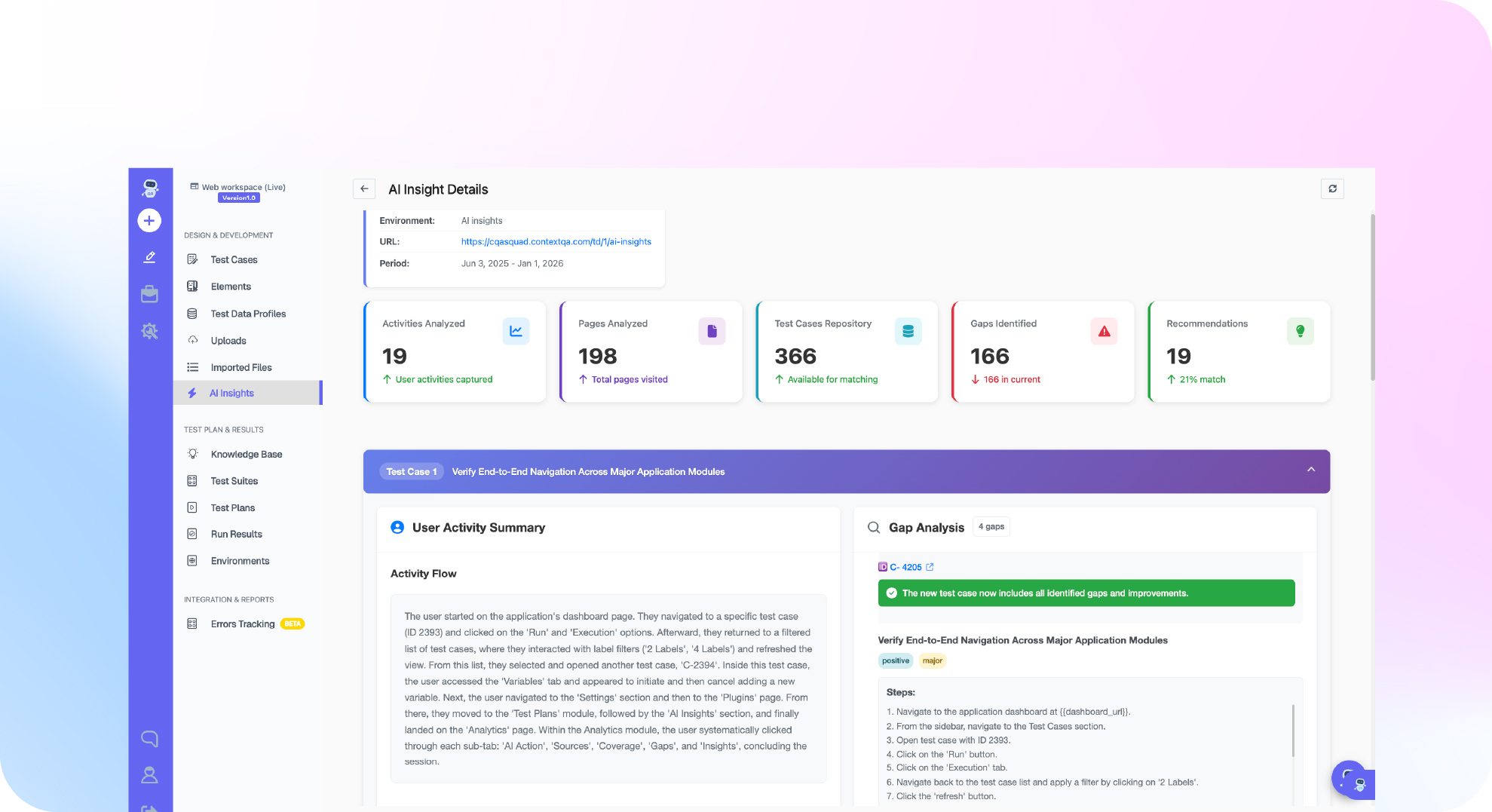
What it is: an autonomous quality engineer. It works out which areas each pull request touches and runs targeted regression tests before merge. It also reproduces bugs reported in Jira, Linear, Slack or a service desk, then gives engineers the likely root cause and the evidence. Best for: smaller product teams that want to set it up themselves. Strengths: unlimited users on every plan and a 15 day free trial with no card. After that, Starter is $49 a month and Pro is $249 a month (checked Nov 20, 2026). Limits: billing is by credits, and extra credits cost $0.025 each, so heavy use needs a forecast. SAP and Salesforce testing is part of the ContextQA enterprise platform, not Ship.
Want an autonomous quality engineer on every pull request? Get started free with Ship by ContextQA. No credit card needed. Testing SAP, Salesforce or other enterprise workflows instead? Book a demo of the ContextQA platform.
Which one fits your team?
In 2027 the choice mostly comes down to who will own the tests. If another company should write and maintain them, choose a managed service such as QA Wolf. If your engineers will run the tool, compare Momentic, mabl and testRigor. If you want every pull request tested without adding headcount, trial Ship by ContextQA.
Outsourcing or in house. Agencies juggling many short client projects often outsource. They get coverage without a QA hire but wait on someone else for every test change. SaaS teams that ship daily usually keep testing in house, so the engineer who causes a regression sees the test fail in their own CI.
Ship sits between the two: it runs targeted regressions before merge and reproduces reported bugs, then hands your engineers the evidence. For a wider look at the market, see how to choose AI test automation tools in 2027.
What to do on Monday:
- Pick your two flakiest specs and one recently closed bug ticket.
- Measure how flaky they really are. Repeat one spec without retries on the same build, using the command pattern from the ContextQA flaky test guide:
npx playwright test tests/checkout.spec.ts --repeat-each=10 --retries=0 --workers=1 --trace retain-on-failure
- Connect two shortlisted tools to the same staging environment and CI pipeline.
- Open a pull request that renames a button. Record which tool notices the impact and which one heals or flags the test.
- Give each tool the closed bug ticket and compare the reproductions and root cause evidence they return.
- Price each tool against your real monthly pull request volume, including extra credits or runs.

Bottom line
AI QA engineer tools in 2027 differ by how much of the testing loop they take on, not by the agent label. Pick a managed service like QA Wolf to hand off upkeep. Pick Momentic, mabl or testRigor if your team will write tests with AI help. Pick Ship by ContextQA, our own product, to test each pull request and reproduce bugs.
Sources
These are the primary pages behind every statistic and vendor claim in this guide. Ship pricing was checked on Nov 20, 2026. Pricing models for the other vendors come from their own sites. Confirm each page on the day you build a budget or shortlist, because pricing and plan limits change often.
- Stack Overflow Developer Survey, 2025: AI
- Ship by ContextQA: plans and pricing
- ContextQA docs: Find and Fix Flaky Tests in CI
- ContextQA docs: Running Tests
- QA Wolf:
qawolf.com - Momentic
- mabl pricing:
mabl.com/pricing - testRigor pricing:
testrigor.com/pricing