
TL;DR: The best Copado Robotic Testing alternatives in 2027 are Provar, ACCELQ, Tricentis Tosca, Testim for Salesforce, open source frameworks, and ContextQA (our own product), the autonomous quality engineer for Salesforce and enterprise app testing. Salesforce ships three major releases a year (Salesforce release notes). The real cost is keeping tests working through Lightning shadow DOM, Flow and profile changes. Pilot each tool on one real sandbox workflow.
If you are searching for the best copado robotic testing alternatives 2027, you probably need Salesforce tests that survive seasonal releases and profile specific Flows without constant script repair. This guide covers each option's best fit, pricing model and an honest limitation, plus a migration plan built on parallel runs.
Quick answers
Why do Salesforce teams look for Copado Robotic Testing alternatives in 2027? Teams want tests that keep passing through three seasonal releases a year and Lightning shadow DOM changes. They also want a pricing model that fits how many people actually write tests, and coverage that reaches the web apps, APIs and databases a business process depends on.
How do I compare Copado Robotic Testing alternatives without trusting vendor feature lists? Pick one real workflow, such as a Flow that creates an opportunity and updates a related record. Run it on every shortlisted tool in the same sandbox, with the same profiles and permission sets. Measure authoring effort, false failures, maintenance after a UI change, and the evidence you get when a test fails. Write down your disqualifying constraints first, as ContextQA's comparison guide suggests.
How do I migrate from Copado Robotic Testing to another tool without losing coverage? Export what you can and list your most valuable regression flows by business outcome. Rebuild those flows first, then run both suites in parallel against the same sandbox for one sprint. Cut over when the pass and fail results match and failures in the new tool are easy to triage. To avoid lock in next time, choose a tool that exports code, such as ContextQA's Playwright code export.
Why do teams look for Copado Robotic Testing alternatives?
Teams look for Copado Robotic Testing alternatives when the tool stops matching how they ship. Copado Robotic Testing is Copado's cloud test automation product for Salesforce and web apps, built on Robot Framework keywords. The usual reasons for leaving are cost tied to the Copado platform, the need for keyword scripting skills, and coverage that has to extend beyond Salesforce.
It also does some things well. If Copado already moves your metadata between sandboxes and your suites survive each release, you keep deployment and test evidence in one pipeline.
The honest reasons teams leave:
- Packaging. Ask Copado for a quote that covers only the testing scope you need. If your team does not release through Copado, a testing product tied to that platform can be hard to fund from a test budget.
- Authoring skills. Tests are keyword scripts. Teams without Robot Framework experience, or teams that want developers to run tests as Playwright code, run into friction.
- Salesforce maintenance load. Lightning components render inside shadow DOM, an encapsulated DOM tree that hides elements from standard page queries, so locators can break after an upgrade. Flows change behavior, every profile needs its own path, and sandbox refreshes wipe test data.
- Scope. Teams that test SAP, mobile, APIs or AI agents in the same release want one suite and one report.
What should you look for in a Copado Robotic Testing alternative?
Judge each alternative by how it handles Salesforce itself: Lightning shadow DOM, three seasonal releases, Flows, profile based access, and sandbox runs from CI. Then look at portability and the pricing model. Score Copado Robotic Testing and every candidate on one shared workflow so the comparison reflects your org rather than a vendor demo.
- Shadow DOM handling: Ask how each tool finds elements inside Lightning Web Components and what happens when a locator breaks. A healed locator should still check the same business result. The ContextQA decision guide recommends a controlled healing experiment.
- Seasonal release resilience: Run the candidate suite against a preview sandbox before each Spring, Summer and Winter release, and count the manual fixes it needs.
- Flows, profiles and permission sets: Run the same Flow as each profile. Switching roles should be driven by data, not by duplicate copies of the test.
- Sandbox and CI fit: Trigger runs from Jenkins or GitHub Actions. Confirm that pass, fail, timeout and cancel each return a clear, consistent result.
- No code plus code: Admins should be able to record tests while SDETs keep a code path. ContextQA, our own product, offers a no code recorder and Playwright export.
- Portability: Find out exactly what exports and what stays behind if you leave.
- Pricing model: Note whether the price is published or quote only, and write down the date you checked.

How do the best copado robotic testing alternatives 2027 compare?
The main 2027 options are Provar, ACCELQ, Tricentis Tosca, Testim for Salesforce, open source frameworks, and ContextQA (our own product, which puts Salesforce tests in the same suite as web, mobile, API and SAP tests). Copado Robotic Testing still fits teams that release through Copado. Commercial pricing is mostly sales led, so confirm it with each vendor. Rank the tools by your own pilot results.
| Tool | Best for | Pricing model | Key limitation |
|---|---|---|---|
| Copado Robotic Testing | Teams already on Copado pipelines | Sales quote | Most value inside the Copado ecosystem |
| Provar | Salesforce first QA teams | Sales quote | Check non Salesforce coverage |
| ACCELQ | Codeless tests across packaged apps | Confirm with vendor | Check what exports if you leave |
| Tricentis Tosca | SAP plus Salesforce enterprises | Confirm with vendor | Heavy setup for small teams |
| Testim for Salesforce | Lightning UI regression | Confirm with vendor | Mostly UI focused |
| ContextQA (ours) | Salesforce plus web, API, SAP; MCP | Demo and quote | No published price |
| Playwright, Selenium, Robot Framework | Teams that own the code | Free, open source | You own shadow DOM and release fixes |
Because Copado Robotic Testing is built on Robot Framework, some keyword logic may carry over to plain Robot Framework. Before you shortlist, read user reviews on G2 and Gartner Peer Insights yourself.
Which alternative fits your team best?
The right alternative depends on three things: where your Salesforce tests run today, who maintains them, and what else you need to test. Teams that deploy through Copado often do best by staying. QA teams that test only Salesforce tend to shortlist Provar. Enterprises with several apps compare Tricentis Tosca, ACCELQ and ContextQA, our own product, on one real Flow.
- Stay on Copado Robotic Testing: This fits teams whose user stories and sandbox promotions already run in Copado. You avoid owning a second CI integration.
- QA teams focused on Salesforce: Provar suits teams that test profiles, permission sets and Flows across sandboxes. Confirm how far its coverage reaches outside Salesforce.
- Enterprises with several apps, including SAP: Tricentis Tosca is common where SAP is heavily used. Measure model design and administration time in your pilot.
- Low code coverage across web, API and Salesforce: Test ACCELQ on a Lightning page that uses shadow DOM.
- Teams already using Testim: Testim for Salesforce adds Salesforce coverage without a vendor change.
- ContextQA (our product): This fits enterprises that test Salesforce Lightning and Classic, SAP Fiori and S/4HANA, web and API in one place. It runs as cloud SaaS, in your own cloud, self hosted, or on premises (Enterprise plan). The tradeoff is that pricing comes only through a demo and quote.
- SaaS startups and dev agencies: Small teams often pick a Playwright repository and own the runner, fixtures and upkeep.
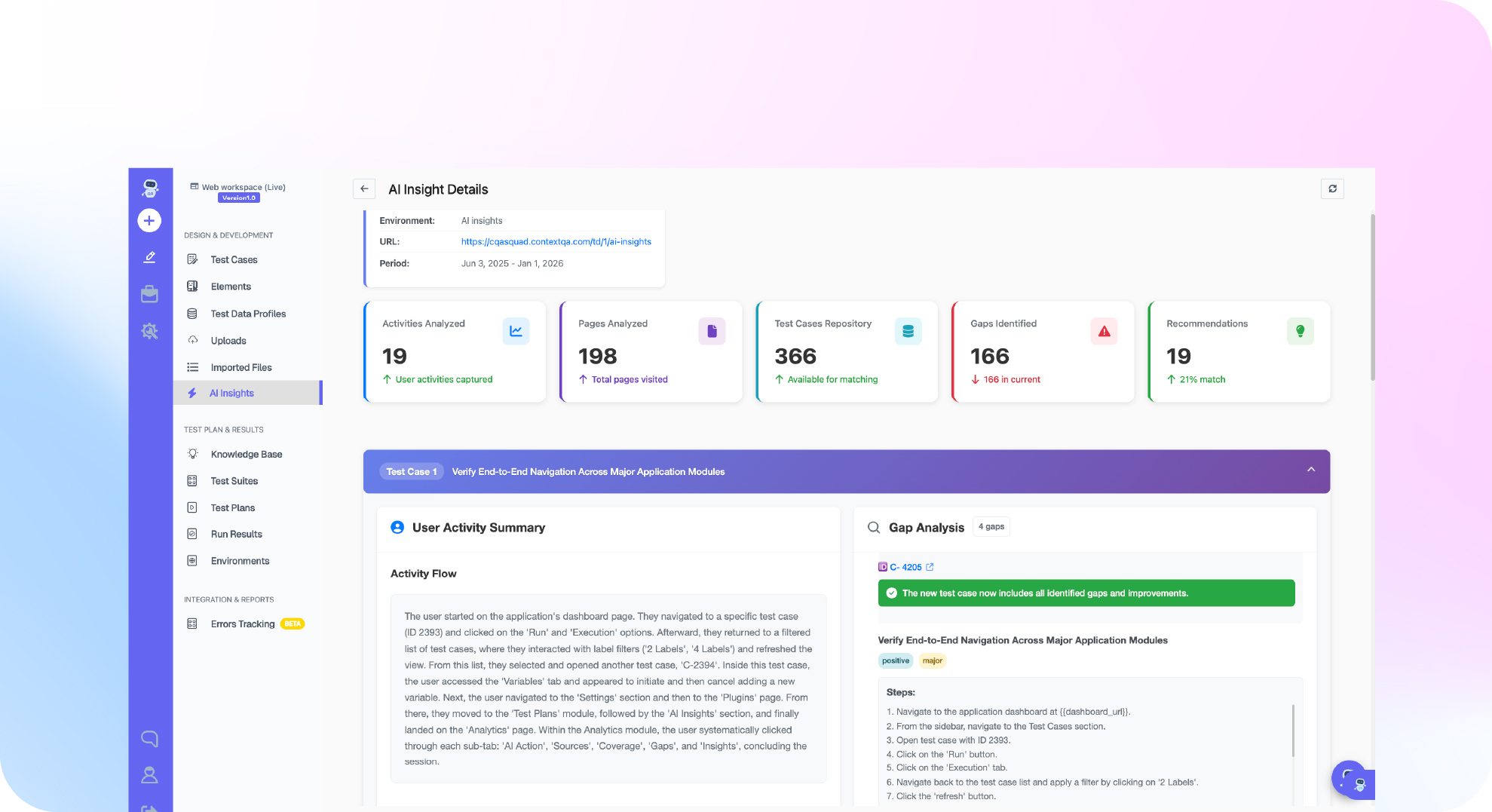
If Salesforce tests keep breaking on Lightning shadow DOM changes and seasonal releases, book a demo to see how ContextQA handles your Flows, profiles and sandboxes, or read about enterprise apps testing.

How can you switch from Copado Robotic Testing without losing test coverage?
Switch in five steps. Inventory and export your Copado Robotic Testing scripts. Rebuild the Salesforce flows that matter most. Wire the new tool into the same CI pipeline. Run both suites in parallel for one sprint. Cut over only when the results match on the same sandbox, profiles and release build.
- Inventory and export. List every suite with its owner and the business process it covers. Then export the scripts, test data and run history. Treat the exported scripts as specifications for what to rebuild.
- Rebuild the riskiest flows first. Start with Flows, approval processes and screens that change with each release, and run them under the profiles real users hold. In ContextQA you can record these flows with the no code recorder, and AI based self healing repairs selectors when the Lightning markup shifts. Check that each healed step still verifies the same outcome.
- Reconnect CI and reporting. Keep the same Jenkins or GitHub Actions trigger and the same Jira or Slack channel. A ContextQA test plan sets the environment, browser and parallelism, and choosing Run Now starts the suite. For browser coverage, a cross browser test plan runs one suite on Chrome, Firefox and Safari.
- Run both tools for one sprint. Point both suites at the same sandbox and build. Log every disagreement and decide whether the test, the tool or the app caused it.
- Cut over and keep an exit. Retire a Copado suite once its results have matched for a full sprint. Playwright code export means your ContextQA tests are not locked into the platform.
Bottom line
In 2027, the best Copado Robotic Testing alternative is whichever tool passes your own Salesforce workflow across Lightning shadow DOM, a seasonal release, Flows, profiles and sandboxes. ContextQA, our own product, fits teams that want Salesforce tests connected to web, API and CI/CD work, with export to Playwright. Shortlist two tools, run them next to your current suite, and cut over when the results match.
For wider context, see our enterprise application testing guide and BrowserStack alternatives for mobile app testing.
Sources
Method note: this guide draws on vendor documentation, vendor pricing pages and public review sites. We did not test or benchmark any tool. ContextQA's Salesforce platform comparison reviewed Provar and Copado documentation on November 12, 2026. Confirm current pricing for ACCELQ, Tricentis Tosca and Testim on each vendor's own pricing page.