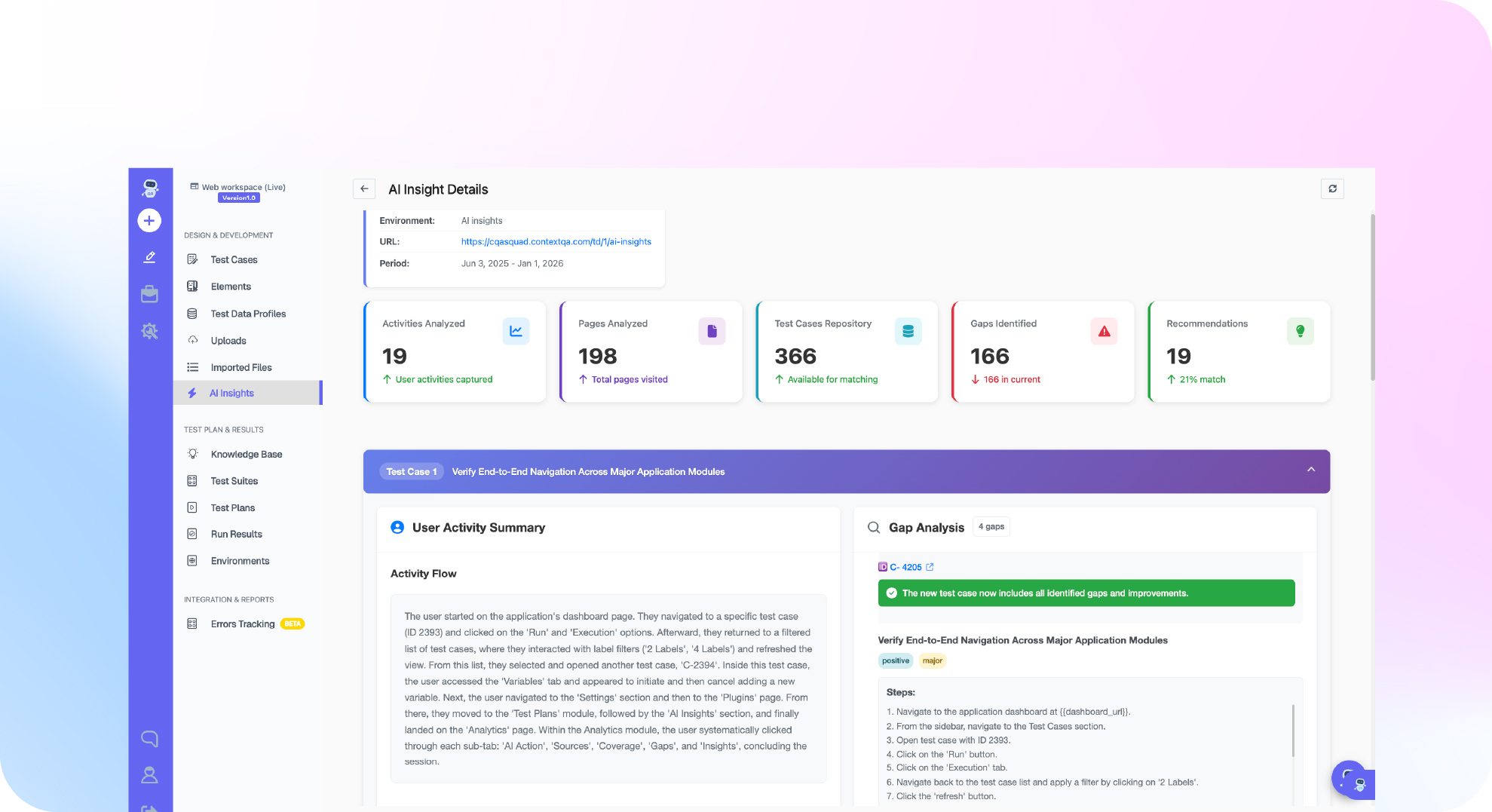

TL;DR: Teams looking for alternatives to a cloud test execution grid usually want three things: less test maintenance, faster pull request feedback, and evidence they can act on. First, rule out any option that fails a hard requirement, such as browser and device coverage, private network access, or CI behavior when a run fails or times out. Then run one real workflow on each option that's left. Ship, the ContextQA autonomous quality engineer, tests every pull request and reproduces reported bugs with evidence.
If you're replacing a test grid, you probably already have a constraint that's failing. It might be flaky CI runs, maintenance after every UI change, or evidence too thin to triage a red build. This guide shows how to rule out options, pilot one shared pull request workflow, and compare tools on evidence, ownership and portability.
Quick answers
How should a QA lead shortlist cloud test grid alternatives without relying on vendor rankings? Start with the disqualifiers: required browsers and devices, private network access, SSO and roles, test data reset, and CI behavior on fail, timeout and cancellation. Drop any option that fails one. Then run the same workflow on the rest and compare the evidence, as the ContextQA decision guide describes.
What should an engineering manager check about lock in before switching away from a hosted test grid? Run an exit test in a clean environment: export the tests and confirm they run outside the vendor's cloud. List the dependencies that remain, such as proprietary step syntax, hosted test data, or healing logic that only exists on the platform. Confirm that locator repair can't weaken a business assertion.
Is there a test grid alternative a small product team can try on pull requests without a sales call? Yes. Ship by ContextQA is self serve. It runs impact analysis and targeted regressions on each pull request before merge, and it reproduces bugs reported in Jira, Linear or Slack. The free trial costs $0 for 15 days, includes 3,000 one time credits, and needs no card (ship.contextqa.com, checked Nov 20, 2026). Paid plans start at $49 a month.
Why do teams look for test grid alternatives?
A test grid alternative is any platform that replaces or supplements a hosted test grid for running, writing or maintaining automated tests. Teams usually start looking when the bottleneck stops being where tests run and becomes who writes, repairs and triages them. A device grid gives you coverage, but it can't tell you which tests a pull request needs.
If coverage is your main problem and your framework, selectors and CI triage already work well, your current grid still does the job.
The usual reasons teams switch:
- Maintenance is the real cost. The bill pays for execution, but the expensive hours go to fixing broken locators and rerunning flaky tests.
- They want signal before merge. They want impact analysis to pick targeted regressions for each pull request, instead of running the full suite after merge.
- Bug reproduction is manual. Someone still has to turn a Jira or Slack report into steps and evidence.
- Portability. Teams need to know which test assets still work if they leave.

What should you look for in a test grid alternative?
Choose an alternative by the problem it needs to solve. One problem is running existing suites on more browsers. The other is spending less time writing, maintaining and triaging tests. Once you know which, compare pricing model, CI behavior, run evidence and portability.
Before you look at vendors, write each criterion as a pass or fail condition, as the ContextQA guide to comparing AI testing alternatives recommends:
- Problem fit. A different grid adds browser coverage and parallel capacity. It won't fix flaky tests or slow pull request review. Those need impact analysis, targeted regressions and bug triage.
- Pricing model. Vendors charge per parallel session, per minute, per user or per credit. Price each plan against your real concurrency and monthly run volume, and record the date you checked each pricing page.
- Open source option. You can run an open source grid, use Playwright's
--shardflag, or run your framework in containers on your own CI runners. That removes license fees, but your team takes over browser images, scaling and video capture. - CI behavior. Pass, fail, timeout, cancellation and wrong build runs should each return a predictable exit code in your pipeline.
- Evidence. Every failure should come with screenshots, logs, video or traces, attached wherever engineers already work.
- Maintenance. If the tool repairs broken locators automatically, check that a repair never weakens a business assertion.
- Portability. Find out which tests, CI hooks and test data still work in a clean environment without the vendor.
How do the test grid alternatives compare?
There are five practical alternatives to a test grid:
- ContextQA Ship, for pull request testing on a small budget
- Open source frameworks, for full code ownership
- Low code AI platforms, for no code authoring and self healing
- Device cloud grids, for raw coverage
- Managed testing services, for extra capacity
| Option | Best for | Pricing model | Notable tradeoff |
|---|---|---|---|
| Current grid (stay) | Large suites already on its cloud | Vendor quote or plan | Switching costs more than it saves if suites are stable |
| ContextQA Ship | Small teams testing every pull request | Free trial, then from $49 a month | Built for PR impact and bug reproduction, not a device lab |
| Open source framework | SDETs who want full ownership | Free license, paid infrastructure | You own the runner, fixtures and flaky test triage |
| Low code AI platform | Testers who don't write code | Per seat or per run | Locator healing can hide a broken assertion |
| Device cloud grid | Wide browser and OS coverage | Per parallel session | Runs your tests but doesn't write them |
| Managed testing service | Extra delivery capacity | Contract | Evidence and handover terms must be written down |
If you need self healing, run a controlled healing experiment. Rename a button. Then confirm the repaired test still checks the business outcome, not just that a locator resolved (ContextQA decision guide).
Which alternative fits your team?
The right choice depends on what's breaking today. If you mainly need breadth across browsers and real devices, your current grid handles that. If the pain is writing, maintaining or triaging tests, choose by team size, compliance needs, and how much test code you want to own.
- Stay on the incumbent. This fits teams whose suites already pass on a hosted grid and who mainly need many real iOS and Android devices in CI. Moving would cost a migration sprint for little gain.
- Small product teams shipping daily: Ship. Ship tests every pull request with impact analysis, which maps a code change to the flows it can break, then runs targeted regressions before merge. It also reproduces reported bugs and gives engineers the likely root cause with evidence. Tradeoffs: you pay in credits, so estimate your PR volume first, and Ship is not a device grid.
- Mobile on real devices. Pick a dedicated real device cloud that uploads apps from the CLI and has CI plugins. Tradeoff: your team still writes and maintains every test.
- Enterprise with SOC 2, SSO and private cloud. Shortlist vendors that share a SOC 2 Type II report under NDA, support SAML SSO, and offer self hosted runners. Tradeoff: procurement takes longer. Ship Enterprise is custom priced, so confirm security terms with the vendor. For Salesforce or SAP workflows, look at the separate ContextQA platform for enterprise apps testing. It runs as cloud SaaS, in your own cloud, self hosted or on premises, and covers web, mobile, API and more.
- Maximum code ownership. Run Playwright on your own runners. Tradeoff: you own the flaky tests, the infrastructure and the evidence pipeline.
- No in house QA capacity. Use a testing service whose contract spells out evidence, turnaround and handoff.
If your shortlist falls short on pull request coverage and bug reproduction evidence, see how Ship tests every pull request before merge: get started free, no credit card needed.

How do you switch from a hosted test grid without losing test coverage?
Switching takes five steps: inventory your coverage, move the assets you own, rebuild what's locked in, run both tools on the same builds for one sprint, then move the release gate. Repository scripts, CI pipeline definitions and test data usually carry over. Tests in vendor formats, dashboards and grid configs have to be rebuilt.
- Inventory coverage. List every suite, the user flows it covers, and which tests gate releases. Retire tests nobody has opened in months instead of migrating them.
- Move what you own. Framework scripts, fixtures, seed data and references to secrets stay with you. Point your existing CI trigger step at the new tool and leave the rest of the pipeline alone.
- Rebuild what's locked in. Tests in vendor formats, custom reports and device capability configs rarely export cleanly. Rebuild only the ones that gate releases.
- Run both for one sprint. Keep the current tool as the release gate while the new one runs against the same pull requests. For each failure, record whether it was a real regression or a false failure, and how long triage took.
- Cut over on evidence. Move the gate only after the new tool catches everything the old one caught on the same builds. Agree on pass conditions for CI behavior, artifacts and portability before the pilot starts (ContextQA decision guide).
For teams that work through pull requests, Ship fits step 4. It tests each pull request before merge, so you can compare its results with the current tool's on the same builds. During the parallel run, track credit use against your pull request volume (ship.contextqa.com, checked Nov 20, 2026).
Bottom line
No single alternative wins for every team. What matters is whether a tool passes your hard requirements before you weigh extra features. Write down the constraints that would rule a tool out: coverage, network, identity, data, CI behavior, evidence and portability. Then run the same workflow on every option that's left and compare the evidence and the maintenance.
To see what a tool that handles the full test loop should do, read what an autonomous quality engineer is.