
TL;DR: A Cypress to Playwright migration mostly means swapping cy. commands for Playwright locators, and trading cy.origin() workarounds for native multi-tab and cross-origin support. Developer satisfaction with Playwright hit 91 percent in the State of JS 2025 survey versus 72 percent for Cypress, the widest gap recorded. This guide shows the actual code changes, plus what ContextQA automates for you.
Cypress and Playwright are closer in philosophy than Selenium and Playwright: both auto-wait, both run in a real browser, both encourage testing through the UI the way a user would. That makes this a narrower migration, mostly a syntax and architecture swap rather than a conceptual one.
Quick answers
Is Playwright harder to learn than Cypress for a JavaScript team? Not meaningfully. The command style is different, page.locator() instead of cy.get(), but the underlying concepts (auto-waiting, chaining actions, scoped selectors) carry over directly.
Can Playwright run my existing Cypress fixtures? Yes. JSON fixtures used with cy.intercept() can be reused as-is with page.route(); only the interception syntax changes, not your fixture data.
Why would a Cypress team bother migrating at all? Mainly cross-browser coverage and cross-origin testing. Cypress runs on Chromium and Firefox with limited Safari (WebKit) support, and cross-origin flows need the cy.origin() wrapper. Playwright covers Chromium, Firefox, and WebKit natively and does not require a special wrapper to navigate across origins.
Selectors and commands, before and after
Cypress chains commands off a global cy object. Playwright scopes everything to a page instance, which matters once you're running multiple pages or contexts in one test.
Before (Cypress):
cy.get('[data-cy=submit-btn]').click();
cy.get('.status').should('have.text', 'Success');
After (Playwright):
await page.getByTestId('submit-btn').click();
await expect(page.locator('.status')).toHaveText('Success');
Both retry automatically, so the behavior is nearly identical. The main adjustment is syntax: Playwright's getByTestId() maps directly onto a data-testid attribute, which is the Playwright convention equivalent to Cypress's data-cy.

Network mocking, before and after
Both frameworks intercept network requests natively, which is one of the few areas where the migration is closer to a direct translation.
Before (Cypress):
cy.intercept('GET', '/api/orders', { fixture: 'orders.json' }).as('getOrders');
cy.wait('@getOrders');
After (Playwright):
await page.route('**/api/orders', route =>
route.fulfill({ path: 'fixtures/orders.json' })
);
Your existing JSON fixture files carry over unchanged. page.route() also intercepts requests fired before the page registers a listener, which is a common source of flaky cy.intercept() setups when a request fires too early in the page load.
Cross-origin and multi-tab tests, before and after
This is where the two frameworks diverge most. Cypress requires every command in a test to run against a single origin unless you wrap the cross-origin block in cy.origin(), and even then, Cypress still cannot automate cross-origin iframes or navigate from HTTPS back to HTTP mid-test, per the official Cypress cross-origin docs.
Before (Cypress, with cy.origin):
cy.origin('https://accounts.example.com', () => {
cy.get('#email').type('user@example.com');
cy.get('#login-btn').click();
});
After (Playwright):
const [newPage] = await Promise.all([
context.waitForEvent('page'),
page.click('#open-sso-login'),
]);
await newPage.locator('#email').fill('user@example.com');
No special wrapper is needed to cross an origin boundary, because Playwright treats the new tab as its own page object inside the same browser context from the start. This is the pattern you'll reach for repeatedly if your app uses a hosted login provider, SSO redirect, or payment popup.
What ContextQA automates in this migration
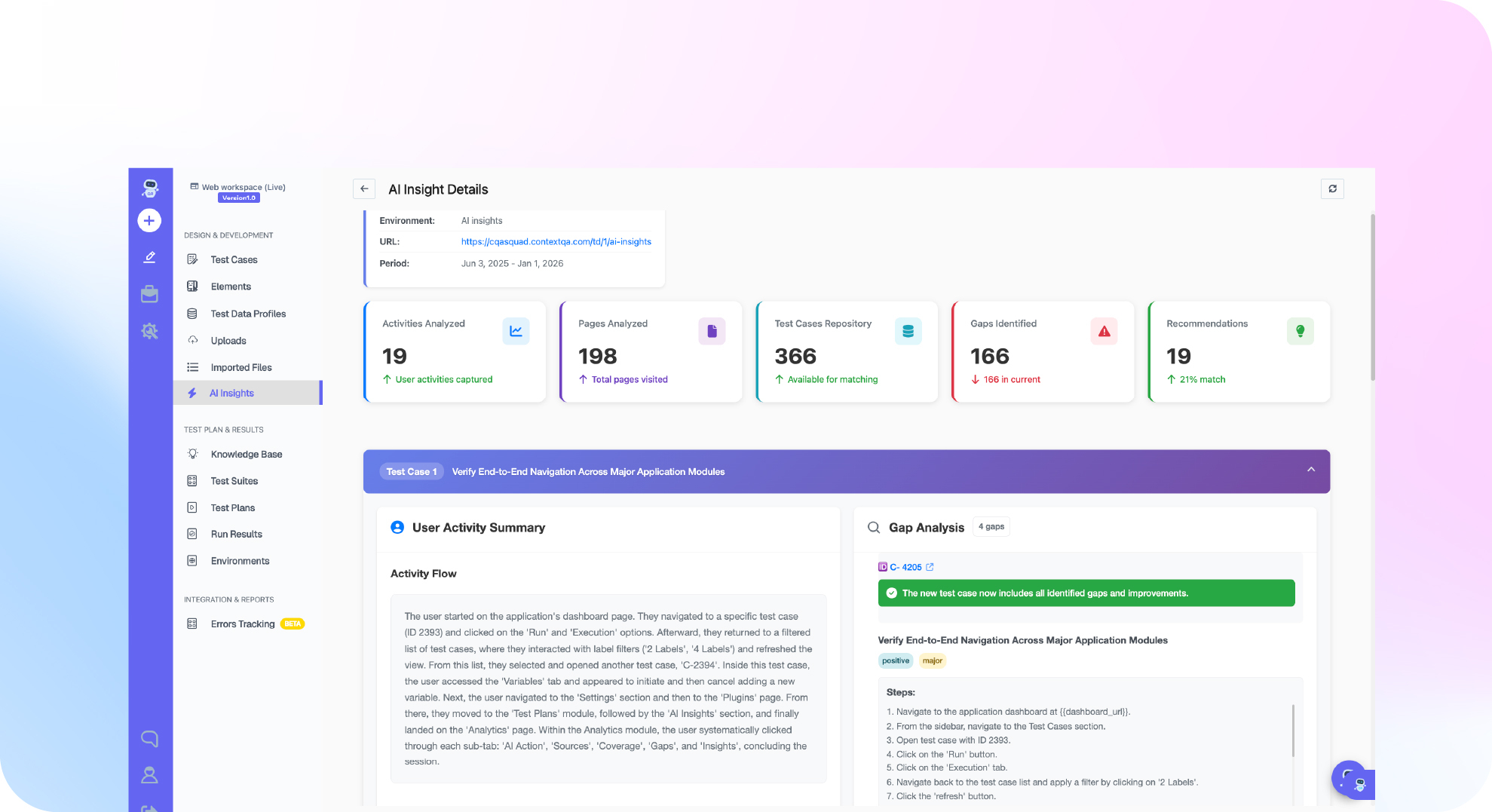
ContextQA's platform reads your existing Cypress specs, including cy.intercept() fixtures and custom commands, and converts them into Playwright-equivalent tests with self-healing selectors, so a renamed data-testid doesn't break the migrated suite on day one.
It also adds WebKit (Safari) coverage automatically, since that's typically the gap Cypress teams are migrating to close, and runs the full cross-browser matrix in parallel without separate Grid or device-farm setup.

A realistic migration timeline
Because Cypress and Playwright share so much philosophy, this migration tends to move faster than a Selenium one, if you sequence it the same disciplined way:
1. Audit for cy.origin() and plugin dependencies. These are the specs most likely to need a structural rewrite rather than a syntax swap.
2. Port one spec file end to end. Include at least one network-mocked flow so your team sees the page.route() pattern early.
3. Swap custom Cypress commands for Playwright fixtures. Reusable helpers translate into Playwright's fixture system, not a 1:1 function copy.
4. Run both suites in CI until coverage matches. Add the new WebKit and Firefox runs as you go rather than waiting for a full cutover.
5. Retire Cypress by suite. Decommission once each suite's Playwright coverage is verified, not on a single fixed cutover date.
Skip the spec-by-spec rewrite. ContextQA converts your Cypress suite, fixtures included, into self-healing Playwright tests and adds WebKit coverage automatically. See how the platform handles migrations or book a demo with your own suite.
Bottom line
Most of a Cypress to Playwright migration is a direct syntax swap; the part worth planning for is the cross-origin and multi-tab tests that needed workarounds in Cypress. For the full strategic guide, see our Cypress to Playwright migration guide, or compare all three frameworks in Playwright vs Selenium vs Cypress in 2026.