
TL;DR: QA is not harder than coding in general. It is hard in a different way. Coding proves that a feature works on the paths the developer planned. QA has to find the paths nobody planned for, including edge cases, environment drift and flaky tests, and then gather evidence that a release is safe. In May 2024 the median wage was $133,080 for the combined software developer, QA analyst and tester group and $102,610 for QA analysts and testers (U.S. Bureau of Labor Statistics, 2024). Ship, the ContextQA autonomous quality engineer, tests every pull request, reproduces reported bugs and hands engineers the evidence.
Ask an engineering team "is QA harder than coding" and you get opinions, not a staffing plan. This guide covers what QA work involves, where the difficulty actually sits, and how leaders should staff and tool for it.
Quick answers
Is QA harder than coding, or just a different kind of hard? It's a different kind of hard. Coding asks you to build one correct path that meets a spec. QA asks you to find every way that path can break: edge cases, bad data, race conditions, environment drift and flaky tests. Many engineers find the open ended search for failure harder to do well than the bounded job of making something work.
Why do so many engineering teams underestimate how hard QA work is? Teams tend to measure QA by how many tests it produces, not by whether it catches regressions before release. The hard parts are mostly invisible: keeping test data isolated, fixing selectors that break when the UI changes, telling a product defect apart from an automation failure, and choosing what to rerun for each pull request. When those parts are neglected, people stop trusting the suite.
How should an engineering manager split testing work between developers and QA when AI coding agents write more of the code? Have developers and their coding agents own unit and integration tests for the code they change. Have QA own end to end coverage, acceptance criteria, reproducing reported bugs and the evidence a release owner needs to say yes. Keep code repair, test repair and release approval as separate steps, each with an owner.
Is QA harder than coding?
QA is not harder than coding, but it is hard in a different way. QA is the discipline of proving that software behaves correctly under real conditions, and coding is the discipline of building that behavior. Developers are judged on whether a feature works. QA engineers are judged on whether anything, anywhere, broke.
The skill sets overlap more than job titles suggest. A test automation engineer writes production grade code in Playwright or a similar framework, maintains CI pipelines and debugs flaky tests, meaning tests that pass and fail on the same build with no code change. QA engineers also work out expected behavior from incomplete tickets and decide when the evidence is strong enough to approve a release. Because the job depends on that judgment, leaders should not staff QA as a junior coding role.
What does the answer tell you about your team?
The answer tells you where your team's hardest problems are. Coding is hard because you build one correct path. QA is hard because you have to find every way that path breaks across browsers, data and releases. If your team says "coding," testing is probably underfunded, and the defects that reach production will show it.
- SDET depth: An SDET (software development engineer in test) writes code to the same standard as product code, against a moving target: async UI state, test data isolation and flaky waits in CI.
- Pay: BLS reports a May 2024 median of $133,080 for the combined software developer, QA analyst and tester group and $102,610 for QA analysts and testers (BLS, 2024).
- Hiring signal: Hire SDETs who can design oracles, not just scripts. An oracle is the expected result a test checks against.
- Tooling decision: Reproducing a bug from a Jira or Slack report and picking which regressions a pull request needs are two of the hardest QA jobs. Ship from ContextQA tests every pull request, reproduces bugs reported in Jira, Linear or Slack, and hands engineers the evidence.

Why does this debate matter in 2026?
The debate matters in 2026 because AI coding assistants now write code faster than teams can verify it. The hard part of shipping has moved from writing code to proving it works. That shift changes hiring, budgets and career paths in favor of people who can design tests, weigh evidence and own release risk.
The adoption numbers back this up. In the Stack Overflow 2024 Developer Survey, 76% of respondents said they were using or planning to use AI tools in development (Stack Overflow, 2024). Google's DORA 2024 report estimated that a 25% increase in AI adoption was associated with a 7.2% drop in delivery stability (DORA, 2024).
Test automation is coding plus a second discipline: boundary values, isolated test data, and tracing flaky tests to timing or shared state. For leaders, the Monday takeaway is to add verification capacity every time AI generated code output grows.
How do you decide which work is harder on your team?
QA is the harder job when the hard part of a change is knowing what could break, not writing the fix. To decide, score the work on three things: how many journeys a change touches, how stable the environment and test data are, and how often failures turn out to be automation noise instead of product bugs.
- Map the blast radius. Count the journeys and integrations one pull request touches. If judging them takes product knowledge the author lacks, testing is the harder job.
- Check environment control. Unstable test data, shared logins and third party sandboxes can make a test harder to trust than the code it covers.
- Classify recent failures. Sort your last 20 failed CI runs into product defects, test maintenance and environment issues. If the last two dominate, QA is underfunded.
- Split ownership by boundary. Developers own unit and integration tests for their code. A QA lead owns cross journey regression, risk calls and release evidence.
- Put agents where the load is. AI coding agents write tests quickly, so more work moves to reviewing their assertions. Ship runs impact analysis on each pull request and reproduces bugs reported in Jira, Linear or Slack, leaving judgment calls to people.
Which approach fits your team?
The best structure depends on how often you release and who owns quality. Small SaaS teams that ship daily usually do best when developers own the tests and every pull request gets automated checks. Teams with regulated or complex workflows need dedicated QA engineers. Most growing teams end up in between, with QA embedded in product squads.
| Approach | Best for | Cost model | Notable tradeoff |
|---|---|---|---|
| Separate QA team | Regulated releases, enterprise workflows | Headcount per tester | Handoffs slow down feedback |
| QA embedded in squads | Growing SaaS with several product teams | Headcount, shared ownership | QA judgment gets spread thin |
| Developer owned, plus Ship | Small teams testing every pull request | Self serve, free to start | Humans still define expected behavior |
In a SaaS startup, hire your first QA engineer once regressions keep reaching customers. That person should own test strategy and release criteria, not write every test.
How does Ship handle the hardest QA work?
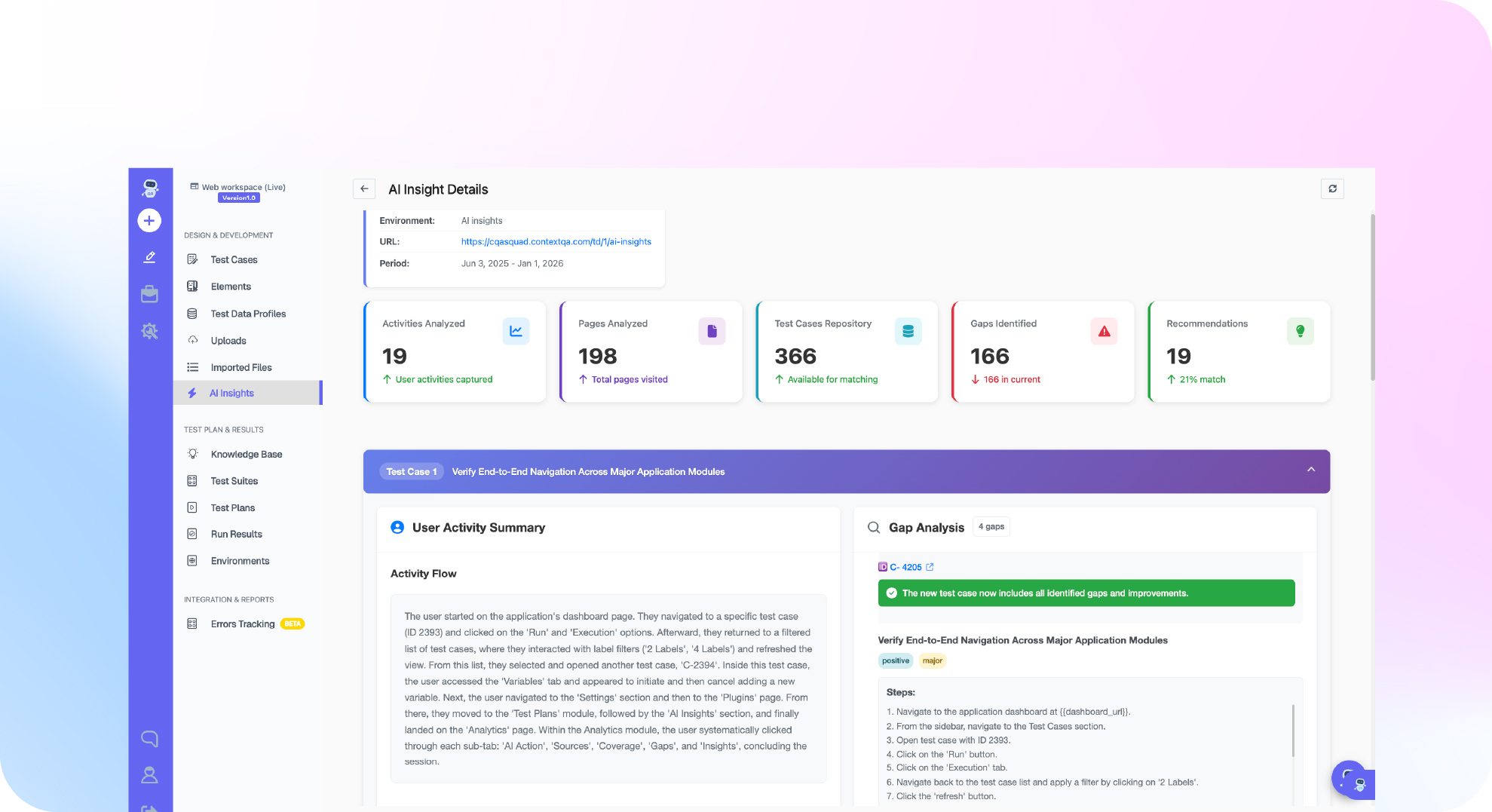
Ship, the ContextQA autonomous quality engineer, tests every pull request with impact analysis and targeted regressions before merge, reproduces bugs reported in Jira, Linear, Slack or a service desk, finds the likely root cause and hands engineers the evidence. It does not settle which job is harder. Software engineers keep writing code, and people still make the release decision.
A developer shows that the change does what the ticket asked. QA shows what else the change broke, a question with no clear edge. Ship works on that second question through this documented workflow:
- A bug report in Slack, Linear or Jira starts a reproduction. Ship records the steps, video, logs and the expected result next to the actual one.
- A coding agent such as Claude Code, connected through the ContextQA MCP server, gets that evidence and prepares a reviewable fix.
- Pull request impact analysis lists which existing tests to rerun and which coverage to add.
- A CI/CD gate waits for real results. The release owner approves with the remaining risk written down.
If reproducing reported bugs and choosing regressions for every pull request is the hardest part of your QA work, get started free with Ship, no credit card needed, or book a demo to walk through the workflow.

What should you do right now?
Don't spend time ranking QA against coding. Use the question to look at how you staff and run quality work. QA is hard because it means thinking about how the whole system breaks, while coding is hard because it means building one part precisely. This week, find where your quality work fails, then fix ownership and evidence.
- Label each of your last 10 escaped defects: missing test, wrong assertion, flaky test or environment gap.
- List every test CI quarantined or retried last month, and give each a named owner.
- Before you merge an AI generated test, show that it fails against a known defect.
- Give QA engineers the same repository and code review rights developers have.
- Put QA and development on one career ladder, and compare pay using the BLS Occupational Outlook Handbook.
- Write release criteria covering the candidate build, required coverage, actual results, remaining risk and a named owner.
Bottom line
QA is not harder than coding. It is a different kind of hard: coding builds behavior that works, and QA proves that behavior holds under edge cases and failure states. As AI agents write more code, verification matters more. Use our checklist for testing AI generated code, and staff QA as engineering work, as covered in what QA automation actually covers.
Sources
These are the primary sources behind the statistics in this article, and each figure links to the page it came from. BLS updates its wage data every year, so check the current release before you compare pay across developer and QA roles on your own team.