
TL;DR: The best QA Wolf alternatives in 2027 depend on who you want writing and maintaining your tests. Ship by ContextQA, the autonomous quality engineer, fits small product teams that want every pull request tested and reported bugs reproduced. It starts with a free trial. Rainforest QA and Testlio fit teams that want outside people to cover testing. mabl and Momentic fit teams that want AI assisted authoring on a platform they run themselves. Pick your operating model before you compare vendors.
This guide compares managed QA services, AI QA engineers such as Ship by ContextQA, and in house Playwright. Each option gets a best fit, a pricing model and an honest limitation, followed by a short migration plan.
Quick answers
What is the difference between a managed QA service, an AI QA engineer, and in house Playwright? With a managed service, the vendor's people write and maintain your tests. With an AI QA engineer such as Ship by ContextQA, the tool generates and runs the tests, and your team reviews the results and sets the release policy. In house Playwright gives you full ownership of the code, along with the runner, fixtures and flaky test triage.
How do I migrate off QA Wolf without losing test coverage? Export every test asset your contract allows and list each critical flow. Run the new tool and the existing suite in parallel on the same builds. Cut over when pass, fail and evidence results match on your release gating flows, and write down any coverage you drop on purpose.
Which QA Wolf alternative fits a small product team that wants to test every pull request? Ship by ContextQA, our own product, runs impact analysis and targeted regressions on each pull request before merge. It also reproduces bugs reported in Jira, Linear or Slack. You get a 15 day free trial with no card, and paid plans start at $49 a month (pricing, checked Nov 20, 2026).
Why do teams look for QA Wolf alternatives in 2027?
Teams look for QA Wolf alternatives when a managed service no longer matches how they ship. Three things usually set this off: the bill grows with the suite, the tests are owned outside the team, or engineers want results on every pull request.
A managed QA service is a vendor whose engineers write, run and maintain your end to end tests under a contract priced around coverage. QA Wolf does this well. If you want broad coverage without hiring SDETs (software development engineers in test) and you're happy with your contract, you should probably stay. Teams that leave usually give one of these reasons:
- Cost model. QA Wolf sells through a custom sales quote. Ship publishes its prices (ship.contextqa.com, checked Nov 20, 2026). Credits and tests under management are different units, so cost per test doesn't compare one to one.
- Ownership. Teams want to edit and review tests in their own repository on the day the product changes.
- Feedback timing. Teams want a gate on every pull request before merge, not a report after a release candidate is cut.
For a direct comparison of the two, see the QA Wolf vs ContextQA head to head. This page covers the wider list.
What should you look for in a QA Wolf alternative?
Look at the operating model first and the feature list second. Decide who writes and maintains the tests, then check CI behavior, failure evidence, flake handling, code portability and how the price grows with the suite.
Score every option on the same criteria, including staying on QA Wolf. ContextQA's AI testing comparison guide says to drop any tool that fails a must have requirement before you compare features:
- Healing that keeps assertions honest: Rename a selector and confirm the test recovers. Then change a price and confirm the test still fails.
- CI behavior: Pass, fail, timeout and cancellation should report consistently in GitHub Actions or Jenkins. Push a broken build on purpose to prove it.
- Failure evidence: Every failure should come with screenshots, video, logs or traces, so your team can triage without waiting on a vendor.
- Flake handling: A pass on retry doesn't prove the product works, so the tool should keep the first failed attempt. To check locally whether a failure reproduces, run
npx playwright test --repeat-each=10 --retries=0. - Portability: Find out what exports as runnable code and what stays behind: data, fixtures and schedules.
- Pricing model: Per run, per credit and per seat pricing grow at different rates. Price out next year's suite size.

How do the best QA Wolf alternatives 2027 compare?
The 2027 alternatives fall into three operating models. With managed services such as Rainforest QA and Testlio, people do much of the testing work for you. With AI platforms such as mabl, Momentic and Ship by ContextQA (our product), your team drives the tool. With in house Playwright, your team owns everything. Compare them by who owns maintenance, not by feature count.
| Tool | Best for | Pricing model | Key limitation |
|---|---|---|---|
| Rainforest QA | No code testing with vendor help | See vendor pricing page | Tests live in the vendor platform |
| Testlio | Managed human and device testing | Managed engagement | Release cadence, not a per PR gate |
| mabl | Low code suites your QA team owns | See vendor pricing page | Your team still maintains tests |
| Momentic | AI authored web tests | See vendor pricing page | You review what the AI asserts |
| Playwright in house | Full code ownership | Free, open source | You own runners and flake triage |
| Ship by ContextQA (ours) | Small teams testing each PR | Free 15 day trial; Starter $49/mo, Pro $249/mo (checked Nov 20, 2026) | Built for smaller teams; enterprise app depth is on the ContextQA platform |
Vendors change their plans often. Read each pricing page on the day you build your shortlist, and save a dated screenshot for procurement.
Which alternative fits your team best?
The right alternative depends on who should write and maintain your tests, and how much triage time your engineers can give each week. Use the profiles below to match your team's capacity to an operating model, then shortlist two options and run the same pilot task on both.
- Stay on QA Wolf: You want people, not tooling, to own coverage, and your engineers have no time to triage failures. Reconsider if developers need to change tests the same day the product changes.
- In house Playwright, Cypress or Selenium: The licenses are free. You pay in engineering time for runners, fixtures, test data, flaky test triage and CI wiring. Playwright's CI guide documents a GitHub Actions setup.
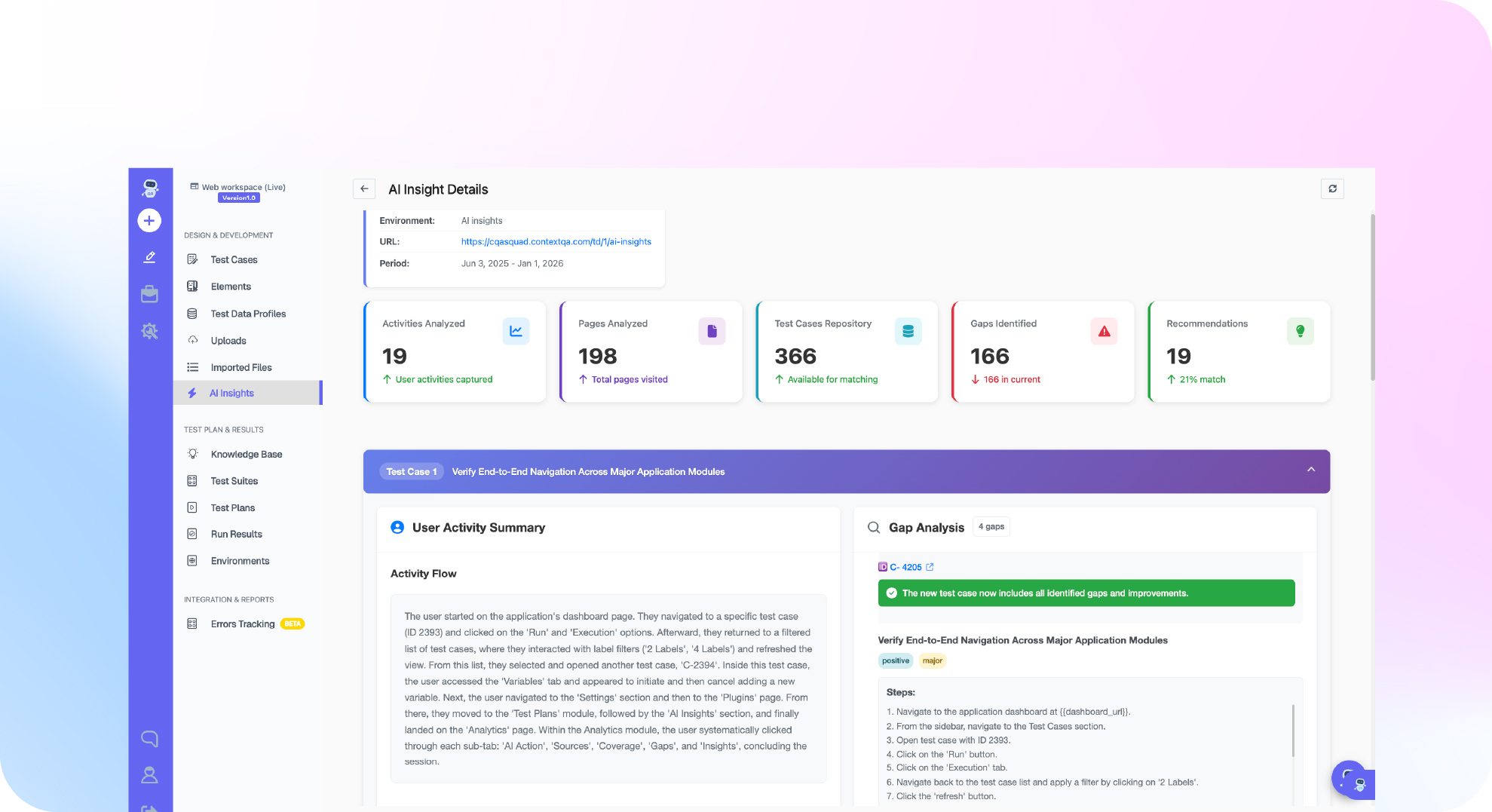
- Ship by ContextQA (our product): Ship tests every pull request and reproduces reported bugs, then finds the likely root cause and attaches the evidence. Every plan includes unlimited users. Your team still reviews assertions and owns the release policy.
- mabl or Momentic: These fit in house QA staff who want AI assisted authoring they run themselves. Someone on your team still owns maintenance and review.
- Rainforest QA or Testlio: These fit teams that want outside testing capacity. Your contract has to define evidence, turnaround, ownership and handover, as the ContextQA decision guide notes for any testing service.
For the wider category, read our best AI QA engineer tools in 2027 guide. If you're also weighing Rainforest QA, see our Rainforest QA alternatives post. To learn the model behind Ship, read what an autonomous quality engineer is.
If you're leaving a managed QA service because you want to own your tests and stop waiting on outside fixes, see how Ship by ContextQA tests every pull request. Get started free with Ship, no credit card needed.

How do you switch from QA Wolf without losing test coverage?
Switching from QA Wolf takes five steps: inventory, export, rebuild, run in parallel, and cut over one flow at a time. Plan for at least one sprint of overlap. The flows nobody wrote down are the ones that get lost, so the inventory matters more than the export.
- Inventory coverage. List every flow, assertion, environment and release gate QA Wolf runs today, and give each one an owner. This list is your pass condition, not the vendor's test count.
- Export what you own. Before you give notice, ask in writing for the test source, run history and CI configuration (webhooks, GitHub Actions steps, secret references). Run the exported specs in a clean repo to find hidden dependencies.
- Plan the rebuild. Expect to rebuild test data seeding, login fixtures and the human triage the vendor did for you.
- Run both for one sprint. Point both tools at the same build and compare failures. Where they disagree, rerun the spec with
--repeat-each=10 --retries=0to see whether the failure repeats, then investigate the first failure's evidence for timing, shared state, authentication and environment differences. Repeated runs only show whether a failure reproduces. They don't tell you the cause, because a real regression can also be intermittent. Playwright's retries docs note that a pass on retry is reported as flaky without telling you the cause. ContextQA's flaky test guide explains how to keep the first failure as evidence. - Cut over per flow. Retire a QA Wolf flow only when its replacement catches the same failures. Write down any coverage you drop on purpose.
Ship's 15 day trial with 3,000 credits gives you room to run step 4 on a few critical flows before you commit to a paid plan (pricing page, checked Nov 20, 2026).
Bottom line
Choosing a QA Wolf alternative in 2027 comes down to who owns your tests. A managed service gives you people who write and maintain them. An AI QA engineer such as Ship by ContextQA (our product) tests each pull request inside your workflow. In house Playwright gives you full control and all of the maintenance. Run your choice beside the current suite, and switch when the results match.
Sources
We didn't test or benchmark any tool on this list. The descriptions come from vendor websites, docs and pricing pages, plus public review sites. We checked Ship pricing on ship.contextqa.com on Nov 20, 2026. Other vendors change their plans often, so check each vendor's current page before you buy.