
TL;DR: The best Momentic alternatives in 2027 depend on who will own the tests. Ship by ContextQA, the autonomous quality engineer, suits small product teams that want every pull request tested and reported bugs reproduced, starting at $49 a month. mabl and testRigor suit teams that want a managed platform. QA Wolf suits teams that want to buy testing as a service. Playwright with an AI agent suits teams that want to own all the code. Many engineers already work this way: 84% of developers use or plan to use AI tools, according to the Stack Overflow Developer Survey 2025.
The short list of the best momentic alternatives 2027 has to offer is mabl, testRigor, QA Wolf, Playwright with an AI agent, and Ship by ContextQA, our own autonomous quality engineer for pull request testing. This guide covers why teams leave Momentic, then gives each option's best fit, pricing model and one honest limitation.
Quick answers
Why do teams look for Momentic alternatives in 2027? Most teams want a better fit, and nothing has necessarily broken. The usual triggers are pricing that doesn't match their usage, missing coverage (mobile, API, Salesforce or SAP workflows), and wanting test assets they can export and own, such as Playwright code. Write those constraints down first, then check each option against its current docs.
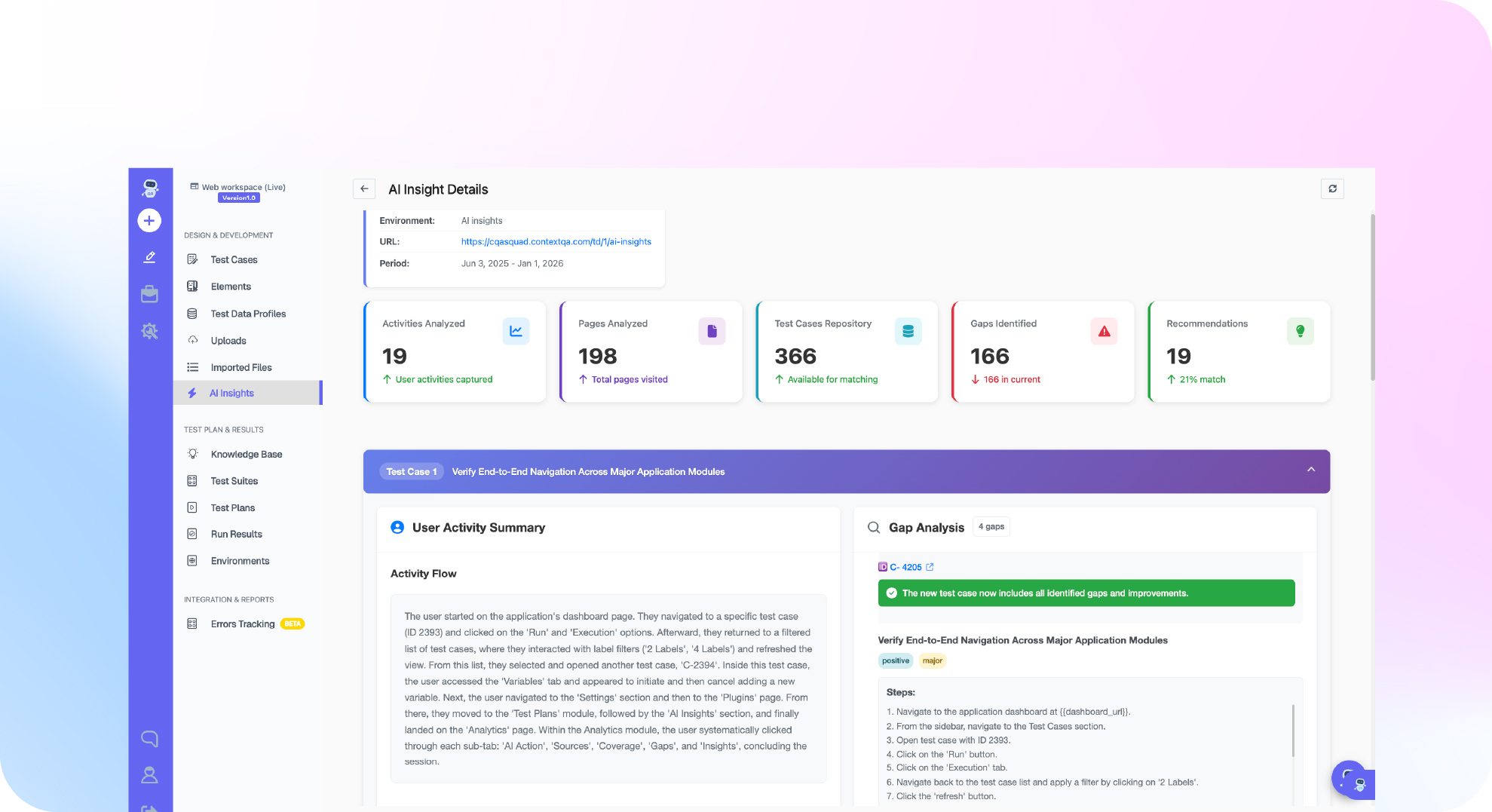
What is the best Momentic alternative for a small product team that wants to test every pull request? Ship by ContextQA, our own product, is built for smaller product teams. It tests every pull request with impact analysis and targeted regressions before merge, and it reproduces bugs reported in Jira, Linear or Slack with root cause evidence. The free trial is $0 for 15 days with 3,000 credits and no card. Paid plans start at $49 a month (ship.contextqa.com, checked Nov 20, 2026).
How do you migrate off Momentic without losing regression coverage? Export or document every flow and assertion you can, then rebuild your most critical flows in the new tool first. Run both tools in parallel against the same builds in CI and compare pass, fail and flaky results along with the evidence each one produces. Cut over only when results match across several release cycles.
How we compiled this comparison
We did not test or benchmark any tool in this guide. Every vendor claim comes from the vendor's own site, docs or pricing page, or from public review sites. We give no rankings and quote no customer results.
- Ship by ContextQA: pricing page checked Nov 20, 2026.
- Playwright: license and docs from the official Microsoft repository and site.
- Momentic, mabl, testRigor and QA Wolf: pricing models summarized from each vendor's public site.
Treat each pricing model as a snapshot. If a vendor page has changed since we checked it, trust the vendor page.
Why do teams look for Momentic alternatives?
A Momentic alternative is any AI test automation tool that makes a different tradeoff on coverage, pricing model, code ownership or maintenance. Teams start looking when one of those tradeoffs stops matching how they ship. Momentic still does its core job, which is writing and running web tests from plain language steps.
If you test one web app on a budget that works, a migration (at least a sprint of parallel runs plus retraining) rarely pays off. The search usually starts after one of these triggers:
- Coverage outgrows the browser. Releases now depend on mobile apps, APIs, database checks or Salesforce and SAP workflows.
- The pricing model stops fitting. Seat, credit and quote based plans scale differently as test volume grows.
- Portability becomes a requirement. Before a multiyear renewal, leaders ask whether tests can leave the platform as code, such as Playwright specs.
- The operating model or workflow changes. Some teams want a service that writes tests, others want a framework in their own repository, and teams merging many pull requests a day want each one tested before merge.

What should you look for in a Momentic alternative?
A good Momentic alternative fixes the specific reason you are leaving without breaking your CI pipeline or locking your tests into a new format. Judge every option on coverage, authoring model, healing behavior, CI failure handling, evidence per run, portability and price predictability.
- Disqualifiers first: Drop any tool that misses coverage you must have. The ContextQA decision guide lays out this method.
- Authoring model: Testers who don't code need a recorder or plain English steps. SDETs want code they can review in a pull request.
- Healing that keeps assertions intact: Rename a button
idand change a displayed price. Healing should repair the first change and still fail on the second. - Deterministic CI: Pass, fail, timeout and cancellation should each return a distinct exit status. Prove it with a pipeline run built to fail.
- Evidence per failure: Screenshots, video, network and console logs, and a likely root cause attached to the run.
- Portability: Export your tests, run
npx playwright testin a clean environment, and list anything that still depends on the vendor. - Pricing model: Model your monthly pull request volume against each pricing page and note the date you checked it.
How do the best momentic alternatives 2027 compare?
The best momentic alternatives 2027 offers fall into three operating models. Ship by ContextQA, our own product, suits small teams that want every pull request tested. mabl and testRigor are managed platforms, and QA Wolf sells coverage as a service. Playwright with an AI agent gives you full code ownership. If Momentic meets your constraints, stay with it.
| Tool | Best for | Pricing model | Key limitation |
|---|---|---|---|
| Momentic | Teams whose AI written web tests are stable today | See Momentic pricing | Confirm test export before committing further |
| Ship by ContextQA (ours) | Testing each PR and reproducing bugs from Jira, Linear or Slack | Free 15 day trial; Starter $49/mo, Pro $249/mo, credit based (checked Nov 20, 2026) | Heavy use costs extra credits; SAP and Salesforce depth sits in the ContextQA platform |
| mabl | Low code web and API suites | Sales quote, per vendor pricing page | Check how tests move out of the vendor's format |
| testRigor | Manual testers writing plain English tests | Tiered plans, per vendor pricing page | Plain English steps need review to stay precise |
| QA Wolf | Buying test coverage as a managed service | Service contract, per vendor pricing page | Turnaround depends on an outside team |
| Playwright + AI agent | Engineers who want to own the code | Open source (Apache 2.0) plus AI tool cost | You own the runner, fixtures, repairs and evidence |
Test every self healing claim before you rely on it. Break one locator on purpose, run the suite, and check that the repair kept the business assertion intact. The ContextQA decision guide calls this a controlled healing experiment. For a related shortlist, see our mabl alternatives comparison.
Which alternative fits your team?
Choose based on who will own the tests. Small SaaS teams that want every pull request tested before merge fit Ship by ContextQA, our own product. Teams with Playwright skills fit Playwright plus an AI agent. Agencies fit a managed service or Ship. If your Momentic suites already pass reliably, stay where you are.
- Stay on Momentic: Your suites are stable, CI is wired up and price isn't the problem.
- SaaS startups and small teams: Ship by ContextQA (our product). Ship tests every pull request with impact analysis and targeted regressions, and reproduces bugs from Jira, Linear or Slack with the likely root cause. Tradeoff: billing is per credit, so watch usage on busy repositories.
- Teams with Playwright engineers: Playwright plus an AI coding agent. Playwright gives full code ownership with no license fee. Tradeoff: you own the runner, fixtures, flaky test triage and evidence pipeline.
- Agencies managing several clients: Ship or a managed service. Every Ship plan includes unlimited users, so client developers add no seat cost. QA Wolf adds outside capacity instead. Tradeoff: a service contract must spell out evidence, turnaround and handoff.
- Non coders writing tests: testRigor. Tradeoff: confirm what you can export before you commit.
- Low code suites: mabl. Tradeoff: run an exit test in a clean environment during the pilot.
If you're replacing Momentic and still need every pull request tested before merge, get started free with Ship by ContextQA, no credit card needed. If you need enterprise coverage across Salesforce, SAP and other enterprise apps, book a demo of the ContextQA platform.

How do you switch from Momentic without losing test coverage?
Switching from Momentic without losing coverage takes six steps. List what your tests protect, rebuild critical flows in the new tool, and run both tools on the same pull requests for at least one sprint. Cut over only when both catch the same failures, and remove the Momentic CI job last.
- Inventory your coverage. List every Momentic test with the flow it protects, its test data and the CI job that runs it.
- Separate what carries over from what gets rebuilt. Flow descriptions, assertions, test accounts, seed data and secrets move as they are. Steps tied to Momentic's runner need rebuilding, so check Momentic's docs for export options first.
- Add the new tool next to the old one. Add it as a separate, non blocking job in
.github/workflows/,.gitlab-ci.ymlor yourJenkinsfile. - Run both tools for one sprint. Point both at the same pull requests and environment. If you trial Ship, compare its targeted regression findings with Momentic's results, one pull request at a time.
- Measure what your CTO will ask about. Track flaky reruns, hours spent fixing tests, failures only one tool caught, and monthly cost from each pricing page.
- Cut over when the results match. Once the new job has caught every failure Momentic caught for a full sprint, make it block merges. Then remove the old job.
Bottom line
The best Momentic alternative in 2027 depends on your constraints, not on a ranking. List your disqualifiers, run one shared workflow through two or three tools, and compare the evidence each one produces. For self serve pull request testing and bug reproduction, try Ship by ContextQA, our own product. Run old and new tools in parallel and cut over when their results match.
Sources
- Stack Overflow, Developer Survey 2025, AI section: survey.stackoverflow.co/2025/ai
- Momentic, product homepage: momentic.ai
- Momentic, pricing page: momentic.ai/pricing
- Ship by ContextQA, product and pricing page, checked Nov 20, 2026: ship.contextqa.com
- ContextQA, Enterprise apps testing: contextqa.com/platform/enterprise-apps-testing
- ContextQA, Compare AI Testing Alternatives decision guide: learning.contextqa.com
- Microsoft, Playwright documentation: playwright.dev
- Microsoft, Playwright Apache 2.0 license: github.com/microsoft/playwright