
TL;DR: The best Virtuoso QA alternatives in 2027 depend on four things: the pricing model, the authoring style, how deep the tool goes into enterprise apps, and whether you can export your tests. ContextQA is our own product, an autonomous quality engineer. It fits teams that want natural language tests built from Jira tickets or plain English, self healing locators, Salesforce and SAP journeys, and Playwright export. mabl, Tricentis Tosca, Functionize, testRigor and Katalon each suit a different kind of team.
This guide to the best Virtuoso QA alternatives in 2027 is for QA leads and engineering leaders who are running into limits on pricing, authoring, enterprise app depth or export. For each option it covers the best fit, the pricing model and one honest limitation. It ends with a migration plan you can start on Monday.
Method note: We did not test or benchmark any tool. Vendor descriptions summarize each vendor's public documentation, pricing pages and review site listings, which are linked below. Pricing models change, so check each vendor's current page before you ask for a quote. ContextQA claims come from learning.contextqa.com and the contextqa.com product pages.
Quick answers
Why do teams look for Virtuoso QA alternatives in 2027? Four reasons come up most: the pricing model, the authoring style, Salesforce and SAP depth, and whether tests can leave the platform. Write each one down as a pass or fail constraint before you build a shortlist. Drop any tool that fails one, however long its feature list is.
Which alternative should we pick if we test Salesforce and SAP workflows? Pick a platform whose current docs cover your enterprise apps end to end, then confirm it with a run in your own environment. On its Enterprise plan, ContextQA (our product) supports Salesforce Lightning, Classic and related clouds, plus SAP Fiori, S/4HANA and SAP GUI workflows, alongside web, mobile and API tests.
How do we migrate off Virtuoso QA without breaking release confidence? Rebuild your highest value journeys first, and keep the assertions, test data and evidence your release decisions depend on. Run the old and new suites in parallel against the same builds. Cut over only when the results match and you have tested a rollback path.
Why do teams look for Virtuoso QA alternatives in 2027?
Teams start looking past Virtuoso QA when one of four things stops fitting: the pricing model, the authoring style, enterprise app depth, or test export. If none of these four is a problem for your team, staying is a sound choice.
A regression suite lasts for years, and a poor fit shows up as maintenance hours and blocked releases that no feature grid reveals.
- Pricing model. Is the price published or quoted, and what does it count: users, runs, credits or parallel sessions?
- Authoring style. Natural language authoring helps manual testers. SDETs (software development engineers in test) who review changes in Git often also want code they can read and edit.
- Enterprise app depth. Salesforce Lightning and SAP Fiori are web UIs that can generate dynamic element IDs, which sometimes change between releases. SAP GUI is a desktop client with no web DOM at all. These journeys need tooling built for them.
- Export. Which file format can you take with you, and what still depends on the vendor's runtime?
For the feature by feature head to head, see Virtuoso vs ContextQA. This guide does not repeat it.
What should you look for in a Virtuoso QA alternative?
Start with the constraint that is pushing you off Virtuoso QA, not with feature lists. Then score every option on the same six points: authoring style, pricing model, enterprise app depth, auditable healing, CI evidence and an exit path. An option that fails a hard requirement should not win on breadth elsewhere.
The ContextQA guide to comparing AI testing alternatives recommends writing every criterion as a pass condition before you name a vendor.
- Authoring that fits your authors. Can manual testers using no code authoring and SDETs working in the repository share one suite?
- A forecastable pricing model. Per seat, per execution, per credit and quote only models scale differently as you add parallel runs. Price your real monthly run volume.
- Enterprise app depth. Ask each vendor to run one of your own Salesforce Lightning or SAP Fiori journeys, not a demo login page.
- Auditable healing. Rename a button, then confirm the test still fails when the business outcome is wrong.
- Predictable CI behavior. In Jenkins or GitHub Actions, pass, fail, timeout and cancellation should each produce a distinct result, with screenshots, logs and video attached.
- An exit path. Run exported tests in a clean environment before you sign, and list the helpers, fixtures and data that stay behind.

How do the Virtuoso QA alternatives compare?
The best alternative depends on how your team writes tests and what it needs to own afterward. ContextQA (ours) fits teams that want plain English or Jira generated tests, self healing, Salesforce and SAP journeys and Playwright export. The table summarizes vendor docs and pricing pages.
| Tool | Best for | Pricing model | Key limitation |
|---|---|---|---|
| Virtuoso QA | Teams whose current setup already works | Quote based | Review export and enterprise app depth |
| ContextQA (ours) | Web, mobile, API, Salesforce and SAP in one workspace | Demo and quote | No published price; you book a demo first |
| mabl | SaaS web teams with low code authoring | Quote based | Export does not cover every step type |
| Tricentis Tosca | Large SAP and packaged app estates | Quote based | Confirm which assets can be exported |
| Functionize | Enterprise web suites wanting ML maintenance | Quote based | Confirm export options in a pilot |
| testRigor | Manual testers writing plain English | Confirm with vendor | Check export options before committing |
| Katalon | Mixed low code and scripted teams | Free tier plus paid | Advanced cases need Groovy or Java |
| Playwright, Cypress, Selenium | SDETs who write code first | Open source | No self healing; you own maintenance |
Pricing models come from each vendor's page: mabl, Tricentis, Functionize, Katalon and ContextQA. Confirm testRigor's current pricing model directly with the vendor. Virtuoso QA does not show fixed pricing. Its price depends on scope, number of applications, test volume and add ons, and customers request a customized quote (Virtuoso QA 2025).
The open source frameworks do not self heal, so you rely on resilient selectors such as Playwright's `getByRole`. Whichever tool you pick, check that a repaired locator never weakens a business assertion.
Which alternative fits your team?
Your choice depends on who writes the tests, which apps they must cover, and how much lock in you can accept. Stay on Virtuoso QA if its authoring covers your web journeys and your suites run green in CI. Move if you need deeper SAP or Salesforce coverage, portable test code, or a different pricing model.
- Stay on Virtuoso QA. Fits teams whose current authoring and contract already work for them. Compare recent reviews from companies your size with your own pilot results.
- mabl. Fits SaaS teams that want low code browser and API tests in a managed cloud. Its documented export has unsupported step types, per the ContextQA migration overview.
- Tricentis Tosca. Fits large SAP centered enterprises that already practice model based testing.
- Functionize. Fits teams that want AI driven creation and maintenance in the vendor's cloud. Confirm in a pilot whether tests and results can leave the platform.
- testRigor. Fits teams where non coders write plain English tests. Check export and exit options before you commit.
- Katalon. Fits teams mixing scripted and low code testing that want a free way to start. Your team owns more framework upkeep.
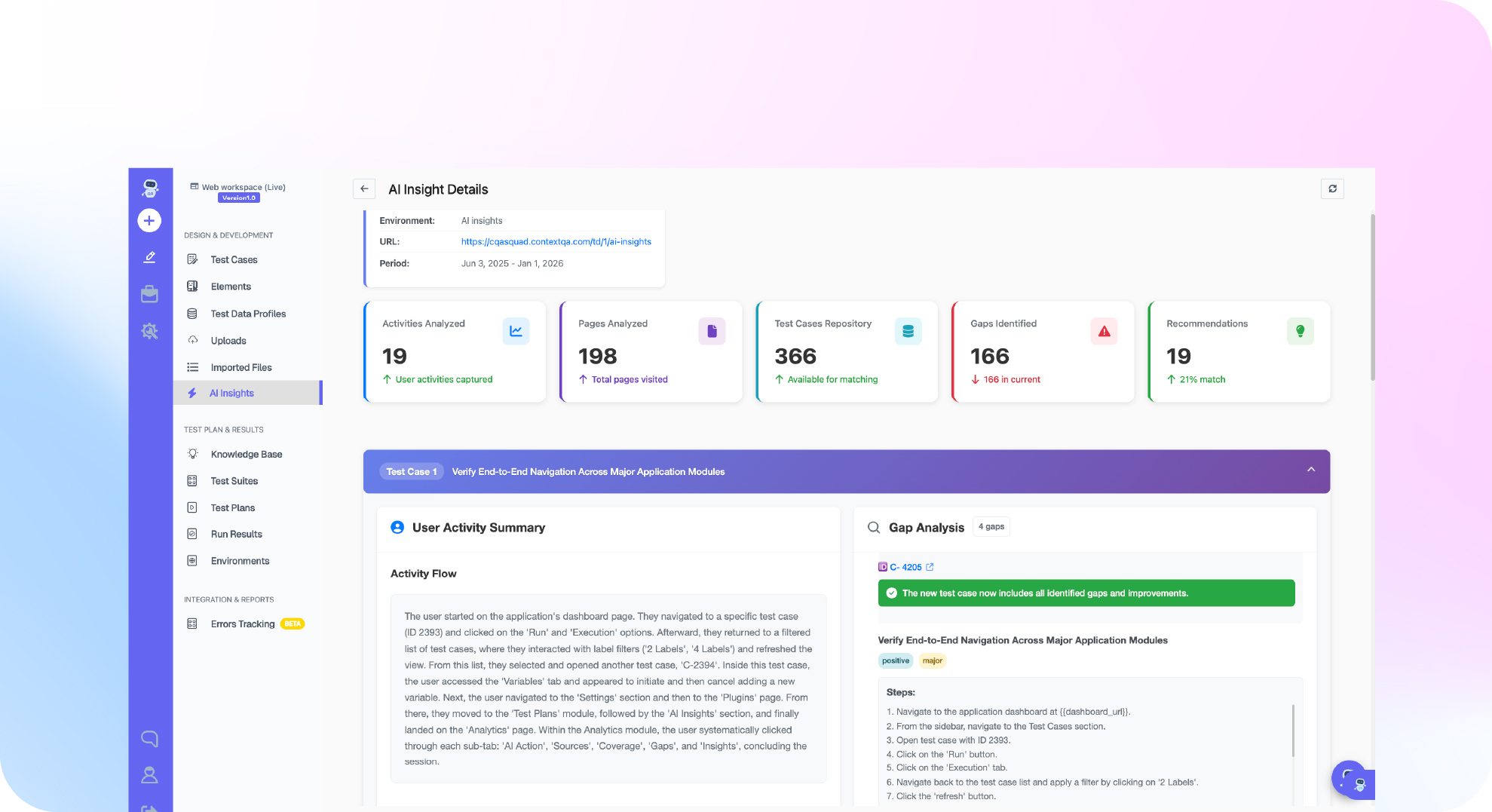
- ContextQA (our own product). Fits enterprises that generate tests from Jira tickets, Figma, Swagger specs or plain English and need Salesforce and SAP coverage. Tests use AI based self healing and export to Playwright. Pricing is quoted after a demo.
If your Virtuoso QA shortlist is stuck on Salesforce and SAP depth or Playwright export, book a demo to see how ContextQA handles both on your own journeys.

How do you switch from Virtuoso QA without losing test coverage?
Switch in stages. List your Virtuoso QA journeys, rebuild the ones with the most release risk first, and run both suites against the same builds for at least one sprint. Business intent and test data carry over, but tool specific steps and helpers must be rebuilt, and your CI stage needs a new ContextQA test plan run. Cut over only when both suites return matching results.
- List and rank journeys. Catalog every Virtuoso journey, tag each by business risk, and rebuild the ones that block a release first.
- Carry over intent and data. Plain English steps, expected outcomes and synthetic data sets transfer as written requirements. ContextQA can also generate cases from the Jira tickets behind them.
- Rebuild what is tool specific. The migration overview warns that helpers, custom code and framework hooks may not map one to one. Rebuild them and keep every business assertion.
- Add ContextQA to your CI stage. Add a test plan run to the GitHub Actions, Jenkins or Azure DevOps stage that runs Virtuoso. The test plan sets the browser or device, environment and parallelism.
- Run both suites in parallel. Compare results build by build, investigate every disagreement, and confirm self healing repairs locators without weakening assertions.
- Cut over and keep an exit. Retire a Virtuoso journey only when its results match. Then export to Playwright so you own the code if you migrate again.
Bottom line
No single Virtuoso QA alternative suits every team. Shortlist by your disqualifiers first: pricing model, authoring style, enterprise app depth and export. Then run the same high value journey on each finalist. ContextQA, our own product, fits teams that want plain English or Jira based tests, self healing, Salesforce and SAP journeys and Playwright export.
Sources
ContextQA claims link to our own documentation and product pages. Other vendor descriptions summarize their public documentation and pricing pages, linked below. We did not test or benchmark any vendor, and pricing models change, so check each page before you request a quote.