
TL;DR: Katalon vs Selenium comes down to a packaged platform versus a library. Selenium is a free, open source browser automation library. You drive it from Java, Python, C#, JavaScript or Ruby, and you build your own runner, waits, Grid and reporting. Katalon Studio is built on Selenium and Appium and wraps them in an IDE with recording, keyword steps and built in reports, with paid tiers for advanced features. ContextQA, the autonomous quality engineer, can migrate an existing Selenium repository through its MCP server.
If your team is weighing katalon vs selenium, don't ask which tool is better. Ask which one your test suite, CI/CD pipeline, and engineers can keep running. Selenium is a code library that gives you full control. Katalon packages automation inside an IDE (integrated development environment). This guide compares setup, flaky test handling, CI integration, and migration cost.
Quick answers
Do we need programmers to adopt Selenium, or can manual testers contribute with Katalon? Selenium is a library, so every test is code, plus a runner such as JUnit, TestNG, or pytest that your team owns. Katalon Studio adds a recorder and keyword steps so people who don't code can contribute. Someone still has to maintain the custom keywords and Groovy scripts.
How hard is it to move an existing Selenium suite to Katalon or to another platform? Neither direction is a one to one copy. Page objects, explicit waits, hidden Thread.sleep calls, Grid capabilities, and retry plugins all need review. Pin a commit SHA and convert a representative slice. Then run old and new side by side with a passing control and a failing control.
Which one costs less to maintain in CI/CD once the suite reaches hundreds of tests? Selenium has no license fee, so the cost shows up as engineering time spent on drivers, Grid, flaky waits, and locator repair. Katalon takes on some of that work but adds license and runtime costs. Before you compare, track how many hours each sprint go into fixing selectors.
Katalon vs Selenium: what is the short answer?
Katalon is a commercial test automation platform built on Selenium and Appium. Selenium is a free, open source browser automation library. Pick Katalon if you want web, mobile, and API testing in one licensed IDE with recording and reporting included. Pick Selenium if you want no license fee, your choice of language, and full control over a framework you build yourself.
- Web: Both tools drive real browsers through WebDriver. Katalon adds a recorder, an object repository, and built in waits. In Selenium, you write the synchronization code yourself.
- Mobile: Katalon runs Appium inside the same project. Selenium has no mobile driver, so you add Appium as a separate dependency.
- API: Katalon includes REST and SOAP test objects. Selenium does not test APIs, so teams add a library such as REST Assured or
requests. - Total cost of ownership: Selenium is free under the Apache 2.0 license, but you pay in engineering hours for the framework, Grid hosting, and locator repair. Katalon's paid tiers are licensed per seat, so check the current pricing before you budget.
How do Katalon and Selenium compare?
Katalon gives up some control in exchange for packaging. It ships a recorder, keyword steps, self healing locators, and reports on top of Selenium WebDriver and Appium. Selenium does the opposite: you code against it in Java, Python, C#, JavaScript, or Ruby and assemble everything else yourself. Katalon gets a team running sooner. Selenium costs nothing to license.
- Authoring model: Katalon Studio has record and playback, a keyword view, and a Groovy script view. With Selenium you write code and choose JUnit, TestNG, or pytest as the runner. Selenium IDE records browser actions, but it is not a full framework.
- Teams with limited coding skills: Katalon is easier for manual testers to start with. Selenium fits teams with SDETs (software development engineers in test) who can own page objects, waits, and helpers.
- Flaky tests and self healing: Katalon's self healing tries a fallback selector when the primary one breaks. Selenium has no built in self healing, so stability depends on explicit waits with
WebDriverWait. The Selenium documentation names race conditions as a common cause of flaky tests. - Lock in: Selenium scripts are plain code in your repository. Katalon tests live in its project format.
Verdict: choose Katalon when speed and authoring without code matter most. Choose Selenium when you have coding capacity and need full portability.

When should you choose Katalon?
Choose Katalon when your team needs a packaged test tool more than a library. It fits teams with mixed skill levels, teams that keep web, API and mobile tests in one project, and teams with no plan to build a framework around Selenium WebDriver. Katalon wraps Selenium and Appium with a recorder, keyword steps, an object repository and reports.
- Mixed skill teams: Manual testers record and edit keyword steps. SDETs drop into Groovy only for the cases that need code.
- One project for several layers: Web UI, API and mobile tests share test data and the object repository, so you don't maintain three frameworks.
- CI/CD without writing a runner: Pipelines call Katalon Runtime Engine through
katalonc, for examplekatalonc -noSplash -runMode=console -projectPath="$WORKSPACE/app.prj" -testSuitePath="Test Suites/Smoke" -browserType="Chrome" -apiKey="$KATALON_API_KEY". Headless CI execution needs a paid Runtime Engine license, so budget for it. Selenium runs in Jenkins or GitHub Actions as a plainmvn testorpyteststep with no license. - Parallel runs without operating a Grid: Test suite collections run suites in parallel against Katalon's cloud or a Selenium Grid you already have. With raw Selenium, your team builds and maintains the Grid or pays a cloud provider.
When should you choose Selenium?
Choose Selenium when your team writes code, wants full control of the browser automation stack, and doesn't want license costs or a vendor dependency. It suits SDETs who already maintain Java, Python, C#, JavaScript, or Ruby suites, run their own Grid, and would rather build reporting and test management from tools they pick.
- Language and runner freedom: Selenium bindings work with JUnit, TestNG, pytest, NUnit, or Mocha. Tests sit in the same repository, review flow, and CI job (
mvn test,pytest -n auto) as the application. - Low lock in: Selenium drives browsers through WebDriver, a W3C Recommendation (W3C, 2018). Your scripts don't depend on a vendor IDE.
- Reporting you build yourself: There are no built in dashboards. Teams publish JUnit XML from CI, add Allure, and link results to Jira. Katalon includes reports and analytics, but your run history then stays inside its platform.
- Long term viability: Selenium is a Software Freedom Conservancy member project. Support for new browser versions comes from a wide contributor base, not a single vendor roadmap.
- Maintenance you accept: Your team owns waits, locators, and flaky test triage.
How do you move between them?
Moving between Katalon and Selenium means rebuilding tests, not converting them file by file. Katalon stores tests as Groovy scripts tied to its Object Repository, while Selenium suites live in your own language and runner. Record a baseline at one commit, migrate a representative slice, and run both versions side by side before retiring anything.
- Pin the baseline. Record the commit SHA, runner version, browser matrix and last passing report.
- Inventory hidden behavior. List page objects or custom keywords, waits, retries and data files. A helper named
login()may hide frame switches or assertions. - Translate intent, not locators. Rewrite each case from the business outcome it checks. Replace
Thread.sleeporWebUI.delaywith explicit waits. - Run a slice in parallel. Run old and new against one build, with a passing control and a deliberately failing control.
- Cut over by suite. Retire source tests only after the results match and you have a rollback path.
ContextQA doesn't document a direct importer for Katalon projects. For those, use the staged conversion path.
If brittle Selenium locators and flaky waits are making you weigh a framework switch, see how ContextQA analyzes your existing repository and previews the migration before anything moves. See how ContextQA does it or book a demo.

Where does ContextQA fit?
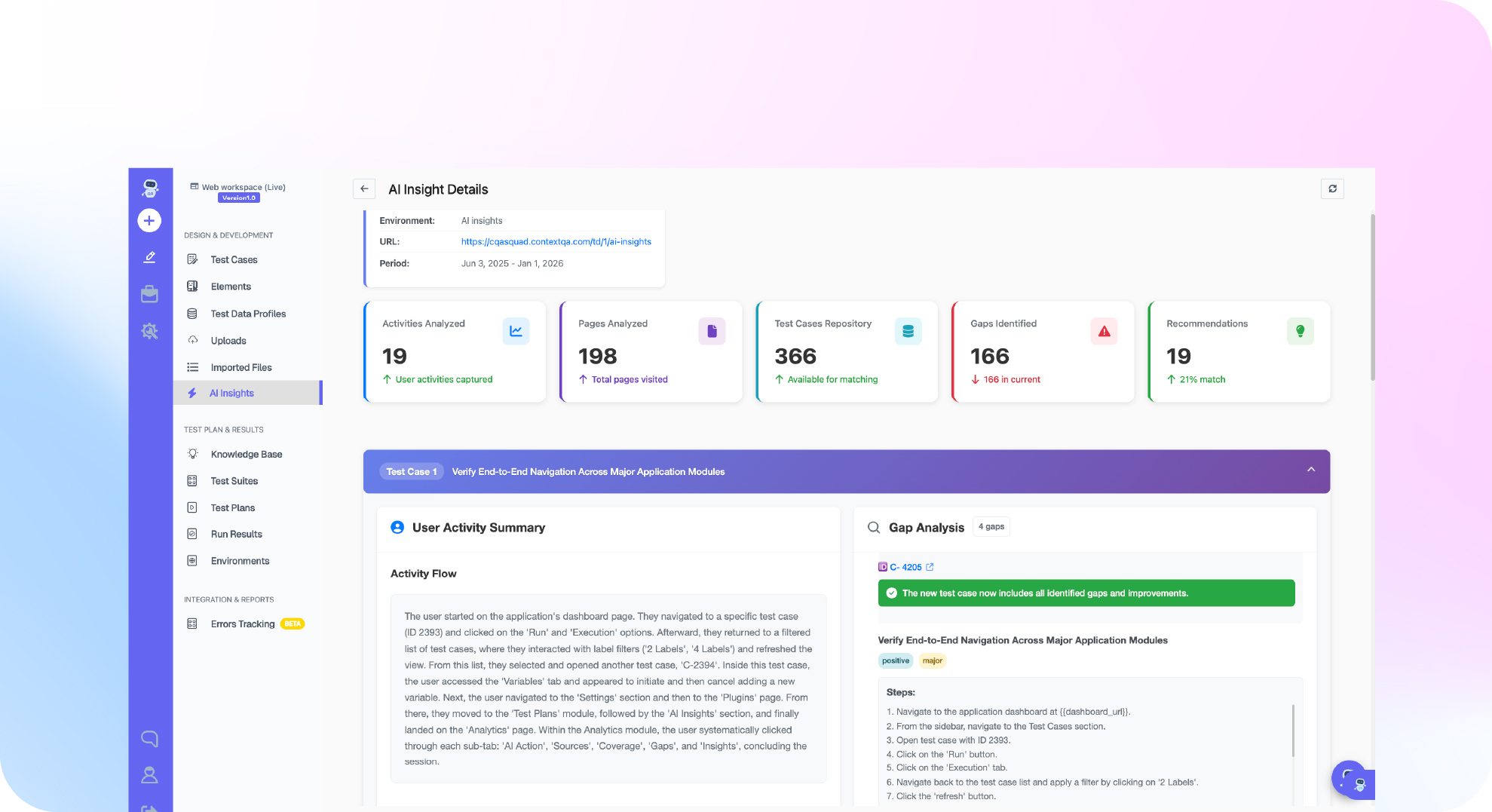
ContextQA fits teams that spend more time maintaining Selenium or Katalon Studio suites than shipping. As an autonomous quality engineer, it creates, runs, and self heals tests, and its MCP server can analyze an existing Selenium repository and preview a migration. Its MCP server can analyze and migrate an existing Selenium repository, and finished tests export to Playwright code so you avoid lock in.
The MCP assisted migration guide lists a connected MCP server and a ContextQA workspace as prerequisites. You then ask the agent in plain English to work through four outcomes:
- Analyze the existing repository to see what will migrate.
- Preview the migration with a dry run.
- Migrate the suite into a ContextQA workspace.
- Verify the migrated test cases by running one.
Before you analyze, the Selenium migration guide recommends recording a baseline: the full commit SHA, the Selenium version, the runner (JUnit, TestNG, pytest) and the Grid configuration. It also recommends verifying migrated cases against the same build with a passing control and a deliberately failing control. To set up the connection itself, see the ContextQA MCP server page.
Conversion is not automatically lossless, so review page objects and hidden waits before you trust the migrated tests. For Katalon projects or Selenium IDE recordings, the migration planning checklist has you classify each asset first. You then either use an intermediate export or rebuild the test from its intent with the no code recorder.
After migration, tests self heal when selectors break. They run in parallel across Chrome, Safari, Edge, Firefox, iOS and Android, and they plug into Jenkins or GitHub Actions.
Bottom line
Choose Katalon when a team with mixed skills needs packaged web, mobile, and API testing and can accept license costs. Choose Selenium when SDETs want to own the runner, waits, and Grid with no vendor dependency. Whichever you lean toward, migrate one representative slice and run it against the same build with passing and failing controls before you decide.
Related reading: what Selenium IDE does and self healing test automation.
Sources
These are the primary sources behind the Selenium, WebDriver, and Katalon claims in this comparison. Check the vendor pages again before you budget, because licensing terms and plan limits change between releases.