
TL;DR: White label QA testing means a software agency resells testing done by a partner under its own brand. The client deals with one vendor, gets one report format, and has one contact. The partner runs regression suites and files bug reports inside the agency's CI/CD pipeline and ticket tracker. Ship, the ContextQA autonomous quality engineer, can take over part of that work: it tests every pull request and reproduces bugs reported in Jira, Linear, or Slack.
White label QA testing lets a software agency ship tested releases under its own brand while a partner does the testing. The model breaks down when flaky tests, slow bug reproduction, or missed regressions reach your client before you catch them. This guide covers how the model works, what to put in the contract, and when an autonomous quality engineer that tests every pull request fits better than outsourced headcount.
Quick answers
How does a white label QA engagement work day to day for an agency? The partner works under the agency's brand. It uses agency email domains, Jira or Linear projects, Slack channels, and report templates. It writes and runs test cases, files bugs with reproduction steps, and returns regression results on the agency's release schedule. The agency keeps the client relationship, the scope, and final release sign off.
When should a team use a QA partner instead of building its own test automation? Use a partner when testing demand swings between client projects, or when hiring SDETs (software development engineers in test) would miss delivery deadlines. Once a product ships daily and needs tests on every pull request, checks inside your own CI/CD pipeline give faster feedback. Ship, from ContextQA, tests each pull request before merge.
What should a QA lead check before signing a white label contract? Confirm who owns the test cases, scripts, and bug history when the contract ends, and make sure the scripts run outside the vendor's own tooling. Ask how the partner handles flaky tests, how fast it turns around regression runs, and how it connects to Jenkins or GitHub Actions. Get NDA and data handling terms in writing.
What is white label QA testing?
White label QA testing is a service model where a software agency resells quality assurance work done by a third party under the agency's own brand. The provider plans, runs, and reports the tests. The client sees only the agency's name, reports, and point of contact, so the agency can sell QA without hiring a testing team.
How it works in practice:
- Scoping. The agency gives the provider the client's builds, test environments, and acceptance criteria. An NDA (non disclosure agreement) usually bars the provider from contacting the client directly.
- Execution. The provider writes and runs functional, regression, and cross browser tests, often inside the agency's CI pipeline.
- Reporting. Defects go into the agency's Jira or Linear board, written in the agency's voice, so the client never sees a second vendor.
The handoff is where this model usually breaks. A ticket that says "checkout fails" with no reproduction steps leaves engineers guessing. Bug reports need steps, environment details, and evidence before they reach a developer.
What can a white label QA partner do for your team?
A QA partner working under your brand gives you regression coverage on every client release, bug reports clients can act on, and testing capacity that grows with project load. You don't need a dedicated tester for each account. A tool running inside the client's own pipeline can cover part of the same work.
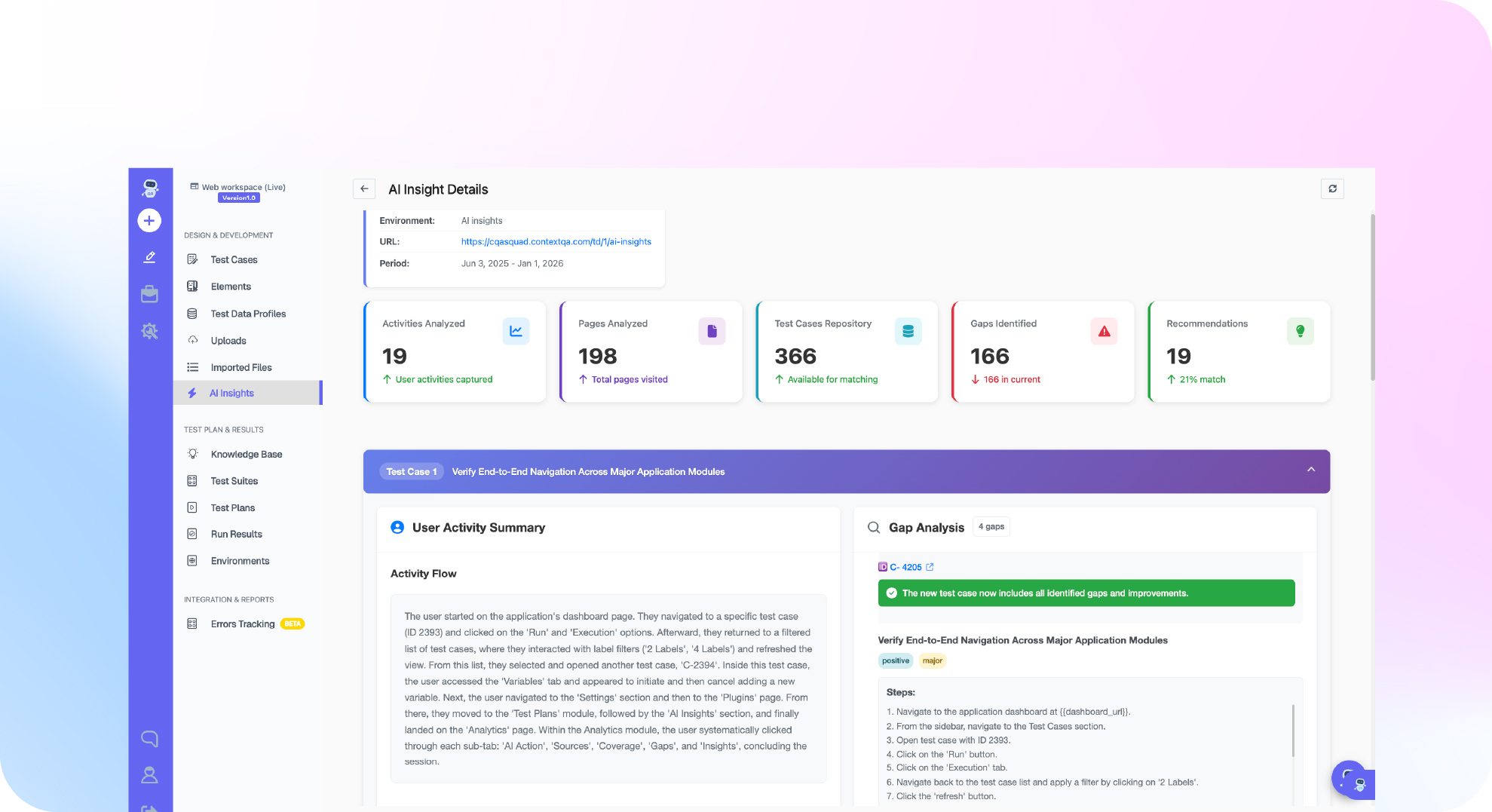
Ship, the ContextQA autonomous quality engineer, handles the core work:
- Pull request gating: Ship runs impact analysis on each pull request diff and executes targeted regressions before merge, so breakages show up in code review, not in the client's production environment.
- Bug reproduction: Ship reproduces issues reported in Jira, Linear, Slack, or a service desk and finds the likely root cause.
- Evidence for engineers: Developers start from a confirmed failure with evidence attached, not a vague "it's broken" ticket.
To compare providers, skip published rankings and test each candidate against these capabilities on a live client repository.

Why does rebranded QA matter for agencies in 2026?
Rebranded QA matters in 2026 because production defects are expensive and clients expect agencies to ship faster without adding headcount. Running a partner's testing under your own brand lets you sell release ready QA on every account without hiring and keeping a test team for each one.
The published data on poor quality is clear:
- Poor software quality cost US organizations an estimated $2.41 trillion in 2022, according to the Consortium for Information and Software Quality (CISQ), 2022.
- Developers spend about 17.3 hours a week on maintenance work such as debugging and refactoring, according to Stripe's Developer Coefficient report, 2018.
Common pricing models:
- Per tester per month: A dedicated, named tester for each client. Easy to forecast, hard to scale.
- Per hour: Fits occasional regression passes, but costs spike near release dates.
- Per cycle or per project: A fixed price for a set scope, which leads to change orders when scope grows.
- Platform subscription: You pay for automated coverage, not people.
Hourly rates vary widely by region and vendor. To compare like for like, ask each candidate for a written quote against the same scope document.
How does a white label engagement run, step by step?
A white label engagement has four stages: scoping, tool access, pull request testing, and branded reporting. The partner plans the tests, runs them, and reports bugs. Your client sees only your reports, ticket comments, and release sign off, and you keep the margin on QA hours.
- Scope the engagement. Agree on which apps, environments, and release cadence are covered, and who controls
stagingaccess. - Join the client's tools. The partner works inside your Jira, Linear, or Slack workspace and your GitHub Actions or Jenkins pipeline, using accounts on your domain.
- Test every pull request. Regressions run before merge. Ship does this with impact analysis and targeted regressions.
- Report under your brand. Reproduction steps and root cause evidence go out as your team's work.
The benefit is QA capacity without a new hire. The risks are harder to see: unclear ownership of test assets, flaky suites nobody maintains after handoff, and client NDAs that forbid subcontracting. Write subcontracting rights and test ownership into the contract before work starts.
Which approach fits your team best?
The right model depends on who owns release risk and how often you merge code. White label QA suits agencies selling testing under their own brand. In house QA suits teams that need deep product knowledge. Outsourced QA suits fixed scope projects. An autonomous quality engineer adds pull request checks to any of these.
- White label QA: A partner tests and reports under your brand. You add QA without headcount, but depend on the partner's turnaround and usually don't own the test code.
- In house QA: Your engineers own the suite, the CI gates, and flaky test triage. Feedback is fastest, but staffing takes the longest.
- Outsourced QA team: A vendor works under its own name on a defined scope, such as a launch or a manual regression backlog. Product knowledge fades when the contract ends.
- [Ship](https://ship.contextqa.com/): Runs targeted regressions on each pull request before merge and reproduces bugs from Jira, Linear, or Slack with root cause evidence.
Recommendation: Pick a staffing model based on who owns quality, then add Ship so every pull request gets tested.
How does ContextQA support white label QA work?
ContextQA supports agency QA work through Ship, its autonomous quality engineer. An agency connects Ship to a client's codebase, and Ship tests every pull request with impact analysis and targeted regressions before merge. It also reproduces reported bugs and gives the client's engineers root cause evidence, while the agency keeps the client relationship.
Workflow for an agency running QA on a client account:
- Start free at ship.contextqa.com with no credit card, and connect one client repository first.
- On every pull request, Ship runs impact analysis and a targeted regression run before merge.
- Send client bug reports from Jira, Linear, Slack, or a service desk to Ship. It reproduces reported bugs and finds the likely root cause.
- Deliver that evidence inside your agency's own reports and ticket comments.
Checklist for vetting a white label QA partner:
- Pre merge coverage: Does it test every pull request, or only nightly builds?
- Reproduction quality: Do bug reports come back with reproduction steps and root cause evidence?
- Tool fit: Does it work inside the client's existing Jira, Linear, or Slack setup?
- Low risk trial: Can you prove it on one client repository before you sign a contract?
If your QA team loses hours rebuilding broken tests on every client release, see how Ship reruns targeted regressions on each pull request: Get started free with Ship, no credit card needed.

What should you do now to get started?
Run a 30 day pilot with one client before you sell rebranded QA at scale. Agree on who owns the test code, add required checks to the client's pull requests, and send bug reports through one triage path. Track escaped defects and flaky tests, then decide whether to expand.
Use whatever test framework the client already runs. A second stack adds maintenance work and complicates handover when the contract ends.
- Commit test code to the client's repository, not your agency's.
- State in the contract who owns the test assets, the CI config, and the defect history.
- Create separate test accounts and seed data for each client. Never share credentials between clients.
- Add a required status check on pull requests to the client's
mainbranch. - Connect the pilot repo to Ship and route the client's bug reports to it.
- Log the flaky test count and escaped defects every week.
If a client needs Salesforce or SAP workflows tested end to end, that is the separate ContextQA enterprise platform, sold through a demo. See its coverage on the solutions page.
Bottom line
White label QA testing works when scope, CI/CD hooks, and bug evidence standards are written down before the first release cycle. The partner runs suites and triages flaky tests, and the agency owns the brand and the client. To test every pull request without new headcount, add Ship. Related reading: QA for software development agencies and how AI fits into QA testing.
Sources
Each link goes to the publisher's original report, so you can check the methodology and year before reusing a number in a client proposal.